Posted tagged ‘Ponzi Scheme’

CLASH OF WORLDVIEWS — EXHIBIT 1

September 9, 2011

Have a look at this exchange between Rick Santelli and Tom Friedman on CNBC. Santelli is very focused on the fact that social security is a pyramid scheme requiring constantly increasing numbers of participants over time in order to support those who got in the system, the scheme, ahead of them. Such schemes were apparently originated by Charles Ponzi beginning in the early 1900’s. Friedman is focused on the “out of order idea” that a “popular” government program could be associated with a situation otherwise characterized as criminal conduct. The two of them, Friedman and Santelli, then proceed to cross talk for a couple of minutes instead of carefully delineating what they agreed about and what they did not agree about. Have a look. It looks for a moment that Friedman will begin to reach across and agree with Santelli about the pyramid scheme when Rick removes the criminal connotation from contention but that moment passes and they get back in their corners and fight it out.

This is so very instructive as to what happens in America in the 2010’s. These two men, both very smart, are so invested in their own worldviews that they do not seek points of practical and factual agreement, they seek only points of disagreement.

Who was right? A Ponzi scheme, according to the SEC’s government website, has the following characteristics.

What is a Ponzi scheme?
A Ponzi scheme is an investment fraud that involves the payment of purported returns to existing investors from funds contributed by new investors. Ponzi scheme organizers often solicit new investors by promising to invest funds in opportunities claimed to generate high returns with little or no risk. In many Ponzi schemes, the fraudsters focus on attracting new money to make promised payments to earlier-stage investors and to use for personal expenses, instead of engaging in any legitimate investment activity.

Why do Ponzi schemes collapse?
With little or no legitimate earnings, the schemes require a consistent flow of money from new investors to continue. Ponzi schemes tend to collapse when it becomes difficult to recruit new investors or when a large number of investors ask to cash out.

Santelli and Friedman could have agreed on the fact that Social Security requires an ever-growing pool of funds from newer workers over time to pay the mandated benefits of retired workers. This certainly meets at least one of the criteria specified in this government website description. Likewise, as with the Ponzi scheme there is no investment activity which goes on with social security, the money is used to pay people who joined the system earlier. Any money not so used is placed into government IOU’s with very low interest rates which, when they are redeemed, will have to be paid out of other government tax monies. They could have agreed that the available funds must meet the mandated benefits over time and that this can only be achieved, in the context of Social Security, by: 1. Cutting mandated benefits; 2. Quickly increasing the numbers of those paying into the system; or 3. Increasing by some means the per person amount that the newer folks, those still working, are required to pay in. The latter solution was tried and is the one alluded to by Friedman which occurred during the Reagan administration in 1984, the last time social security came close to running out of money to pay mandated benefits. Santelli’s implied criticism of this “solution” is that the 2.4 Trillion dollars in taxes which exceeded the benefits actually paid out between 1984 and 2009 was gobbled up by federal government which spent the money as if it were ordinary tax money and the government left a bunch of IOU’s in the till. In terms of the description of the Ponzi scheme, these funds may legitimately be viewed as having been used for the personal expenses of the scheme promoters, in this case the U.S. government. This fact, Santelli’s argument implies, made the government the equivalent of Charles Ponzi, the criminal, who raked off some of the proceeds from the new “investors” for his own use rather than to pay the early investors. It appears to me that just the label, Ponzi scheme, angered Friedman greatly. No real attempt at rational discussion was made after this charge was leveled by Santelli. Pehaps had Santelli chosen the less judgmental term “pyramid scheme” it would have seemed less offensive to Friedman?

What purpose did this exchange serve other than entertainment for CNBC viewers? Who comes off well? Until we get to the point where we can stop calling each other liars or “idiots” because the other’s worldview is different than our own, we’re not going to get very far in bridging the differences between us. We will remain at drawn daggers over every issue. And that is not good since the existence of a country, this country, which is a multicultural country, must necessarily be based upon reaching some type of a broad based agreement across the generations and the classes and the races and the cultures as to what this country’s government should be about.

They could have agreed on all of the facts. But they chose instead to fight out a war of terminology which predicably degenerated into calling the other a belittling name. The different assumptions which each makes underly this argument. The distinction is whether the government is viewed as a benevolent father figure seeking only the good of its citizens or as a self-interested participant whose actions benefit some of its citizens at the expense of others. There you have it, a concrete example of the clash of worldviews.
THE GREAT ECONOMIC WISDOM OF PROGESSIVES

July 18, 2010

This newest Pelosi-ism has moved me to do a bit of examination of the Progessives’ approach to the economy.  This post will show a few prominent Progessives in their own words.  The first quote is from Ms. Pelosi, who you will remember has been Speaker of the House of Representatives of the United States for three and a half years.    

Ms. Pelosi’s conclusions can’t have anything to do with politics trumping sound economic principles, can they?  She concludes that: (1) Republicans are mean guys who lie about the effect of paying some people not to work, and (2) paying money for no work is a good thing for economic recovery because it makes sure the money is spent quickly.  It’s great that this policy has only positive effects, right Ms. Pelosi.  This eliminates even having to think about the possible negative effects, huh?   

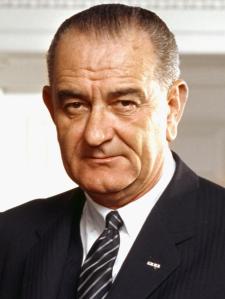
Lyndon Johnson, the father of the Progressive program known as the Great Society, is among the most prominent and powerful progressives ever.  From Larry De Witt’s excellent 2003 essay,”The Medicare Program As The Capstone To The Great Society — Recent Revelations in the Recent White House Tapes,” Johnson is quoted at length admitting that sound economics was not his motivation for acting on many domestic “priorities,” it was just his innate goodness that he was putting into governing.   

Probably the most revealing conversation regarding LBJ’s political values and sentiments as they related to Social Security and Medicare was an extended conversation he had with his Press Secretary, Bill Moyers. In this conversation, recorded on March 10, 1965, Johnson permits himself to reflect almost philosophically on his support for a provision in a pending bill which would provide a retroactive increase in Social Security payments. Moyers is arguing that the President should support the retroactivity clause because it will provide a stimulus to the economy. Johnson supports the provision, but he makes clear to Moyers that he does not see programs like Social Security and Medicare as being about economics.
Johnson: My reason though is not because of the economy. . . . my reason would be the same as I agreed to go $400 million on health. I’ve never seen an anti-trust suit lie against an old-age pensioner for monopoly or concentration of power or closely-held wealth. I’ve never seen it apply it to the average worker. And I’ve never seen one have too much health benefits. So when they come in to me and say we’ve got to have $400 million more so we can take care of some doctors bills, I’m for it on health. I’m pretty much for it on education. I’m for it anywhere it’s practicable. . . . My inclination would be . . . that it ought to retroactive as far back as you can get . . . because none of them ever get enough. That they are entitled to it. That’s an obligation of ours. It’s just like your mother writing you and saying she wants $20, and I’d always sent mine a $100 when she did. I never did it because I thought it was going to be good for the economy of Austin. I always did it because I thought she was entitled to it. And I think that’s a much better reason and a much better cause and I think it can be defended on a hell of a better basis. . . . We do know that it affects the economy. . . . it helps us in that respect. But that’s not the basis to go to the Hill, or the justification. We’ve just got to say that by God you can’t treat grandma this way. She’s entitled to it and we promised it to her.”    

In fact, Johnson explicitly eschews economics in favor of his paternalistic approach to “taking care” of people.  What happens in the long run, who knows so long as the present is taken care of?    

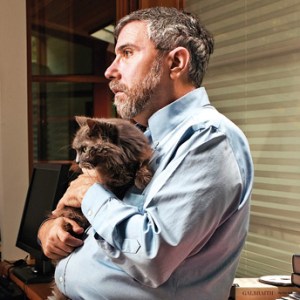
Paul Krugman, a self admitted Progressive as well as an Economic Nobel Laureate and columnist for the NY Times, has recently observed this concerning his assignment of blame for starting the Third Depression:    

So I don’t think this is really about Greece, or indeed about any realistic appreciation of the tradeoffs between deficits and jobs.    

Paul Krugman

It is, instead, the victory of an orthodoxy that has little to do with rational analysis, whose main tenet is that imposing suffering on other people is how you show leadership in tough times.     

And who will pay the price for this triumph of orthodoxy? The answer is, tens of millions of unemployed workers, many of whom will go jobless for years, and some of whom will never work again.    

In other words the ‘not profligate’ among us are hard hearted and unfeeling b_ _ _ _ds who are just interested in elections!  Huh?    

FDR Campaign Button

Then there is this famous quotation from the godfather of all modern Progressives, FDR, addressing the political strength of the Ponzi scheme  known as Social Security:    

We put those pay roll contributions there so as to give the contributors a legal, moral, and political right to collect their pensions and their unemployment benefits. With those taxes in there, no damn politician can ever scrap my social security program. Those taxes aren’t a matter of economics, they’re straight politics.     

This demigod admitted to his unconcern for the future economics of his country in favor of the politics of paternalism.     

And again there is the always economically minded Ms. Pelosi addressing Obamacare as a “jobs” bill.     

Who believes that it is a good thing for this country for people to quit their paying jobs so that they can be cared for by the rest of us.  But in the mind of Madam Speaker this is a great jobs program because the unemployed will be able to fill the now abandoned jobs.  You sly fox!!!  Since it’s such a good jobs program why aren’t we starting it in 2010 instead of 2014?     

Finally, I quote the “Compassionator in Chief,” the “Decider” himself on the indispensible nature of the Medicare Part D drug benefit which has never been paid for, even in theory, other than by increasing the size of the federal deficit.  Having pushed this entitlement through to favor politcally active and powerful senior citizens over everyone else, in his 2004 State of the Union speech George W. Bush proclaims:    

I signed this measure proudly, and any attempt to limit the choices of our seniors, or to take away their prescription drug coverage under Medicare, will meet my veto.    

What economic laws do Progressives hold to as a matter of principle?  None that I can see other than the idea that there really is such a thing as a free lunch.  The economics of supply and demand, the law of unintended consequences be damned, that’s what Progessives believe.  In the Progressive mind electoral politics is the only thing that matters.  Whatever policy will get them through the next election is what they will choose.  Whatever benefits them politically, usually paternalistic and pandering, will win the day even if the problems created in the long run are obvious and huge.  They simply deny the existence of long term economic effects from their politically motivated economic actions.  Progressive politicians, like most of us, are capable of rationalizing away any inconvenient fact of life, such as the fact that you can’t create wealth by dropping borrowed money from helicopters.  In fact, the more intelligent the Progressive, the better they are at rationalizing and sound biting away the inconvenient fact that there is simply no such thing as a free lunch, someone always has to pay.

UPDATE – As of August 11, 2011 this just in:

The White House has now adopted the economic road advocated by Ms. Pelosi. Grow unemployment and you will grow the economy. No kidding, this is what they think. Don’t believe me, here is Jay Carney lecturing a reporter from the Wall Street Journal from the White House podium on the basics of economics:

I guess you really can grow the economy by dropping money from helicopters. Why stop at the unemployed, give everyone free money and we’ll all be better off in the long run. Whoo knew? No wonder we’re in such great shape with these geniuses in charge. Have they ever heard of Bastiat and the effect of the broken window?