Posted tagged ‘National Debt’

DESTROYING AMERICAN WEALTH

August 8, 2011

I want to share a thought I’ve had but is not yet fully cooked. I look forward to hearing from you if you have any insights or criticisms.

It is my hypothesis that in the last eight decades and particularly in the last four, the US has actually undertaken policies which have encouraged and subsidized current consumption on the basis that this is “good” for the economy. The corrollary is that saving is bad for the economy. Can this non-intuitive argument hold water?

Check out Chris Matthews spouting the party line and the commonly held belief about the economics of public policy.

In following the preferred economic policies of Chris Matthews and his “well informed” (those who took economics in school) brethren U.S. economic and job growth has been retarded and following this prescription over a number of years has led, albeit not obviously or intentionally, to the current financial meltdown we are experiencing.

First I should define my terms. Wealth means any thing which is valued primarily for it’s capacity to create a future stream of income in a competitive economic environment. Consumption means any thing which is valued primarily for the physical or psychic benefit of the creator or purchaser rather than for it’s capacity to create a future stream of income.

Everything which can be labeled either wealth or consumption is created by the application of human ingenuity or skill to the environment or context in which they live. Consumption is required to continue life. Wealth is built when there is excess over and above what is needed to maintain life and that excess is put to the creation of wealth. In the hunter gatherer societies, wealth may have been created by inventing and building a bow and arrow or a ladder for picking fruit from high branches. Whoever owned these tools could use them to create a stream of income in the future, income in terms of additional food animals and fresh fruits unavailable to other humans. The inventors of these products had to have had a bit of time to work on their ideas which was not absolutely required for subsistence activities. This “extra time” is something which, at it’s basic level, can be seen as savings. The results of these inventions created yet greater savings since it increased the productiveness of the people who used them and made still more time available to invent other things. Wealth (at least by this definition) and savings, in whatever form they may appear, are clearly inextricably intertwined.

As to savings, why do modern people, if they do, spend less than they make? First, they believe in saving for a rainy day. Second, they want to save because they would like to buy something in the future. Third, they desire to be free of having to live on current earnings, i.e. living from hand to mouth, and would prefer more leisure or other consumption in the future, i.e. luxury and/or retirement.

What do modern folks do with that which they don’t spend? First, they put it at interest with a bank. Second, they invest in businesses owned by them or people they know. Third, they invest in financial instruments. Fourth, they put it under a mattress or it’s equivalent, buying gold or government debt.

What do the first three of these have in common. They represent an investment in or purchase of productive capacity which amounts to wealth. Putting money in the bank has this effect because it is loaned out (or is used to support loans) to others who, at least sometimes, purchase productive capacity. The fourth, “putting money under the mattress,” is an attempt to the preserve the value of their savings when there appear to be unacceptable (to them) risks or disincentives in following the other alternatives.

Since the New Deal we have decided to make it government policy to increase consumption which it is my contention amounts to a decrease in wealth building which would have otherwise occurred. It is a trade off. In this undertaking the government decided to subsidize or otherwise advantage consumption over wealth building. This has led to predictable results which we all see.

It is understandable that the Roosevelt administration focused on the problem of deflation because once begun it becomes a sort of self fulfilling prophecy for “negative economic growth.” People wouldn’t spend money today because what they want to buy will be even cheaper tomorrow. This is true of both consumer items and wealth. People were trying to keep what they had because they were afraid of what was going to happen next. They thought it might be impossible to replace what they had. The “sure thing” in the minds of many was that over time their money would be more valuable tomorrow. The longer it went on the more fear there was and consequently the more reticence to spend money. Remember old FDR’s “The only thing we have to fear is fear itself” speech? FDR concluded that a government remedy was needed, as if the government hadn’t begun it in the first place, which would force or subsidize people into spending money. Enhancing consumption was good then, in the 1930’s, and this idea has persisted as the economic gospel for decades.

The first of the permanent government policies begun by the FDR administration was the social security system. In keeping with Matthews’ view and as explained by FDR in the following quote this was but a toe dipping foray into forced spending, to wit:

The Social Security Act offers to all our citizens a workable and working method of meeting urgent present day needs and of forestalling future need. It utilizes the familiar machinery of our Federal-State government to promote the common welfare and the economic stability of our nation.
The Act does not offer anyone, either individually or collectively, an easy life–nor was it ever intended to do so. None of the sums of money paid out to individuals in assistance or in insurance will spell anything approaching abundance. But they will furnish that minimum necessity to keep a foothold; and that is the kind of protection American’s want.

1938 FDR Address on the 3rd Anniversary of the SSA.

Okay, what am I complaining about? What incentives and disincentives did Social Security introduce with encouraging the spending of money? It had several effects on the Rational Economic Actors (REA) among us. First, it factually shifted the economic burden of providing an income to retirees from the retirees themselves to their children, grandchildren and great grandchildren. Second, it removed some of the economic benefit of having and raising children because it required those children etc. to pay a percentage of their incomes to people who had not borne the vast majority of the burden of raising them. Third, it tended to change the perception of children from necessities to secure old age into expensive luxury items provided to the public. Acknowledging this subsidy for the childless, the Rational Economic Actor [REA] tends to have fewer or no children. The REA will also reduce their personal savings during their working years in proportion to what their social security benefits are expected to provide. With this need for savings reduced the tendency of the taxpayer will also tend to more consumption. Furthermore, the government did not invest any of the funds obtained from working Americans in the form of current taxes in creating wealth for the future. If it were an insurance company from which a policy of old age insurance was purchased, the company would have had to invest the “premiums” paid by its customers in order to be able to pay the future claims for benefits. On the other hand, the social security administration received govenment IOU’s for the excess of taxes over expenditures which actually reduced the need for raising other taxes to defray day to day government expenses, hence further enhancing what was available to consume. As opposed to the requirement that an insurance company must save and invest to pay future benefits, the government simply raised taxes in order to defray any shortfall between “premiums” and “benefit claims.” When fewer children are born, as the REA reacts to the government’s subsidy, even more consumption is available to the parent. In short, there is nothing in the effects of this law which increases savings and the creation of wealth although it does reach it’s goal of subsidizing consumption.

The extension of the social security system from a supplemental income system to a rather more full pension system has increased the perverse incentives over time. The, in FDR’s words, “American” desire for a minimalist approach as indicated in the quote above, has morphed over time. None other than Frances Perkins, Secretary of Labor under President Franklin Delano Roosevelt, noted this in 1960.

“When I saw this bill adopted by Congress with a large majority of the votes of both parties and when I saw after a few flurries of opposition in later years, both parties to continue to improve it and to broaden it’s coverage and to make more generous it’s benefits, I have come to realize that not only was it the crowning act of my working life, but that it was perhaps one of the most useful blessings time has brought to the American people.”

As noted by Perkins, over time the social security system benefits were enhanced. In this, it is clearly the way of all government entitlements. They constantly evolve and grow. Their constituency becomes more organized and single issue motivated and their opposition becomes, effectively, politically suicidal. With every new benefit the incentive to save, invest and have children is reduced. Over time payroll taxes to pay the increased benefits are raised but since that tax money is not saved but is spent to pay ongoing government bills there is more consumption.

Then came the great Medicare benefit of Lyndon B. Johnson.
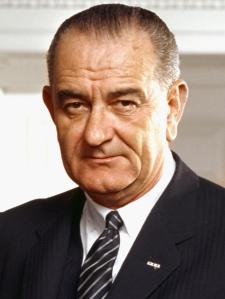
Even as late as 2004 additional benefits were added to Medicare in the form of Part D, a system of drug benefits paid for out of general revenues, i.e. with no new taxes to pay for it. And this was in a Republican Congress with a Republican President. How much clearer can this be? We are buying drugs now and the future tax payers are going to have to pay for them. This increases current consumption but does nothing about paying for it. Can it really be free?

The creation of the Medicare entitlement had the same effect as social security and it was based on the same funding mechanism, payroll taxes. The presence of Medicare emphasized the freedom from the need to save for a rainy day and actually enhanced the consumption effects created by social security and for the same reasons. It reduced the necessity of embracing the gift of children who, if they were raised them right, might pay for our future health care. About this aspect of Medicare President Lyndon Johnson said:

And through this new law, Mr. President [referring to President Truman], every citizen will be able, in his productive years when he is earning, to insure himself against the ravages of illness in his old age.

And in fact President Johnson specifically noted that government requirement would replace the filial bond between the generations, to wit:

No longer will young families see their own incomes, and their own hopes, eaten away simply because they are carrying out their deep moral obligations to their parents, and to their uncles, and their aunts.

Concluded LBJ in a speech in 1966 on the eve of Medicare’s debut:

Medical care will free millions from their miseries. It will signal a deep and lasting change in the American way of life. It will take it’s place beside Social Security and together they will form the twin pillars of protection upon which all our people can safely build their lives and their hope.

He was certainly right that it would forever change the American way of life. Perhaps not in positive ways, but certainly deeply and lasting.

And there is the creation of a trillion or more in underfunded liabilities in state and local public pension systems to say nothing of the federal system. According to Pew Charitable Trust:

All told, states already have set aside about $2 trillion to meet their long-term obligations. But they still need to come up with about $731 billion—a conservative figure that does not include all costs for teachers and local government employees.

How does this idea of underfunded public employee pensions work into my hypothesis? Well it works the same way. A public pension is a promise by a public entity to pay money for current services at some time in the future. When the public entity is not saving and investing enough to make the agreed upon future payment, the public entity is actually consuming more in public services than it can afford to pay for currently. Therefore future tax payers, largely different people, will have to make payments even though the previous and current tax payers have received the benefit of the services provided by the public employees. We have, in this way, enhanced current consumption (in terms of increasing government services) and not set aside enough money to pay the future costs of the retired workers who have provided or are providing those services. In a way, by making an unfunded promise, we have actually found a way of having our cake and eating it too.

Likewise, something which has been discussed extensively on this blog, tax policy has been favorable to current consumption. High wage earners have been taxed at the highest rates for both payroll and income taxes. Hence, the excess which the high income earners would have had available to save and invest was taxed away and made into current consumption by way of government spending. The larger the house which is purchased, the greater tax benefit from the mortgage interest deduction, which is another incentive to consume. The high wage earner sees what is actually nothing but consumption as a way to save on his taxes and buy something which is likely to appreciate in value (up until recently that is). It works the same way for second homes. The second home’s mortgage interest is deductible and hence subsidized by the tax code. It appeared for years to the REA that it was more likely that she would receive a big pay off when she sold her home or second home than if she would have paid the taxes on the mortgage interest and invested the difference in productive assets. This was particularly true when the tax law permitted appreciation on a home, up to $500,000, to be received totally tax free without requiring the money to be reinvested in a new home. Deductions such as the charitable deduction also tends to direct spending towards current consumption (what the charity will do with the money) over long term after tax savings and investment. The only tax benefit which favors savings and investment are the reduced rates for those who receive dividends or create profitable asset sales in the form of a 15% cap on taxes paid on dividends or long term capital gains. But given the rather small amounts left after most people, even high wage earners, have paid their federal taxes, only those who already have a great deal of wealth and savings to invest are the only real beneficiaries of this law. And of course, when such individuals die their estates are generally taxed at large percentages, thus converting savings into consumption. So there are clear limits on the actual benefit to saving and investing of the current capital gains law.

And then there is our preferred manner of keeping us out of “depression” which amounts to no more than borrowing huge amounts of money from future Americans in order to keep the “economy moving now.” As Chairman Bernanke said recently of his latest Quantitative Easing [QE] program (QE just amounts to buying government debt with money freshly off the printing press) and after the government has already issued more than 5 Trillion in public debt in just the last two years:

“By easing conditions in credit and financial markets, these actions encourage spending by households and businesses,” Bernanke said. “A wide range of market indicators suggest that the Federal Reserve’s securities purchases have been effective at easing financial conditions, lending credence to the view that these actions are providing significant support to job creation and economic growth.”

Emphasis added.

There is example after example of the public policies of this country directed at consumer spending at the expense of savings and wealth buidling. This has built a country which is focused on the here and now and completely forgets about the long term effects of anything. Even the idea of a depression is unthinkable. We’ve had a significant number of depressions in this country’s economic history and only one lasted more than a few years. And that depression is called the Great Depression because it was greatly extended by nearly every public policy initiative undertaken in a vain attempt to halt it.

Government has little power to affect the economy as a whole in a way which creates only winners. Our understandable aversion to short term pain has created a governmental policy which has limited our country’s creation of productive assets and wealth in favor of ever more consumption. The focus has been on consumption, Starbucks, luxury housing, second homes, expensive cars, and gadgets for everything has been the result. This means when it comes time to hire people to make and do things, there has been little invested in productive assets which would give them something to make or do. We haven’t applied a large amount of our wealth to create more wealth, we’ve consumed it. It’s been spent. All those luxury houses which have been foreclosed may never be used. Even maintaining and paying the utilities on them may be too much of a strain on our much poorer nation. Jay Carney, White House spokesman, is the poster boy for the idea that debt doesn’t matter, thwarting savings and increasing consumption is the RIGHT THING to do.

In the same way I suppose that riots are the RIGHT THING to do since they create damage which must be repaired. Maybe this explains his thinking on a whole range of destructive and freedom destroying government policies. Hey Jay, there is no such thing as a free lunch, somebody always has to pay.

TIME MAGAZINE – JULY 4, 2011: Does It Still Matter?

July 12, 2011

Cover of Time Magazine, July 4, 2011

Eight months ago in “America’s Holy Writ” I responded to an Andrew Romano article published in Newsweek magazine. I actually suggested that Tea Partyers read the Romano article because, to an extent, it’s criticisms were on target.

Timed for release on the Fourth of July, Time Magazine has now unleashed it’s managing editor, Richard Stengel, upon those unworthy few who would defend the ideas originally embodied in the constitution. The title of the piece, “Does It Still Matter” could equally apply to the piece itself.

I’d like to take a moment to reply to Stengel even though I don’t recommend his article as I did Romano’s. Stengel doesn’t even give the Tea Partyers a fair hearing, preferring to caricature most of their ideas rather than trying to argue against them. This is most unfortunate since I had high hopes for an article written by a man characterizing himself as having run “the National Constitution Center in Philadelphia.” This is legitimate background and the article therefore promised to be an even better and more informed read than Romano’s.

Let me first set out a principle which, to me, debunks the entire premise of Stengel’s piece which is never mentioned by Stengel. The US Constitution forms the sole legal basis for the existence of the federal government and the role of that government in our lives. To me, that makes it seem kind of important and not at all irrelevant. But for the existence of the constitution, the exercise by the federal government of any power over the American people or even over the states would be, very simply, illegal. The constitution cannot be irrelevant until either the federal government no longer exists or the constitution is replaced by something else legitimating federal power. Stengel never really admits his true agenda. He assumes without stating that the constitution is merely an ancient symbol which “unites” us rather than a legal instrument from which any and all federal power flows.

Stengel’s very first paragraph telegraphs what he is going to do. He starts by listing a few modern developments of which the drafters could not have been aware and in so doing suggests that the framers of the constitution would be unable to make any sense of these developments under their little ol’ constitution, to wit: World War II, DNA, Sexting, Television, Miniskirts, Collateralized debt obligations, Computers, Antibiotics and Lady Gaga. His first direct assault is on the father of the country, George Washington. Says he, Washington was ignorant of powered flight therefore suggesting that drones over Libya and the use of GPS to aim missiles would raise questions of war and peace which would just be beyond him. Stengel implies that familiarity with old style cannon balls could never have prepared Washington for the knotty issues raised by technology. Without taking a breath he follows the idea of Washington’s dullness with the idea that the framers didn’t know about health insurance or even “germ theory.” His suggestion, Congress’s power to regulate interstate commerce can be used to force each of us to buy health insurance and, although mystified by the product, the use of this power in this way would have pleased the framers. Finally but still only in his first paragraph, Stengel suggests that Thomas Jefferson’s repulsive conduct of owning and sexually using his slaves would certainly invalidate all of his ideas about small government because it (his conduct) would likely have colored Jefferson’s view of the half black Barack Obama as President of the United States. That’s a lot of work for a single paragraph.

In his second paragraph he follows with a sop to the old guys lauding their attempts to protect democratic freedoms (of course he never mentions that these “freedoms” appear nowhere in the original constitution but were adopted later by the first congress as a double-check against misuse of federal power, these freedoms are otherwise known as the Bill of Rights). He then assassinates the characters of the founders for their “slaves as 3/5’s of a person compromise” without even mentioning the reason for that compromise. He continues with an indictment of the constitution for male only suffrage and finally winds up his second paragraph calling them “kind of crazy” to reach a compromise providing that each state, large or small, would have two senators.

Most of you already know this but for those who don’t, the 3/5’s compromise enabled the northern states to limit the representation of the southern ones in the House of Representatives to the number of their white inhabitants plus 3/5’s of their slaves. This was an indelicate compromise to be sure, but it was one which forced the south to accept fewer representatives in return for the north’s grudging agreement to allow the south to keep their slaves. Without this compromise the southern states would simply not have joined the union. A slave owning country or several countries would have remained. As to the idea of women’s suffrage, Stengel doesn’t mention that the franchise was left to the states and was not even addressed in the constititution. Finally Stengel avoids mentioning any of the reasons which underlay the apportionment of the senate at two senators per state. Does he not recall that the senate was the body in which the power of the states themselves was to be protected? Each state had an equal interest in seeing that it’s sovereignty was not impaired by an overly active federal government and therefore equal representation was appropriate. Further, to have apportioned the senate by population would have allowed states with the larger populations a larger voice and hence more of an incentive to take advantage of the smaller states, as such, when passing measures affecting the powers of the states. The role of a elected chamber based upon population was already played by the house of representatives and a second body, like the senate, would have been wholly unnecessary if the interests to be represented in that body were the same as those represented in the house. If the states were not perceived as in need of protection from a potentially intrusive federal govenment there would have been no reason for a second body in the legislature at all, much less one with two senators per state. In his “kind of crazy” remark the former “director” of the “Constitution Center in Philadelphia” indicates that he is unwilling to understand or even give voice to the rather delicately balanced structure of the constitutional government which was needed to address the interests of every group whose consent to be governed by the new federal government was needed.

After taking down the foresight and prudence of the founders Stengel heads out after the Tea Partyers, those who are supposedly fanatical about the wisdom of the founders. He correctly draws the battle lines between the “original intent” group and the “liberal legal scholars” who analyze the text to find the “elasticity” they believe the framers intended. However, after drawing these battle lines, Stengel inexplicably omits any reference to the source of the debate. Adoption of The tenth amendment, one of those ‘bill of rights’ amendments he previously thought so highly of for protecting our civil and political rights, was required as a condition of ratification of the constitution by several of the states. He simply references the existence and general terms of this debate over intent and leaves it at that. In handling the issue this way he creates a rough equivalence between the two contenders. the expansive camp and the restricted camp without addressing the merits. The tenth amendment as passed by the first congress and enacted by the states has much to say about which of the contending parties in the debate has it right because it provides that:

The powers not delegated to the United States by the Constitution, nor prohibited by it to the States, are reserved to the States respectively, or to the people.

The intent behind the enactment of the tenth amendment is actually contained in the Preamble to the Bill of Rights, to wit:

THE Conventions of a number of the States, having at the time of their adopting the Constitution, expressed a desire, in order to prevent misconstruction or abuse of its powers, that further declaratory and restrictive clauses should be added: And as extending the ground of public confidence in the Government, will best ensure the beneficent ends of its institution.

How did this history simply slip his mind, having been director of the “Constitutional Center?” Is it even relevant to him?

Without reference to the tenth amendment or it’s history, Stengel goes through the debates on several of the current issues currently requiring constitutional interpretation, i.e.: the dividing line between the war power of Congress and the power of the President as commander in chief of the military; the effect of the 14th Amendment’s acknowledgement that the debt of the US shall not be questioned on the debate as to whether it is even necessary to raise the debt limit; the question of whether the adoption of Obamacare is a form of regulation of commerce as contemplated by the constitution; and, finally, the question of whether the 14th Amendment’s extension of citizenship by birth in the US which was intended to confer citizenship upon former slaves should equally apply to make citizens of so-called ‘anchor babies.’

Stengel reaches some predictable results given his view of the constitution as a symbol rather than as a legal document to be construed according to the intentions of it’s drafters. Rather than intended to be stretched out of all recognizable form, the original constitution was intended to be subject to amendment as circumstances warranted and the people willed. What seems to irk Stengel and his crowd is, however, how high the bar for amendment was set by the founders. He prefers extensions of federal power by “analyzing” the language of the constitution in order to find the elasticity supposedly placed there by framers, a group still smarting from an oppressive British government which knew few boundaries to its power in the American colonies. His preference for looking at the constitition as a symbol rather than as a legal document subject to amendment is clear when he says:

We can pat ourselves on the back about the past 223 years, but we cannot let the constitution become an obstacle to a future with a sensible health care system, a globalized economy, an evolving sense of civil and political rights

Strangely, however, at the end of the piece Stengel quotes Judge Learned Hand, to wit: “Liberty lies in the hearts of men and women; when it dies there, no constitution, no law, no court can even do much to help it.” Is Stengel suggesting by use of this quote that the desire for liberty has died in the American breast? For myself, I prefer the words of a related thought expressed by Thomas Jefferson in a letter to Sam Kercheval in 1816:

Where then is our republicanism to be found? Not in our constitution certainly, but merely in the spirit of our people. That would oblige even a despot to govern us republicanly. Owing to this spirit, and to nothing in the form of our constitution, all things have gone well. But this fact, so triumphantly misquoted by the enemies of reformation, is not the fruit of our constitution, but has prevailed in spite of it. Our functionaries have done well, because generally honest men. If any were not so, they feared to show it.

I agree with Thomas Jefferson in the sentiment stated. Unlike Stengel and apparently Hand, I don’t feel that yearning for freedom is dead in America. In fact, I believe that it is this yearning for liberty from the government’s intrusion in our daily lives which has given birth to the Tea Party. The Tea Party was not born out of a nostalgia for a dusty old document or for men who wore wigs or for those who held other men as slaves. The Tea Party embodies the voice of those people who stongly desire to govern their own affairs without either help from or control by the federal government and who are willing to engage in political battle in order to achieve that end.

TRY A LITTLE IRONY

April 24, 2011

The Treasury Secretary and other government officials began a full court press in January in order to get the Congress to raise the debt limit on the US national debt. As you know, without counting social security IOU’s, the debt stands now at $14.3 Billion. The interesting argument Obama operatives are using is that increasing the debt limit will somehow show that we are serious about paying our debts. With their adult and serious faces on Obama’s entourage says that passing a “clean” debt increase will assure our creditors that they will be paid. Apparently our creditors will be satisfied even though they are being paid mostly with money manufactured out of thin air by the Fed through its QE2 program. What does this mean for finding real lenders after QE2 is over? Here is what White House Chief economic advisor, Austan Goolsbee, said on ABC in January:

The pressure has continued to mount on the so-called Tea Party Freshmen in the House to raise the debt ceiling without any quid pro quo process to constrain out of control spending. Supposedly, according to the pundits and Obama accolytes, issues of spending are better left to the political process of passing a budget. Of course this wasn’t so easy for FY 2011’s budget which the Democrats, even with overwhelming majorities in both houses in 2010, failed to do.

Does this strike anyone else as ironic or even extremely ironic? Is it not at least a bit incongruous that the administration which ramped up spending to astronomical levels and which lost a mid-term election at least in part because of fiscal issues, is now pointing at the Tea Party Freshmen as lacking concern for the country, now defined as a seriousness about honoring our debt obligations. That the administration has gone out in full campaign mode to advocate a policy of nearly unlimited borrowing in order to “calm” the markets about our debtworthiness also seems a little ironic to me. Remember the old but tried wisdom of George Washington when addressing the issue of debt repayment: “To contract new debts is not the way to pay old ones.” – Letter to James Welch, April 7, 1799. I suppose times and financial fashions have changed in two centuries.

Exactly who is more interested in paying this money back with something of value? Is it the Tea Party Freshmen who came to office on the idea that they would rein in out of control federal government spending? Or is it the administration which is poised to borrow yet another $1.7 or so over the next 12 months? Who will bondholders believe has their best interests in mind even if there is an interruption in the operation of the printing press? Is it administration which is looking to “borrow” the principal and interest from the Fed to pay the maturing debt along with much more to “invest” in domestic priorities or is it those people looking to try to keep the government’s spending within it’s means? Think of yourself as a bank, to which of these two would you rather loan money?

The Administration has tried to frame this debate in political rather than in economic terms. They know that if they can successfully make the Republicans look like politicians seeking a political victory, particularly at the country’s expense, rather than as deficit hawks looking after the public treasury, that they may be able to avoid having to make substantial cuts to the FY 2012 budget. This will provide them a political victory because it will demoralize Tea Party types since their substantial victories in the fall will have counted for little. The Democrats hope the Partiers will either stay home or vote third parties in 2012.

Furthermore, the Democrats are setting up a scenario that even if the Republicans take this issue to the limit and are actually successful in making big inroads in spending but the economy heads into a double dip either because of this or for any other reason before the election, it is the Democrats who will win politically in 2012 and the president will very likely be re-elected with a mandate to spend even more borrowed money to avoid further economic catastrophes. It is quite the political gambit and it looks to me like it may work. Strangely the adminstration in power will be in a position where they can argue that the deficit hawks caused the problem and the problem wouldn’t have happened if the government had “stayed the course” of continued high deficit spending. As a member of the chorus, Treasury Secretary Geithner said in a recent warning to the Republicans concerning using the debt limit vote to force constraint on spending:

(Lawmakers) will say there’s leverage in it, we can advance it. But that would be deeply irresponsible and they will own the risk.

It won’t happen in the end, but if they take it too close to the edge, they will own responsibility for that miscalculation.

Clearly Geithner is saying that Republican lawmakers are intentionally running the risk of economic catastrophe to even take the issue to the brink in order to force spending cuts because they supposedly “. . . understand that you can’t take any risk the world starts to think the United States won’t meet its obligations.”

“There’s no conceivable way that this city, this government can court that basic risk,” Geithner said.

Obama’s argument is: don’t worry about the soaring debt, what you really need to worry about is the possibility that somebody will put a stop to large scale deficit spending upon which our “prosperity” strangely depends. Here is the vice president making the case explicitly:

This is a “Catch 22.” If we keep borrowing to pay for failed ‘stimulus’ we go bankrupt. And according to Biden, if we don’t keep borrowing and spending like crazy, we go bankrupt. The irony is that we go bankrupt either way. For my part I’d rather go bankrupt from being pennywise than pound foolish. I’d rather do with less now and set the stage for future prosperity than leave a growth-defeating debt for future generations to cope with. I hope it’s not just me who feels this way.

MAY 15 UPDATE: Secretary Geithner has now been forced to sadly ‘predict’ that the failure to quickly pass an increase in the debt ceiling will have the effect of creating a “double dip” recession. See: http://nationaljournal.com/economy/geithner-predicts-double-dip-if-congress-fails-to-lift-debt-ceiling-20110514 .