Posted tagged ‘Krugman’

THE IMPERATIVE OF POWER

March 9, 2011

Libyan Dictator Gaddafi

It is clear to me as I watch the pressures increase on President Obama to somehow become militarily involved in the Libyan “civil war” that at this time in history this is only one in a long line of uniquely American situations. The US is the indispensible nation in every sense. Britain, France and Italy, together or in any forseeable combination with others including China and/or Russia, could not project force into the region in sufficient quantity and quality to impose a “no fly zone” or to deploy and supply land forces to intervene in this part or any part of northern Africa. Hence, the decision as to what to do with Col. Gaddafi is ours and ours alone.

What mounting pressures? First, there are the news stories of the dictator Gadaffi’s airplanes attacking civilians and images of the injured. Second, there is the economic problem of the potential interruption of exports of Libyan crude and natural gas which is causing a spike in oil prices. Third, there is the Hitler problem, i.e. this idea is that leaving a brutal dictator in power is a bad thing, if he can be removed, since the dictator is, by definition, brutal. The fact that leaving him in power may not be the worst thing that could happen is disregarded or never even entertained. Last, there is the political pressure applied by John McCain and others on the President to “do something.” The political benefit of the latter’s course is that after having come out publically for a “no fly zone,” in subsequent days if the President does nothing and anything bad happens in Libya, it can politically be spun as being the “President’s fault.”

As the American public we simply must become less idealistic and more realistic. First, American armed forces are not and should not be used as the policemen of the world. They have been raised and are supported by us to advance the interests of the United States. If the mere fact of their existence creates irresistable political pressure for them to be deployed unwisely and in ways not directly related to the interests of the United States of America, then it might very well be better if they did not exist in the first place. In short, as the father of a soldier, I suggest that it may be better to be France which has no power to do anything so they can simply sit back and criticize and complain which ever way it turns out.

As Strafor’s George Friedman observed recently:

It should also be remembered that the same international community that condemned Saddam Hussein as a brutal dictator quite easily turned to condemn the United States both for deposing him and for the steps its military took in trying to deal with the subsequent insurgency. It is not difficult to imagine a situation where there is extended Libyan resistance to the occupying force followed by international condemnation of the counterinsurgency effort.

As much as I may disagree with President Obama on many things, I do not envy him his job. He has no way to go where he will not be castigated and criticized for what he does or doesn’t do. He simply cannot win. There is no outcome, other than full fledged western-style democracy, which will unambiguously please everyone and that is very unlikely indeed.
It reminds me of discussions I have had with friends and acquaintances about the wars in Afghanistan and Iraq. Some of them criticize former President Bush for going into these wars, others criticize him for mishandling them but almost no one refrains from criticizing him under the philosophy that “he did his best to do what was right for the US” and leave it at that. They also refuse even to engage in the “hypothetical situations” which I pose. Usually they simply snort and act as if my hypothetical and indeed any such hypothetical is ridiculous. An example, assume that President Bush failed to take aggressive military action against those who attacked us from Afghanistan, what further mischief would those miscreants have been encouraged and enabled to inflict and who would have been blamed? Would Osama Bin Laden have been able to take up the mantle of Salladin, having defeated and humiliated the obviously weak infidel enemies, and been able to earlier and even more thoroughly radicalize south Asian and north African Muslims in their opposition to the West. Would Mubarak have fallen earlier? Where did the Bush go who promised no “nation building” and a humble foreign policy when the crap hit the fan?

Obviously, it is far too complex an exercise for a 10 minute conversation to rerun history with all it’s moving parts possibly moving differently. The problem is, however, that we prefer to act (and vote) as if the one variable that we would like to modify would have been the only change in the entire situation and that if our preferred choice had been made ‘things’ would have obviously turned out better. We like to think only about the opportunity costs of the roads not taken without giving any credit to the beneficial effects of the road actually taken.

This same kind of analysis could be applied to the folks who opposed the Obama stimulus. They don’t like to talk about the probability that without it the US and much of the world could have been plunged into a rather lengthy depression with attendant deflation with far more unemployment for a substantial period of time. They simply assume that the last two years would have been the exactly same (or maybe even better) except we wouldn’t have borrowed 3 trillion dollars. This is a ridiculous assumption. On the other hand, the pro-stimulus group prefers to leave to later the question of the future costs of having borrowed trillions to provide the present liquidity which has kept transactions happening and prices from falling. That this may very well cause a Japan style lost decade or worse is dismissed out of hand by the gogo-stimulus crowd (namely Paul Krugman) as being unthinkable. The opponent in Krugman’s mind is a repeat of the Great Depression and anything is better than that. The only possible problem with borrowing these trillions in Krug-world is that you may not borrow enough to keep everyone happy until the bandwagon starts rolling again.

I guess what I am really saying is that the existence of power–whether to project substantial military force into Libya or the power to borrow and spend trillions of dollars–creates it’s own imperative to use that power and let the future care for the future. It may be better policy in the long run to have our leaders constrained by laws and other circumstances which do not allow them the freedom to engage in the “big thing.” As it stands, our leaders, rather than being subject to a future of being second guessed as to what the world would have looked like if they had used the power they had, they are very likely to be overtempted to simply use it and see what happens.
THE GREAT ECONOMIC WISDOM OF PROGESSIVES

July 18, 2010

This newest Pelosi-ism has moved me to do a bit of examination of the Progessives’ approach to the economy.  This post will show a few prominent Progessives in their own words.  The first quote is from Ms. Pelosi, who you will remember has been Speaker of the House of Representatives of the United States for three and a half years.    

Ms. Pelosi’s conclusions can’t have anything to do with politics trumping sound economic principles, can they?  She concludes that: (1) Republicans are mean guys who lie about the effect of paying some people not to work, and (2) paying money for no work is a good thing for economic recovery because it makes sure the money is spent quickly.  It’s great that this policy has only positive effects, right Ms. Pelosi.  This eliminates even having to think about the possible negative effects, huh?   

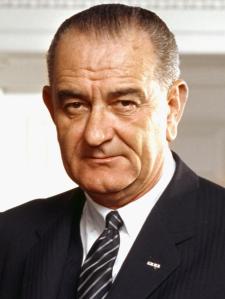
Lyndon Johnson, the father of the Progressive program known as the Great Society, is among the most prominent and powerful progressives ever.  From Larry De Witt’s excellent 2003 essay,”The Medicare Program As The Capstone To The Great Society — Recent Revelations in the Recent White House Tapes,” Johnson is quoted at length admitting that sound economics was not his motivation for acting on many domestic “priorities,” it was just his innate goodness that he was putting into governing.   

Probably the most revealing conversation regarding LBJ’s political values and sentiments as they related to Social Security and Medicare was an extended conversation he had with his Press Secretary, Bill Moyers. In this conversation, recorded on March 10, 1965, Johnson permits himself to reflect almost philosophically on his support for a provision in a pending bill which would provide a retroactive increase in Social Security payments. Moyers is arguing that the President should support the retroactivity clause because it will provide a stimulus to the economy. Johnson supports the provision, but he makes clear to Moyers that he does not see programs like Social Security and Medicare as being about economics.
Johnson: My reason though is not because of the economy. . . . my reason would be the same as I agreed to go $400 million on health. I’ve never seen an anti-trust suit lie against an old-age pensioner for monopoly or concentration of power or closely-held wealth. I’ve never seen it apply it to the average worker. And I’ve never seen one have too much health benefits. So when they come in to me and say we’ve got to have $400 million more so we can take care of some doctors bills, I’m for it on health. I’m pretty much for it on education. I’m for it anywhere it’s practicable. . . . My inclination would be . . . that it ought to retroactive as far back as you can get . . . because none of them ever get enough. That they are entitled to it. That’s an obligation of ours. It’s just like your mother writing you and saying she wants $20, and I’d always sent mine a $100 when she did. I never did it because I thought it was going to be good for the economy of Austin. I always did it because I thought she was entitled to it. And I think that’s a much better reason and a much better cause and I think it can be defended on a hell of a better basis. . . . We do know that it affects the economy. . . . it helps us in that respect. But that’s not the basis to go to the Hill, or the justification. We’ve just got to say that by God you can’t treat grandma this way. She’s entitled to it and we promised it to her.”    

In fact, Johnson explicitly eschews economics in favor of his paternalistic approach to “taking care” of people.  What happens in the long run, who knows so long as the present is taken care of?    

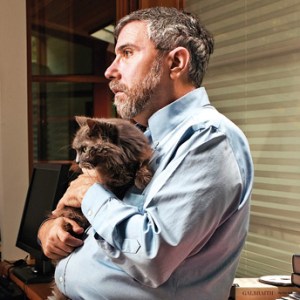
Paul Krugman, a self admitted Progressive as well as an Economic Nobel Laureate and columnist for the NY Times, has recently observed this concerning his assignment of blame for starting the Third Depression:    

So I don’t think this is really about Greece, or indeed about any realistic appreciation of the tradeoffs between deficits and jobs.    

Paul Krugman

It is, instead, the victory of an orthodoxy that has little to do with rational analysis, whose main tenet is that imposing suffering on other people is how you show leadership in tough times.     

And who will pay the price for this triumph of orthodoxy? The answer is, tens of millions of unemployed workers, many of whom will go jobless for years, and some of whom will never work again.    

In other words the ‘not profligate’ among us are hard hearted and unfeeling b_ _ _ _ds who are just interested in elections!  Huh?    

FDR Campaign Button

Then there is this famous quotation from the godfather of all modern Progressives, FDR, addressing the political strength of the Ponzi scheme  known as Social Security:    

We put those pay roll contributions there so as to give the contributors a legal, moral, and political right to collect their pensions and their unemployment benefits. With those taxes in there, no damn politician can ever scrap my social security program. Those taxes aren’t a matter of economics, they’re straight politics.     

This demigod admitted to his unconcern for the future economics of his country in favor of the politics of paternalism.     

And again there is the always economically minded Ms. Pelosi addressing Obamacare as a “jobs” bill.     

Who believes that it is a good thing for this country for people to quit their paying jobs so that they can be cared for by the rest of us.  But in the mind of Madam Speaker this is a great jobs program because the unemployed will be able to fill the now abandoned jobs.  You sly fox!!!  Since it’s such a good jobs program why aren’t we starting it in 2010 instead of 2014?     

Finally, I quote the “Compassionator in Chief,” the “Decider” himself on the indispensible nature of the Medicare Part D drug benefit which has never been paid for, even in theory, other than by increasing the size of the federal deficit.  Having pushed this entitlement through to favor politcally active and powerful senior citizens over everyone else, in his 2004 State of the Union speech George W. Bush proclaims:    

I signed this measure proudly, and any attempt to limit the choices of our seniors, or to take away their prescription drug coverage under Medicare, will meet my veto.    

What economic laws do Progressives hold to as a matter of principle?  None that I can see other than the idea that there really is such a thing as a free lunch.  The economics of supply and demand, the law of unintended consequences be damned, that’s what Progessives believe.  In the Progressive mind electoral politics is the only thing that matters.  Whatever policy will get them through the next election is what they will choose.  Whatever benefits them politically, usually paternalistic and pandering, will win the day even if the problems created in the long run are obvious and huge.  They simply deny the existence of long term economic effects from their politically motivated economic actions.  Progressive politicians, like most of us, are capable of rationalizing away any inconvenient fact of life, such as the fact that you can’t create wealth by dropping borrowed money from helicopters.  In fact, the more intelligent the Progressive, the better they are at rationalizing and sound biting away the inconvenient fact that there is simply no such thing as a free lunch, someone always has to pay.

UPDATE – As of August 11, 2011 this just in:

The White House has now adopted the economic road advocated by Ms. Pelosi. Grow unemployment and you will grow the economy. No kidding, this is what they think. Don’t believe me, here is Jay Carney lecturing a reporter from the Wall Street Journal from the White House podium on the basics of economics:

I guess you really can grow the economy by dropping money from helicopters. Why stop at the unemployed, give everyone free money and we’ll all be better off in the long run. Whoo knew? No wonder we’re in such great shape with these geniuses in charge. Have they ever heard of Bastiat and the effect of the broken window?