Posted tagged ‘economics’

DEAL-MAKING BETWEEN GOVERNMENT AND BUSINESS

April 1, 2011

I have a question. Is it easier to make a living by competing against other hard nosed competitors for the success of having the best and most economical product or by forming “partnerships” with the federal government furthering the government’s purposes in exchange for a share of the pie guaranteed by government power? The latter has the additional advantage of raising the prestige of the corporate power players. I think I know the answer. Let’s see how it works in real life.

Did you hear how many Chevy Volts have been sold by GM dealers in the last three months? It seems to be about a thousand or so and this is with a very generous federal government subsidy of $7500 per vehicle. Did you also hear recently that GE’s Jeff Immelt has agreed to purchase either 25,000 or 50,000 GM hybrid products over the next two years, including Volts.
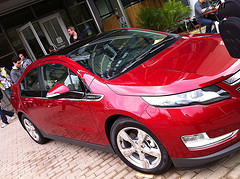
Chevy Volt courtesy Swirlspice

That’s quite a jumpstart for a car that seems to be having some trouble getting into people’s garages. Perhaps the trouble for consumers is the price tag of over $40,000. Perhaps even more important than the premium price tag is the fact that Consumer Reports found a few significant problems with the Volt when they tested it and published their review. In any case it is undisputable that the public has yet to catch on to the benefits of owning a Volt.

Enter GE, stage right. The GE purchase from GM (government motors) is a big deal for all concerned. I wonder why it happened? Maybe GM has given GE real special pricing (like 30 or 40% off) or maybe something else has happened? Is it possible that GM and GE are now secret partners of some kind? Or is GE just somehow dumber than the ordinary consumer spending his own money and reading Consumer Reports. Or is GE’s Immelt perhaps just way smarter than those consumers who resist the $7500 tax incentive, after all GE’s Immelt was recently named Chairman of Mr. Obama’s Economic Advisory Board. From this vantage point at the top of Washington’s business heap, I’m sure Immelt sees information which tells him that the price of oil is going up (but uh oh, on the other hand, what will happen to the economics of this purchase if the price of electricity goes up along with the price of oil)? It’s hard to figure what real economic benefits GE receives for making this nearly $2 Billion purchase and GE isn’t letting us in on Immelt’s thoughts.

Is it possible, though, that the real source of the impetus for this purchase lies in the fact that GM and GE are both closely connected with federal government–otherwise known as the source of all power and largesse in the universe, and that these two behemoths of industry have found this to be a compelling interest they have in common?

Are GE and GM cooperating because they are being operated as subsidiaries of the federal government? Remember GM is still owned to a large extent by the feds. Remember also that GE is real big into green energy technologies. GE is in the business of making wind generators. They also make all sorts of high tech electrical devices as well as the lowly lightbulb and are positioned to rake in vast profits in any federal subsidy or mandate program designed to support the green energy industry. Such mandates and subsidies might even be designed by the government to target products in which GE has the advantage. It is also true, as you may recall NBC, the formerly GE owned network, constantly beat the political (public education) drum for green energy. Are these things just coincidences?
Can this be the interest which both of these giant companies have in common?

Remember Mr. Obama’s “business friendly” statement during his state of the union address:

Clean energy breakthroughs will only translate into clean energy jobs if businesses know there will be a market for what they’re selling.

In Washingtonese this means that if the public is forced or induced to buy GE’s products, this will encourage and profit GE to make those products. In this way the government can create an unlimited market for “inventions” whether the public would willingly buy them with their own money or not. This statement had to be music to the ears of GE and Jeff Imelt, it’s CEO, since you may know that in the last five years the stock price of GE has fallen over 40% and was at one point in 2009 down over 70%. In that regard, it seems that President Obama at his State of the Union addressv was preaching to his choir, Immelt and GE.
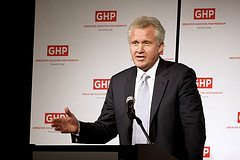
Jeff Immelt, CEO of GE

Even before the President’s speech, but after the 2010 midterm election victory by Republicans, Immelt publicly suggested that he would be willing to use the economic clout of GE to support other companys’ high tech inventions when he said:

Business backing for new technology such as advanced autos is going to be more important as government spending wanes.

What use does a business like GE have for “backing [the] new technology” of other companies for the technology’s own sake? Aren’t corporations like GE in business to make profits for their own shareholders? Can it be true that Immelt and other corporate power players are just adding to their own prestige as deal-makers with stockholders’ money? Or is it possible that their main motivation is to lay the groundwork for important future “public private partnerships” where the government can lay the competition low through it’s regulatory and taxing power?

Whether this is just synergy in business or corporatism Mussolini-style is not unambiguously clear but it does bear close watching. In view of the price tag and the report by Consumer Reports, one should look skeptically at the idea that GE acted because it found the Volt a compellingly efficient piece of equipment rather than because it saw the opportunity to make a deal with the current interventionist administration.

HEAD’S UP IN THE UPCOMING DEBATE OVER FUNDING SOCIAL SECURITY

March 13, 2011

Remember when President Obama, last week, said in a press conference that in the middle of the decade his budget would have us to a point where we would no longer be adding to the deficit? Halleleujah!! Unfortunately, it is indisputable that the Obama budget never once comes close to matching income and outflow. The following is how the President’s new press secretary explained it, and did it without backing down an inch from what the President said:

This is an example of avoiding a plain mathematical truth through application of obfuscation and is just plain tomfoolery. It is true that:

In war, truth is the first casualty. Aeschylus Greek tragic dramatist (525 BC – 456 BC) .

But our politicians, for purposes other than war, have seemed to take this adage and placed it at the service of their intramural debates and elections. This is not a difference of worldviews, a topic often explored by this blog, with it’s attendant differences in context, language and emphasis created by differing worldviews. This is an example of a simple lack of candor. In no one’s world should this be okay. This is not an issue of context, of language or emphasis. It is just not true.

This also gives us a little taste of how we’ll be treated in the upcoming social security debates. An example of this was delivered by a group of Democrat Senators about 30 days ago. These Senators explained that the Republicans are in favor of ‘privatizing’ social security and that social security can pay every dollar of benefits for the next 27 years and that social security is actuarially sound among other important things.

I am unsure whether there have been any post-Bush Republican proposals for “privatizing” social security but I am certain that there is a big problem with calling social security “actuarially sound” and explaining that it has the resources to pay benefits for 27 years without any changes without further explanation. It is a bit like the President’s news conference when he suggested that in 2015 his budget will be balanced and his press secretary had to spin and spin the point until he was dry.

What is the truth? The truth is that in 2011 current social security benefits will exceed current social security taxes. How can it be that social security is “actuarially sound” or able to pay every penny of benefits for the next 27 years without any changes and yet social security has now started to pay out more in benefits than it receives in taxes? Are the Republicans ginning up lies? Are the Democrats now having to courageously put a stop it?

Well, the truth is that the social security system will need to call on non-social security tax revenues in order to pay the difference between current social security benefits and current social security taxes for the foreseeable future. It is a fact that this began in FY 2010. There is no end in sight. Since this is undeniably true, what do the Democrat Senators mean by saying that social security can pay every penny of benefits for the next 27 years? These Senators are only saying that the general tax revenues which are going to have pay the social security benefits will not be used to do so directly, they are saying that something else will happen between cup and lip. What will happen, however, is only on the books of the Social Security Administration. The government’s general revenues will, instead, be used to pay off some of the IOU’s which have been piling up in the SSA for 27 years. The general revenue funds which have redeemed the IOU’s will then be used to pay current social security benefits. In this way there will be two stops for these dollars, not one. The dollars will change status from general revenues to the proceeds from paying off the IOU’s. The net effect will be nothing, zero.

Do you remember the old pragmatic-sounding “pay as you go” Unified government budgets which began in 1983. Under the Unified budget social security taxes were used to pay-as-you-go for non-social security government programs. The surplus between social security outlays and expenditures in those years was used to make the federal budget deficit look smaller or the budget surplus look larger, including during the years of Mr. Clinton’s magic “budget surpluses” of FY 1998, 99 and 2000. See the chart below for a graphic example of what was going on.

For instance, as the chart shows, in FY 2000 approximately $200 billion was added to the trust fund as a result of this social security surplus. The accumulated surplus is what the Democratic Party’s Senators are actually talking about in terms of the “solvency” and “actuarial soundness” of the program. The existence of these IOU’s will not lessen the difficulty and the reality of coming up with the difference between the social security taxes and the social security benefits to pay retirees on an ongoing year to year basis.
This is a fact that everyone needs to know so that when politicians deny that social security amounts to a fiscal problem at the present time, you’ll know that they are trying to tell you something about accounting, not about reality. Because the general tax revenues will first be used to pay off the IOU’s which the SSA has been accumulating in it’s filing cabinets before being used to pay benefits doesn’t make a hill of beans to the painful reality that somebody will have to pay the bill.

Oh and by the way, as to the partisan politics of this. Control of Congress has been split almost evenly during the period since FY 1984 between Democrat and Republican. The presidency a bit more Republican at 16 years to 10. It should also be noted that during the legendary Clinton “budget surpluses” the Congress was Republican. In short, this not a partisan problem (notwithstanding the rather duplicitous grandstanding and fear-mongering by the Democratic Senators featured above) it’s a government problem. The only reason that the Social Security system didn’t collapse in the 1980’s, after nearly 40 years of Congressional control by the Democrats, the party whose Senators are now yoohooing about how the Republicans are all for putting granny out on the street, was because the government used it’s power to raise taxes not because it used it’s head to properly administer the taxes it had to fund the social security entitlement it had created!!!!!!

THE GREAT ECONOMIC WISDOM OF PROGESSIVES

July 18, 2010

This newest Pelosi-ism has moved me to do a bit of examination of the Progessives’ approach to the economy.  This post will show a few prominent Progessives in their own words.  The first quote is from Ms. Pelosi, who you will remember has been Speaker of the House of Representatives of the United States for three and a half years.    

Ms. Pelosi’s conclusions can’t have anything to do with politics trumping sound economic principles, can they?  She concludes that: (1) Republicans are mean guys who lie about the effect of paying some people not to work, and (2) paying money for no work is a good thing for economic recovery because it makes sure the money is spent quickly.  It’s great that this policy has only positive effects, right Ms. Pelosi.  This eliminates even having to think about the possible negative effects, huh?   

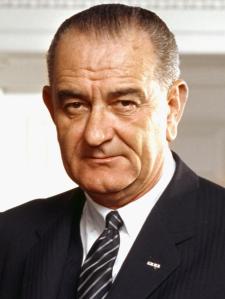
Lyndon Johnson, the father of the Progressive program known as the Great Society, is among the most prominent and powerful progressives ever.  From Larry De Witt’s excellent 2003 essay,”The Medicare Program As The Capstone To The Great Society — Recent Revelations in the Recent White House Tapes,” Johnson is quoted at length admitting that sound economics was not his motivation for acting on many domestic “priorities,” it was just his innate goodness that he was putting into governing.   

Probably the most revealing conversation regarding LBJ’s political values and sentiments as they related to Social Security and Medicare was an extended conversation he had with his Press Secretary, Bill Moyers. In this conversation, recorded on March 10, 1965, Johnson permits himself to reflect almost philosophically on his support for a provision in a pending bill which would provide a retroactive increase in Social Security payments. Moyers is arguing that the President should support the retroactivity clause because it will provide a stimulus to the economy. Johnson supports the provision, but he makes clear to Moyers that he does not see programs like Social Security and Medicare as being about economics.
Johnson: My reason though is not because of the economy. . . . my reason would be the same as I agreed to go $400 million on health. I’ve never seen an anti-trust suit lie against an old-age pensioner for monopoly or concentration of power or closely-held wealth. I’ve never seen it apply it to the average worker. And I’ve never seen one have too much health benefits. So when they come in to me and say we’ve got to have $400 million more so we can take care of some doctors bills, I’m for it on health. I’m pretty much for it on education. I’m for it anywhere it’s practicable. . . . My inclination would be . . . that it ought to retroactive as far back as you can get . . . because none of them ever get enough. That they are entitled to it. That’s an obligation of ours. It’s just like your mother writing you and saying she wants $20, and I’d always sent mine a $100 when she did. I never did it because I thought it was going to be good for the economy of Austin. I always did it because I thought she was entitled to it. And I think that’s a much better reason and a much better cause and I think it can be defended on a hell of a better basis. . . . We do know that it affects the economy. . . . it helps us in that respect. But that’s not the basis to go to the Hill, or the justification. We’ve just got to say that by God you can’t treat grandma this way. She’s entitled to it and we promised it to her.”    

In fact, Johnson explicitly eschews economics in favor of his paternalistic approach to “taking care” of people.  What happens in the long run, who knows so long as the present is taken care of?    

Paul Krugman, a self admitted Progressive as well as an Economic Nobel Laureate and columnist for the NY Times, has recently observed this concerning his assignment of blame for starting the Third Depression:    

So I don’t think this is really about Greece, or indeed about any realistic appreciation of the tradeoffs between deficits and jobs.    

Paul Krugman

It is, instead, the victory of an orthodoxy that has little to do with rational analysis, whose main tenet is that imposing suffering on other people is how you show leadership in tough times.     

And who will pay the price for this triumph of orthodoxy? The answer is, tens of millions of unemployed workers, many of whom will go jobless for years, and some of whom will never work again.    

In other words the ‘not profligate’ among us are hard hearted and unfeeling b_ _ _ _ds who are just interested in elections!  Huh?    

FDR Campaign Button

Then there is this famous quotation from the godfather of all modern Progressives, FDR, addressing the political strength of the Ponzi scheme  known as Social Security:    

We put those pay roll contributions there so as to give the contributors a legal, moral, and political right to collect their pensions and their unemployment benefits. With those taxes in there, no damn politician can ever scrap my social security program. Those taxes aren’t a matter of economics, they’re straight politics.     

This demigod admitted to his unconcern for the future economics of his country in favor of the politics of paternalism.     

And again there is the always economically minded Ms. Pelosi addressing Obamacare as a “jobs” bill.     

Who believes that it is a good thing for this country for people to quit their paying jobs so that they can be cared for by the rest of us.  But in the mind of Madam Speaker this is a great jobs program because the unemployed will be able to fill the now abandoned jobs.  You sly fox!!!  Since it’s such a good jobs program why aren’t we starting it in 2010 instead of 2014?     

Finally, I quote the “Compassionator in Chief,” the “Decider” himself on the indispensible nature of the Medicare Part D drug benefit which has never been paid for, even in theory, other than by increasing the size of the federal deficit.  Having pushed this entitlement through to favor politcally active and powerful senior citizens over everyone else, in his 2004 State of the Union speech George W. Bush proclaims:    

I signed this measure proudly, and any attempt to limit the choices of our seniors, or to take away their prescription drug coverage under Medicare, will meet my veto.    

What economic laws do Progressives hold to as a matter of principle?  None that I can see other than the idea that there really is such a thing as a free lunch.  The economics of supply and demand, the law of unintended consequences be damned, that’s what Progessives believe.  In the Progressive mind electoral politics is the only thing that matters.  Whatever policy will get them through the next election is what they will choose.  Whatever benefits them politically, usually paternalistic and pandering, will win the day even if the problems created in the long run are obvious and huge.  They simply deny the existence of long term economic effects from their politically motivated economic actions.  Progressive politicians, like most of us, are capable of rationalizing away any inconvenient fact of life, such as the fact that you can’t create wealth by dropping borrowed money from helicopters.  In fact, the more intelligent the Progressive, the better they are at rationalizing and sound biting away the inconvenient fact that there is simply no such thing as a free lunch, someone always has to pay.

UPDATE – As of August 11, 2011 this just in:

The White House has now adopted the economic road advocated by Ms. Pelosi. Grow unemployment and you will grow the economy. No kidding, this is what they think. Don’t believe me, here is Jay Carney lecturing a reporter from the Wall Street Journal from the White House podium on the basics of economics:

I guess you really can grow the economy by dropping money from helicopters. Why stop at the unemployed, give everyone free money and we’ll all be better off in the long run. Whoo knew? No wonder we’re in such great shape with these geniuses in charge. Have they ever heard of Bastiat and the effect of the broken window?

Krugman’s Depression!!

June 29, 2010

Paul Krugman

Well, it’s finally happened.  Nobel prize winning economist, Paul Krugman, is throwing in the towel on the current crop of top politicians.  He has called the start of the Third Depression.  The hyper-rational Krugman has concluded that the G8 and G20 leaders are not about trying to save their countries or citizens through a frugal reappraisal of their economies.  Oh no, he judges that Merkel, Harper, et al., are marching to a different drummer and an anti-social one at that:

So I don’t think this is really about Greece, or indeed about any realistic appreciation of the tradeoffs between deficits and jobs. It is, instead, the victory of an orthodoxy that has little to do with rational analysis, whose main tenet is that imposing suffering on other people is how you show leadership in tough times.

Although I am not a genius like Krugman, I believe that Keynesianism’s strength is that it addresses the economy as a dynamic whole.  The idea is that the more money that is moved (spent), the higher the incomes of the people.  Hence, in recessions and depressions Keynes prescribes a policy of forcing money to move. The problem is that when you move borrowed money through the system in a way which does not result in an increase in real wealth, you have wasted the money.  And the taxpayers still have to pay it back.  How much of the money increases real wealth?  I’m thinking that the $700 Billion stimulus bill, put together in a matter of months, probably has a lot more boondoggles than wealth creating projects in it.

It’s like the difference between borrowing $100 to buy a business tool and borrowing the same $100 to eat out.  The former increases your wealth, you are demonstrably better at making money.  The latter only makes you better off to the same extent that a patio grilled hamburger,  which would have fed you just as well, would have made you better off.  If you spent $100 to eat out and you could have served hamburgers on the grill for $10, you’re $100 in debt but only $10 better off.  Surely, the restauranteur and the waiter and the chef are better off but you’re still left in debt from the extravagance.  Keynes assumes that you’ll be better off in the long run when the money goes around.  Perhaps this is so but we’re all still in debt even though we made some money in the coming around going around merry go round. 

It can only be true that the political leaders of the largest economies on earth are sadistic ideologues if they believe that their borrowing money today is without negative economic consequences in the future and still they refuse to do it?  Are we really to believe Krugman cares more about their electorates than they do?  Is this refusal to accept purely rational Keynesianism just another example of populist anti-intellectual backlash ?  Being willing to allow “unnecessary” pain to be visited upon current voters in order to benefit those not yet alive or at least not old enough to vote is without a doubt politically difficult.  After all, it is not a political coincidence that Keynesianism, which minimizes short term pain, is the very ‘ism’ we in the US have been following since Bush and the Democratically controlled congress passed a $152 stimulus in 2007.   Krugman the intellectual simply denies even the possibility that the willingness to accept current pain is simultaneously the patriotic and responsible thing to do.  

Mr. Krugman, is it possible that the G8 and G20 leaders believe in the “new orthodoxy” of frugality because they have lost faith in the long term benefits of following Keynes?  We started with Keynesian policies in the 1930’s so it seems it’s fair to say we’re in the long run now. Keynes didn’t theoretically address the long term outcomes of continuously following his proposals over a long period since he suggested that in the good times which followed the bad ones we’d pay back the debt.  It should also be remembered that Keynes coined the phrase, “In the long run we are all dead.”   What’s happening right now in the Keynes driven economy?  Not much good that I can see other than an increased propensity to save.  The political leaders of much of the rest of the world, personally disdained by Krugman, seem to agree with my assessment of the situation. 

Keynes is Krugman’s intellectual hero.  A rejection of Keynes is in a real sense a rejection of Krugman.  Krugman obviously believes that rejecting Keynes and therefore Krugman is irrational.  The rejection of Krugman may be what he really has in mind when he calls the G8 leaders sadistic.

AN OPEN LETTER ABOUT GOLD

June 10, 2010
Gold US Eagle Coins

John Schoen, a columnist for MSNBC’s personal finance site, writes about gold. gold bugs and gold values in an article titled “Gold Bugs Fly High As Values Soar.”  This article features prominent quotations from an “investment strategist” at Barclay’s Wealth, Michael Crook,  http://www.msnbc.msn.com/id/37490761/ns/business-personal_finance/.  Says Crook: 

As the market realizes that the events that it’s working though are not the end game, the selling from the ETFs creates source of downward momentum that we actually haven’t seen before,” . . . .  Investment demand has become a much a larger source of demand than it used to be. So the question is that a true shift in preference or it is it a bubble? We’re wagering it’s the latter.

As indicated by this quote, Crook and Schoen’s article generally take the view that the current run up in gold is just another bubble not unlike the bubble in the early 1980s when gold rose in price to over $800 per ounce.  If so, this bubble could mimic the tech stock bubble or the oil bubble or even the housing bubble which is still in the process of popping.

I wrote a response to Mr. Schoen.  I would like to share with you the gist of that response.

John:

Do you have any bullion gold yourself?  If not, I would be interested  in an article about why you’ve decided to avoid bullion.  Is it because you see that in the last century the fiat dollar has never collapsed therefore it is not possible that it will collapse?  Do you think it is impossible for the fiat dollar to become worthless or nearly so?  If not impossible, how ‘unlikely’ is it do you think?  If it is merely ‘unlikely’ and not impossible how do you quantify the likelihood of the occurrence of that unlikely eventuality?  Have you read or do you know of Nicholas Taleb’s book, “The Black Swan” which concerns the impact of the highly unlikely event or non-event? 

I consider it unlikely that gold will lose half of its dollar value over the next twelve months but it appears to me that the difference between you and me is that I don’t consider it impossible that this will happen or that it may double again.  If an event such as these were considered impossible by some, I would have to understand why they believed it was impossible before I would believe in its impossibility.  Crook simply opines that markets are discovering that this period is not the “end game.” 

The destruction of gold’s current valuation or the doubling of it is not impossible at the very least because Congress could conceivably pass a law deeming the value of gold at $600 per ounce or there could be rampant deflation when the Bush tax cuts expire in 2011 or the Fed could successfully reduce the size of the money supply when velocity returns to a more normal value and in any of these events and a million more I could think of, gold would lose much of its market value.  Likewise war and hyperinflation might push the value quickly higher. Virtually anything is possible, even the election of an honest government at some point in the future is possible, but that’s another subject. 

It seems to me, however, that holding some gold is a reasonable hedge against a Talebian Black Swan event, hyperinflation, loss of the dollar’s reserve currency status in favor of gold, or world war, whatever.  Not likely events, and events too terrible to contemplate to be sure, but not impossible ones either.  

I should also have included this but I didn’t think of it until later.

No more than 5% of net financial assets held in gold though, is that a good idea John?  For me and apparently for you, diversification is important.  For others, with the US government apparently ready to step in to take care of them in their dotage although they haven’t provided for it themselves, why not?  They could end up mega-rich.   If they win great, if not, it would sort of be like the Wall Streeters who were bailed out by the government too.   

You also cite Congressman Anthony Weiner and his public crusade against gold companies supporting conservative talk show hosts.  Weiner has criticized at least one prominent coin dealer for a “mark up” of either two or three times (208%) the melt value of some gold coins they offered for sale. Does Weiner understand the numismatic value of gold?   There are pennies and a few other coins which I have owned which are worth hundreds of times their base metal value?  Is Weiner simply saying that there are rare coin dealers who are sharks?  Duh!!  Who doesn’t know that?  However, are the people who are buying that type of gold betting on the Talebian Black Swan of government confiscation of non-numismatic gold?  Wouldn’t this action very likely send the price of the remaining gold, the numismatic gold, that much higher?  I just wonder?  Is the public as stupid as the intelligentsia think?  Do we all need to be protected from ourselves and from the evil,  racist Glenn Beck? 

 P.S.  Your point about exchange value is a good one John.  Perhaps some silver coins then as well? 

In the end, who knows what will happen.  The Boy Scout motto should ever be our watchword whether young or old, “Be Prepared.”

Congressman Weiner’s report on Goldline, the offending coin merchant, can be found at http://weiner.house.gov/Reports/GoldlineReport.pdf

IT’S ALL ABOUT INCENTIVES MS. PELOSI

May 29, 2010

       How do you get people to do things which are good for them and good for each other?  One possible plan would be to start with a definition of what is good and then develop the incentives to accomplish that good.  In a world in which people are free to choose, there could even be a deeply human relationship between what is good and the incentives you develop.  Let’s work through it and see . . .

       What is good? Are you one of those seditious folks who think giving people what they want is good?  If you are such a one, how would you go about giving people what they want?  Would you ask them?  This is imperfect since they can lie to try to please the questioner or to please themselves by answering in a way which pleases their view of themselves or their responses may be limited by the questions which the questioner asks because of the questioner’s own idea of what is good.  Of course, you could simply tell them what is good for them and eliminate their choices altogether but that’s another post.  Alternatively you could simply see what they are willing to freely trade for, a very objective and real way of expressing their idea of what is good for them?

       If you think that what people are willing to pay or trade for is the best measure of what is good, then you have a starting point. If this is your idea, then you  would probably create a free market in which people are freely permitted to exchange things of value which they own (payment) for other things which they consider to be of equal or greater value but which they don’t own yet. The desire for things which other people have and which you are willing to trade value for is called demand by some economists and it is at least one measure of what is good.

       Supply, on the other hand, comes about by people seeking to create goods and services which others demand in order to have valuable things to trade for the goods and services created by others to satisfy their own demand. This is what the market is all about, matching buyers and sellers, supply and demand.  In my experience this is the main reason most people go to work in the first place. Their incentive to work is to get something to trade with. Hmmm, it appears that there may even be a relationship here between supply and demand, work and appetite.

       What does the speaker of the house think about this supply and demand idea of what is good?  Says she,

Think of an economy where people could be an artist or a photographer or a writer without worrying about keeping their day job in order to have health insurance.

Don’t believe that she said that, watch her yourself in this clip from the Rachel Maddow show a few months ago.


       Is Madam Speaker nuts?  Certainly she could not have intended to say that.  It must have been garbled to the extent of a Bushism.  Creating artistic entrepreneurs who haven’t been discovered yet, that wouldn’t create real economic growth, would it?  Certainly the speaker’s handlers got to her and made sure that she didn’t say that again, right?  Wrong, here she is last week repeating her prescription for economic growth through stimulating entrepreneurs.

       What happens to people who do not create that which others want to buy? In Pelosiworld they are subsidized to turn out mountains of unwanted but “artistically valuable” books, paintings, sculptures and photos. Seems as if we’re going to have a large supply of artistic goods. Unfortunately, however, there’ll still be about the same amount of demand for valuable things like food, health care, cars, gas, etc. If people aren’t willing to eat and drive less in order to get the artistic good you’re selling, there has been a mis-allocation of resources. There’s been an allocation of resources, human labor, to produce things which are not very valuable to others. The result of this mis-allocation, for instance, may be hunger without the food to satisfy it!!!! Get it, there is a relationship, huh? I know it’s harsh but in a world where people are unable to sell their art, they must get a real job for which people are willing to pay money!!!! At this job they will in turn create things others want and need. Hamburgers, computers, cars, medical care, whatever.

       In Pelosiworld, while creating the goods and services people want, the better producers are going to be taxed extra in order to help pay the medical bills for otherwise starving artistes? Will food end up being a part of their governmentally provided medical treatment? Shelter? Where will it stop? Is this arrangement sensible to anyone? By creating a Pelosiworld we are in a place where people aren’t going to want to do the things which are hard, unpleasant or difficult but which have real value. In Pelosiworld we will subsidize the creation of things which have little or no value (remember Pelosi admits that the artistes don’t even create enough value to afford to pay for their own health insurance). Therefore, things that they might have created and for which there is a real demand will become even scarcer. While there is growth in both taxes on productive and valuable work and subsidies for creating things that are not valuable, guess which of these things Pelosiworld will create more of and which it’ll create less of?

       I’ve got the answer to this conundrum, let’s import more undocumented workers in order to do the work that ‘Americans just won’t do.’  If we do this, however, we’ll have to make sure that the new players never catch on to the game.