As you may recall, I’m a big proponent of dialogue, civil dialogue, between people who disagree. I recently complimented Steven Attewell of the Realignment Project blog as a progressive willing to engage without labeling or demonizing his opposition. My idea that our current politics amounts to nothing more than a clash of tightly held world views underlies much of my thinking and my advocacy of a more civil dialogue.
Today on the Bill Moyers program, Moyers and Company, we were introduced to a bright social psychology scholar named Jon Haidt, Ph.D. of UVA’s Department of Psychology. I am impressed and amazed that Moyers invited him. I am impressed and amazed that Moyers conducted the interview with a general air of civility and without obvious (other than his facial expressions) rancor.*
I’ve got to say that I await Haidt’s book, “The Righteous Mind: Why Good People are Divided by Politics and Religion,” with much anticipation. Anyone who espouses the twin ideas that human beings are are all hypocrites and that the human brain is first and foremost a rationalization generator, has my attention. Moyers almost swallowed his tongue when Haidt said that we should stop idealizing his holy ‘reason.’This interview with Moyers just whetted my appetite for more.
By the way, here’s a link to Haidt’s home page if you care to look into this guy and it appears to contain a link to the Moyers interview.
See Haidt’s homepage at: http://people.virginia.edu/~jdh6n/.
At the end of the interview Haidt expresses some pessimism with our ability to make political changes which would encourage a more civil dialogue. He points to the practical difficulty of changing systemic electoral mechanisms in a world where both parties have incentives for keeping them as is. Nevertheless he pronounces two prescriptions to improve our present political situation which we can individually adopt. First he recommends that we, as a matter of personal morality, refuse to demonize or to impugn the motivations of those who oppose us on policy grounds. Second he suggests that we develop a complete intolerance for political corruption, whether it be on our own side or on an opponent’s side. We need to abandon the idea that, “Sure he’s a scoundrel but he’s our scoundrel.” Who knows but this could even bring an end to the truthfulness of the common Washington quip, “If you want a friend, get a dog.” I couldn’t agree more strongly with Haidt’s proposals. If the book lives up to the promise of the interview, I hope that people across the spectrum of ideas and ideologies will really listen to him and internalize his ideas.
*There was one moment during which Moyers could not keep himself from demonizing Republicans. Haidt was using the recent conflict over raising the debt limit to characterize the difficulty the parties had in reaching a compromise over the debt ceiling. Haidt was explaining that there are certain things which have been “sacrilized” (made sacred) for each of the parties. In posing a question about this situation, Moyers described it in this manner: “So John Boehner and the Republicans find it immoral to compromise and President Obama finds it immoral not to compromise.” This was hardly Haidt’s point, but I think that it was a stark shaft of light illuminating the interior of the Moyers brain.
Comments:Comments Off on Bill Moyers Gives Me Hope
In the last few years the term “American Exceptionalism” has come to the political forefront. As with any other term which moves into the political arena, it takes on the character of a political football. Whoever can define it in the public mind has control of the football. In preparing to run for the presidency Newt Gingrich wrote an entire book about it. In his introduction Mr. Gingrich describes the idea like this:
Belief in American Exceptionalism leads inevitably to smaller, more effective, accountable and limited government. The American Revolutionaries did not shed their blood for the welfare state; nor did they aim to replace the arbitrary rule of King George . . . with their own oppressive bureaucracy. Instead they fought for individual liberty–that made America an exception among all other nations.
But this individual liberty which Next speaks of is not altogether clear since it is likewise a term carrying a lot of political weight. To some people, like the President of the United States, I believe that liberty is merely a synonym for fairness which is the least clear term I can imagine.
As to his own idea of the meaning of American Exceptionalism, the President has said that he, as an American, believes in American Exceptionalism,
. . . just as I suspect that the Brits believe in British exceptionalism, and the Greeks believe in Greek exceptionalism.
A less than clear exposition but clearly not in agreement with Mr. Gingrich’s view, I believe it is fair to say, since it seems to deprecate the very concept of exceptionalism itself.
First, Mr. Gingrich.
Then, President Obama.
I would like to tell you what I think about the source of the American Exceptionalism. I will start where our exceptionalism started, with the founding of the country. Our country was born in a war which was declared by a Continental Congress. A formal body of men elected by their peers from the 13 American colonies. In this elected Continental Congress effectively resided, in the minds of the people, the sovereignty of the American people. This elected congress appointed the officers to serve in its continental army, it declared the independence of itself and its constituent colonies and it appointed ambassadors and other officials to effect its will. It was not an army with a political arm but a civilian political entity with an army. The army, and its commander in chief reported to Congress and was expected to serve Congress. At the conclusion of the war the commander in chief resigned his commission to the Continental Congress and went home to Mount Vernon. This view of the role of civilian versus military power was thus established in the United States But why? Why was it that General Washington effectively bowed to the civilian government of the United States? The underlying thought process on the part of all concerned flowed naturally from the general view in the colonies as to the proper role of governmental power, including military power, in the country and an implicit agreement as to the ends it should serve. The result of these views was a Declaration of Independence which is one of the most elegant documents in all history especially when you understand that it was drafted by a committee and submitted to a vote. It acknowledged, as it must have, both unalienable rights of the people and the ultimate purpose of government itself, which was to secure those rights to the people. It further acknowledged that governments derive their just powers through the consent of this people, in this context — those who are governed. This was from the beginning in the DNA of the country, not because of the words chosen by Jefferson and Franklin and Adams et al, but because of innate characteristics and opinions held by the majority of the American people.
The next step in the creation of our country was the drafting and adoption of the United States Constitution. Every state had input into the drafting of the constitution. After it was drafted and available for all to read and digest, every state had a choice as to whether or not to adopt or reject the constitution. The notes of the convention kept by James Madison show the full range of the debate in the convention. And let me tell you something else about the ratification which you may not know. Each state selected the members for the ratifying conventions of the states. It was not a decision made by the state legislatures, bodies of general jurisdiction, but was made by a group of people selected for the sole purpose of adopting or rejecting the constitution as drafted.
Some states withheld their ratification until they received a promise that a bill of rights protecting individual and institutional rights from national interference would be added to the seven articles which outline and constitute our form of government. Once again, consent, not force, was the basis of the decision of how the country was to be governed and the decision to join the government by each of the states. The oath of office for officers of the government specified that it was the constitution, the form of government, that was to be upheld and protected by those officers. There was no dividing line recognized between the constitution and the nation itself. And since the constitution was the law of the land, which could be read and understood by every one of its citizens, we became a nation ruled by laws and not by men. This constitution and the history behind it became part of the DNA of the country.
The requirement that the consent of the governed was necessary in order to legitimate the government was a third element of the DNA of this country. And the model of government which they chose was a constitutional republic, a style of government providing through that constitution for protection of the rights of people and institutions through the separation of powers, the bill of rights and use of enumerated powers describing the functions to be undertaken by the national government.
This process of adopting a national constitution was a reflection of the character of the American people. The end product, which was adopted by the ratifying conventions of all 13 states, was a roadmap for how the future consent of the governed was to be obtained. Hence the people, those in whom the declaration of independence acknowledged the power to form governments as well as to change or abolish them, rested, created a government like no other for the United States of America through adoption of the constitution and the bill of rights.
What does this all have to do with American Exceptionalism, you may ask?
American Exceptionalism in my opinion, is very much about where the remaining power lies after a part of the power has been ceded to the government. The power which was not ceded to the government by the people continues to lie in the hands of the people themselves. This fact is embodied in the tenth amendment to the constitution, the last of the bill of rights. That is the most important element of the idea of American Exceptionalism. The people have ceded only so much power to the government as is necessary in order to establish peace and the rule of law so as to permit them, the people of the United States, to govern their own affairs as they see fit. This, rather than the idea of government by elected legislators and officers, is the idea behind “self government.” Self government is often misunderstood as the idea of being able to vote into office those who we believe should be there so that they can govern us under the fiction that we are acting through them. This, in my view, is not the main point of self-government. Self-government, correctly understood, is the idea that we citizens, acting within the law and in reliance upon the guidance of our own consciences, retain the right to govern our own individual affairs. We remain the sovereigns or governors of ourselves. This does not mean anarchy, far from it. it means that the people are entitled to pursue what they desire in the context of a free and civil society. Of course, as John Adams observed,
Our Constitution was made only for a moral and religious people. It is wholly inadequate to the government of any other.
As such our churches, the ones which the government was to stay out of pursuant to the terms of the first amendment, have been, to a great extent, the voluntary “re-education camps” required in a free country for it to exist and prosper. This concept of self government, coupled with personal restraint, which I believe flowed from a well-spring deep in the hearts of the American people from the very founding of our country, is the source of the concept underlying the term ‘American Exceptionalism.’
We have often heard lately from former House Speaker Pelosi, Presidential spokesman Jay Carney, and even the Secretary of Agriculture Tom Vilsack, that subsidizing consumption is economically creative and will create economic growth. How can that be you ask, paying people not to work seems inherently unproductive? Dr. Milton Friedman once responded to a questioner who asked a related question concerning taxes; he was asked whether high tax rates don’t force producers to find more and better ways to produce goods and services and isn’t that the value of high tax rates, to “spread the wealth?”
This is what Friedman had to say:
In other words, if you increase consumption without increasing production, the American people are not, in fact, better off. When you pay people who don’t produce things people want to buy at an affordable price, you do not make the country better off. You may indeed make some individuals better off, and in a short run this may even be desirable, but in anything other than the very short run, this is a net negative for the country. Is this not crystal clear?
Comments:Comments Off on Unemployment Compensation and Economic Growth
Posted December 9, 2011 by Michael Chovanec Categories:Politics, Taxes
Remember my last post? It was all about the daylight which has appeared between Buffett and Obama on dividend and capital gains taxes. Buffet clearly thinks that people who already pay ordinary income taxes, as opposed to capital gains taxes, are taxed enough. Buffett’s thought is that people who make money in manipulating financial instruments, thereby paying an income tax rate of 15% on capital gains and dividends, should pay more. Mr. Obama has let the capital gains tax issue gather dust. Perhaps he has overlooked it or perhaps his connected financial backers don’t want that tax boondoggle to go away. Instead, this week, the president gave a speech on the ‘New Nationalism’ in which he once again tries to make us believe that everyone who makes a lot of money doesn’t pay his fair share. He actually suggests that Buffett agrees with him on this. Here is what our President said while attempting to emulate Progressive Party presidential candidate Theodore Roosevelt:
Under President Clinton, the top rate was only about 39 percent. Today, thanks to loopholes and shelters, a quarter of all millionaires now pay lower tax rates than millions of you, millions of middle-class families. Some billionaires have a tax rate as low as 1 percent. One percent.
That is the height of unfairness. It is wrong. (Applause.) It’s wrong that in the United States of America, a teacher or a nurse or a construction worker, maybe earns $50,000 a year, should pay a higher tax rate than somebody raking in $50 million. (Applause.) It’s wrong for Warren Buffett’s secretary to pay a higher tax rate than Warren Buffett. (Applause.) And by the way, Warren Buffett agrees with me. (Laughter.) So do most Americans — Democrats, independents and Republicans. And I know that many of our wealthiest citizens would agree to contribute a little more if it meant reducing the deficit and strengthening the economy that made their success possible.
It’s enough to make a person cringe. The President of the United States seems to be fudging to the favor of his high dollar backers who, like Buffett, make their money in the financial business. I think he should be quiet about fairness until he returns to the issue of capital gains and to the position he forthrightly took in his campaign; that capital gains should be taxed at the same rate as all other income. When you do that, President Obama, come to the rest of the high income citizens, those who make their money in the real economy, and ask them for more. Until then, please just shut up.
Comments:Comments Off on President Obama Does It Again
Sorry about the six weeks of silence. Been busy. First, let me clean up some unfinished business on Warren Buffett and what he thinks about taxing “high earners” much more.
Billionaire Mayor Michael Bloomberg’s media operation has outed Warren Buffett’s real views concerning the need to raise taxes on the wealthy. Do you believe you already know them? Who exactly does he think should pay more in income tax? Have a look for the answer to this question.
Now, have you heard of the Buffet rule? The millionaire surtax? The Occupy Wall Street rule — “Let’s Eat the Rich”? Each of these ideas seems to be supported by the president. First, let’s see about the millionaire surtax idea. The democratic party’s own senate majority leader has proposed a 5.6 surtax on all income above $1,000,000 in order to fund the president’s job program. A permanent tax of this type, of course, would fly directly in the face of Mr. Buffett’s position as stated in the clip above that people who already pay tax at the ordinary income rate should not see their taxes raised. Reid, though, proposed this when he saw that the president’s taxing proposals to fund his so-called jobs bill weren’t going to fly.
How about this Buffett rule? What is that? The Buffett Rule is a rule which would make the tax rates levied upon dividends and capital gains up to the level applicable to ordinary earned incomes. Remember Buffett’s secretary? Yeah, it would actually do what Buffett says he wants. You’ll remember that I blogged about Obama’s hesitance to do this very thing back in April.
Well, this is what Mr. Obama said last month to a CNBC reporter in response to a question as to whether he would support the surtax proposed by the senate majority leader:
So, the approach that the Senate is taking, I’m comfortable with in order to deal with the jobs bill.
We’re still going to need to reform this tax code to make sure that we’re closing loopholes, closing special interest tax breaks, making sure that the very simple principle, what we call the Buffett Rule, which is that millionaires and billionaires aren’t paying lower tax rates than ordinary families, that that’s in place.
This gets really confusing. In April Mr. Obama’s proposed tax plan did not include a return the Reagan Rule of taxing all incomes equally. In fact of the three players, Rep. Ryan, the president and the Debt Commission, it was only the Debt Commission which did that. Now, however, Mr. Obama says something which sounds a lot like he is adopting at least the taxation part of the Commission’s proposal. Is there any indication that he is serious about this? Shouldn’t this be touted by the press as big news? A change in the president’s position vis-a-vis taxes on capital gains and dividends? Why isn’t this big news?
I propose to you that it is not big news precisely because it is just a big fudge (I would have said something else but look at the abuse Joe Wilson got when he said something unkind about the president’s health care bill which apparently is turning out to be a reality). Even the rosy glass wearing news media sees it as a fudge and therefore is just not interested in reporting it as a change in position. Wouldn’t the famously liberal media prefer that taxes on the “paper rich” be raised to at least the level of the “working rich?” All this is confusing if you pay attention to what is being said but watch what is being done on this score when the “super committee” which is tasked with reducing the budget reports in the day before Thanksgiving. That will be action, not words. By the way, isn’t Thanksgiving Wednesday the least important news day of the year. Everyone is traveling or cooking. Can you imagine anyone paying more than just passing attention? Why did they set this day for issuing their report? Washington is such a strange place. And we have a strange president who first rails against the mega-rich both directly and through his OWS surrogates but perversely won’t raise their taxes. He even seems to prefer their company (i.e. Martha’s Vineyard) to the company of his old ChiTown crew.
Bravo Mr. Buffett!! At least you cleared up the ambiguity in your own position. On the other hand, even if the President is ignoring your sage advice on this score apparently you’re still bundling lots of money for him. What do you think that this might be about? I know, I know, I’m may be a bit too cynical about a really nice man like Mr. Buffett.
Let me recommend for the contrast of ideas a blogger who disagrees with me on many, if not most, ideas on political economy. Steve Attewell is a fellow WordPress blogger at the Realignment Project. He has written much more than I have and is a very accomplished
Steve Attewell's Bio Pic
blogger. He is a very bright and articulate Ph.D. student in the history of public policy at UC Santa Barbara. Steve is a progressive by his own definition, a definition which can be found in the archives of his blog. Lest one believe that there is a lack of good faith on the other side of economic and political debates of our time, Steve’s blog shows this to be a demonstrably false notion. People of intellectual integrity, thoughtfulness and good will do exist on all sides of the debate (assuming that he would consider me and others of like mind as having the equivalent qualities) and I am happy to say, Steve is obviously a man possessing them. This is a pre-requisite for fruitful and informative discussion of any issue.
He recently wrote a blog post, ‘Living in the Age of Magical Austerity Thinking.’ He argues that those who believe that austerity is the answer to our current economic problems are incorrect. He can be forgiven if he goes a bit over the top when characterizing his intellectual opponents as those who feel, “. . . solicitude of the have-muches, distaste for redistribution, fear of state capacity, and fear for the rights of the managing classes . . .” since his economic thinking is largely informed by Nobel Laureate Paul Krugman. Krugman’s own ideas go beyond Steve’s tepid castigation, calling austerity adherents and their political representatives the equivalent of sadists. Some of my own ideas concerning austerity can be found here.
I recommend Steve to anyone who reads this blog as a balance to my own ideas. Incidentally, I admit to being McCurious, Steve’s interlocutor in the comments section of his Magical Thinking post. I also appear in the comments section of his post on GM’s ‘recovery’ as being indicative of the success of “Industrial Policy.”
I’ll be on vacay for a couple weeks. This is unfortunate because there is so much to talk about with the President’s jobs bill, the new “minimum tax on millionaires” and the Republican search for a presidential candidate in the air. I particularly look forward to seeing how the millionaire tax does in the Senate where there are so many wealthy paragons among the Democratic majority. Forgive my cynicism for doubting that they will pass this measure even while many of them will give strong lip service to it. They’ll prefer to attack the House, trying to put the “blame” on the Republicans for being shills for the ultra-wealthy. I hope that this is going to be the fight. I would like full hearings in Congress which investigate the underlying question: the real benefits of taxing capital gains at a lower rate than ordinary incomes.
Rep. Paul Ryan Courtesy SpeakerBoehner
I normally like Representative Paul Ryan’s take on things but this morning on the Fox News Sunday public affairs program is an exception. When defending the tax rate differential for capital gains Ryan could only fall back on the saying that, “when you tax something more you get less of it.” Exactly what does that mean in this context? Why doesn’t the same adage apply to all incomes????? Wouldn’t increasing all incomes be good? Why the advantage for capital gains? Let’s have the question of benefitting capital gains in relation to ordinary income put to the test out in the open meeting rooms of capital (pun intended) hill with C-Span covering the full proceedings. Ryan, who I believe has previously described himself as a Ronald Reagan Republican, will need to explain to the viewers why Ronald Reagan’s tax reform pegged the top marginal rate on all incomes, whether capital or ordinary, at 28%. Did that make economic sense then? Why not now? That’s the sort of political fight that I’d like to see.
At least the President is finally being true to his campaign position that taxing capital gains like ordinary incomes is a “matter of fairness.” You may remember my previous posts on the President and Warren Buffett’s view of the appopriate tax rates which should be applied to capital gains and dividend-type income, here, here, here and here. See you in a couple of weeks.
Comments:Comments Off on LAUDING AN INTELLECTUAL OPPONENT
Have a look at this exchange between Rick Santelli and Tom Friedman on CNBC. Santelli is very focused on the fact that social security is a pyramid scheme requiring constantly increasing numbers of participants over time in order to support those who got in the system, the scheme, ahead of them. Such schemes were apparently originated by Charles Ponzi beginning in the early 1900’s. Friedman is focused on the “out of order idea” that a “popular” government program could be associated with a situation otherwise characterized as criminal conduct. The two of them, Friedman and Santelli, then proceed to cross talk for a couple of minutes instead of carefully delineating what they agreed about and what they did not agree about. Have a look. It looks for a moment that Friedman will begin to reach across and agree with Santelli about the pyramid scheme when Rick removes the criminal connotation from contention but that moment passes and they get back in their corners and fight it out.
This is so very instructive as to what happens in America in the 2010’s. These two men, both very smart, are so invested in their own worldviews that they do not seek points of practical and factual agreement, they seek only points of disagreement.
Who was right? A Ponzi scheme, according to the SEC’s government website, has the following characteristics.
What is a Ponzi scheme?
A Ponzi scheme is an investment fraud that involves the payment of purported returns to existing investors from funds contributed by new investors. Ponzi scheme organizers often solicit new investors by promising to invest funds in opportunities claimed to generate high returns with little or no risk. In many Ponzi schemes, the fraudsters focus on attracting new money to make promised payments to earlier-stage investors and to use for personal expenses, instead of engaging in any legitimate investment activity.
Why do Ponzi schemes collapse?
With little or no legitimate earnings, the schemes require a consistent flow of money from new investors to continue. Ponzi schemes tend to collapse when it becomes difficult to recruit new investors or when a large number of investors ask to cash out.
Santelli and Friedman could have agreed on the fact that Social Security requires an ever-growing pool of funds from newer workers over time to pay the mandated benefits of retired workers. This certainly meets at least one of the criteria specified in this government website description. Likewise, as with the Ponzi scheme there is no investment activity which goes on with social security, the money is used to pay people who joined the system earlier. Any money not so used is placed into government IOU’s with very low interest rates which, when they are redeemed, will have to be paid out of other government tax monies. They could have agreed that the available funds must meet the mandated benefits over time and that this can only be achieved, in the context of Social Security, by: 1. Cutting mandated benefits; 2. Quickly increasing the numbers of those paying into the system; or 3. Increasing by some means the per person amount that the newer folks, those still working, are required to pay in. The latter solution was tried and is the one alluded to by Friedman which occurred during the Reagan administration in 1984, the last time social security came close to running out of money to pay mandated benefits. Santelli’s implied criticism of this “solution” is that the 2.4 Trillion dollars in taxes which exceeded the benefits actually paid out between 1984 and 2009 was gobbled up by federal government which spent the money as if it were ordinary tax money and the government left a bunch of IOU’s in the till. In terms of the description of the Ponzi scheme, these funds may legitimately be viewed as having been used for the personal expenses of the scheme promoters, in this case the U.S. government. This fact, Santelli’s argument implies, made the government the equivalent of Charles Ponzi, the criminal, who raked off some of the proceeds from the new “investors” for his own use rather than to pay the early investors. It appears to me that just the label, Ponzi scheme, angered Friedman greatly. No real attempt at rational discussion was made after this charge was leveled by Santelli. Pehaps had Santelli chosen the less judgmental term “pyramid scheme” it would have seemed less offensive to Friedman?
What purpose did this exchange serve other than entertainment for CNBC viewers? Who comes off well? Until we get to the point where we can stop calling each other liars or “idiots” because the other’s worldview is different than our own, we’re not going to get very far in bridging the differences between us. We will remain at drawn daggers over every issue. And that is not good since the existence of a country, this country, which is a multicultural country, must necessarily be based upon reaching some type of a broad based agreement across the generations and the classes and the races and the cultures as to what this country’s government should be about.
They could have agreed on all of the facts. But they chose instead to fight out a war of terminology which predicably degenerated into calling the other a belittling name. The different assumptions which each makes underly this argument. The distinction is whether the government is viewed as a benevolent father figure seeking only the good of its citizens or as a self-interested participant whose actions benefit some of its citizens at the expense of others. There you have it, a concrete example of the clash of worldviews.
Comments:Comments Off on CLASH OF WORLDVIEWS — EXHIBIT 1
Tonight’s the big night. A joint session of Congress and the President will present (at least part of) a plan to create more jobs to reduce the 9.? unemployment rate. Is the air electric with anticipation? Well, uhuh, it’s not, unless you mean about the NFL opener between the last two Super Bowl champs, the Packers and Saints, which will start shortly after the President leaves the speaker’s podium.
What’s happening? It’s just another chance for the President to get on TV and use his teleprompter jiujitsu on his opponents. What will likely transpire is an announcement that there is an exciting list of things which will receive federal money so that “we the people can have jobs.”
Afraid of the moniker that he’s just a big spending liberal, the President will “pay for” at least some of these expenses with “revenue enhancements” paid for by the people who still have a little money left in 2011. The President will seek to tax away any money that might have been “saved” and make sure that it is spent productively, as is always the federal way. Although the Republicans in Congress have already indicated their refusal to go along with this, the motive behind the plan is so that the President can say in his re-election bid that it is the Republican refusal to go along with his brilliant plan that is causing the continuing malaise in the economy. And, he and his surrogates will go on, the Republican refusal is because they love the “rich” so very much and don’t care about the poor unemployed. There will be no discussion about why the plan would have worked or whether there would have been some job losses to offset the job gains if he had gotten his way. It’s the perfect political plan, make it look like you’re trying to do something while making the other guy look like he’s resisting for political purposes, not economic ones. Same old playbook. It worked with the debate over increasing the national debt limit. The Tea Party label is permanently damaged and they got less than a 2% reduction in spending for the fiscal year beginning October 1. He made them pay a pretty high price for that hollow “victory.” Same plan, phase II.
The President, I predict, will not suggest increasing the capital gains or divident taxes on the very wealthy, he will target instead the upper middle class. Tiresome and predictable but it’s worked (politically) before. So why not again?
I know one thing for sure. Mr. Obama doesn’t understand or, perhaps, care about the TANSTAAFL rule. The TANSTAAFL rule provides that there is no such thing as a free lunch, someboy always has to pay. And the only interest group which he feels should not pay in order to build up the economy is the massive and growing government sector.
Coils of USPS Stamps - Courtesy USPS Website
The government does actually produce things but mostly not things that the public would pay for at the prices it charges. It uses either monopolies or taxes to corral the resources to make it run. If we don’t watch out, though, plans like President’s will create an entire country in the image of the U.S. Postal System. And that would be a helluva shame.
Comments:Comments Off on THE PRESIDENT’S JOB-SPEECH
Every good cop in this country should be happy about what happened on August 26, 2011!!! Why? On that day the United States Court of Appeals for the First Circuit (Northeastern U.S.) handed down an opinion strongly protecting the rights of we the people to record the police while they do their jobs in public. In Glik v. The City of Boston, et al., the Court decides that it is already “clearly established” that an individual has a first amendment right to record video of police while on duty in public and a fourth amendment right against being arrested for doing so notwithstanding the Massachusetts wire-tap statute. The Court goes so far as to call this first amendment right “virtually self-evident.” The right identified by the First Circuit is predicated upon Supreme Court precedent that generally the government may not limit the “stock of information” available to the public. This right, the Court holds, extends to members of the public who are not “reporter[s] gathering information about public officials.” It is also important to the Court that the filming was in public, that it was done from a “remove” and that Glik neither spoke to nor molested the officers in any way.
The result in this case is good news for everyone, but especially so for cops given the public display of video recordings of police apparently threatening arrest and prosecution of citizens lawfully exercising their first amendment rights. This decision removes from argument, within the territorial boundaries of the U.S. First Circuit Court of Appeals anyway, the proposition that such recordings are unprotected and subject to state infringement. All police should be happy about this since it sounds the death knell for such reports as this one which place the police in a very bad light indeed.
Law enforcement for centuries has gotten the benefit of the doubt in court. Convictions must be based upon evidence of guilt beyond all reasonable doubt. Many such convictions have been obtained based nearly solely upon police court testimony. This “presumption” is both wise and understandable. It is wise since police are hired to serve the law abiding community and to arrest law breakers thus they are empowered to do on our behalf what we would otherwise have to do for ourselves. It is also understandable because cops, as the representatives of the rest of us, are presumed to have no reason to lie about what they have seen and heard. They are generally perceived by juries as being unbiased truth tellers. Obviously what is true in most communities is not true in all a la O.J. Simpson and downtown Los Angeles.
The proliferation of video recording equipment in society should have been welcome news to the good police officer who expects to be filmed doing his job well and justly. But now, in view of the many videos and even more reports of police attempting to intimidate private citizens into not filming their activities, every thinking head will have a question. When numerous police are captured actually turning their power against those whose only crime is video recording, is it fair to wonder whether they have something to hide? That perception has the potential to make the job of the policing effectively impossible. If the police aren’t given the benefit of the doubt in court, how can our laws ever be enforced. Will a change in perception with the attendant reduction of convictions cause the frustrated police to take enforcement matters into their own hands since they will no longer be able to “trust” the public? That would be truly corrupt. Even if it doesn’t go that far it has the potential of creating a dangerous downward spiral.
Part of the problem is that, like in every profession, there are bad people who are police. There are those who simply relish control and power. They push things up to and over the line when they can. They like the adrenalin rush. And they feel protected in the current system because it’s their word against that of the ordinary citizens and “who you gonna believe?” Of course, a problem will arise when they take the case to court and the prosecution has to say, “who you gonna believe, me or your lying eyes?” The potentially worse problem arises when a significant number of jurors ask themselves what would this policeman be saying if there had been a camera, this could wreck the entire system of prosecutions?
So why are police concerned about video recordings anyway? There are at least three reasons that occur to me. 1. Everybody, even police, can have a bad day and a bad day recorded on video may get very bad for them. 2. They are concerned that being recorded “doing their job” may interfere with their ability to do their jobs in the future by disclosing “police procedures” which are not already generally known; by public dissemination of their identities which will be received by members of the public who they would rather be invisible to; and, 3. The traditional police model of “it’s us against them” forces police in general to protect even the bad apples among them and this can be very difficult when the bad apple in blue has made an appearance on a recorded video acting disgracefully.
Why then would good cops, and the rest of us, be happy with the protection provided by this First Circuit ruling of the right to unobtrusively record video of police in public? Because it takes the police out of the box they which they are in. They can’t just say to themselves, it’s us against them. They will themselves now have to discriminate between good cops and bad cops, because they can no longer afford to protect the bad ones. Harboring and remaining silent about bad police endangers all of them. They no longer have any choice. They will now have to discriminate in their support between those “good cops” having a bad day and those bad cops who can’t be trusted with power and who ought to be shown the door. It forces the police to hold themselves and their “brothers in blue” to a higher standard. They cannot hide from the camera being wielded by someone with first amendment rights. So if they insist on “protecting their own” and they protect the bad among them as well as the good, then they’ll lose the benefit of the doubt. This result is one which, neither they nor we, can afford.
Comments:Comments Off on VIDEO RECORDING OF COPS IS PROTECTED
U.S. vice president, Joe Biden, a practicing Roman Catholic, said something in “prepared remarks” during his China visit on Tuesday which I have difficulty understanding.
“But as I was talking to some of your leaders, you share a similar concern here in China. You have no safety net. Your policy
Biden in China Image Courtesy of Whitehouse.gov
has been one which I fully understand — I’m not second-guessing — of one child per family. The result being that you’re in a position where one wage earner will be taking care of four retired people. Not sustainable. So hopefully we can act in a way on a problem that’s much less severe than yours, and maybe we can learn together from how we can do that.”
Under that country’s “one child policy” the Chinese are restricted to having small families. In urban areas they are permitted a single child. In rural areas they are permitted two, but only if the first is a girl.
The vice president’s office responded to the growing controversy concerning these remarks through its spokewoman, Kendra Barkoff.
The Obama administration strongly opposes all aspects of China’s coercive birth limitation policies, including forced abortion and sterilization. The vice president believes such practices are repugnant.
All of this made me think. Assuming the office of the vice president is correct in saying that he views these practices as repugnant, how could he have been so deaf to the implications when delivering his prepared remarks on this issue?
I think that it is very clear, though he may find forced abortions personally abhorent, that Mr. Biden really more deeply believes that the Chinese Communist government has the legal and rightful power to inflict this policy upon it’s own people. I admit that, on examination of my own conscience, this is also the basic flawed mind-set under which I have been operating.
We need to spend a moment examining the conflict here. This is no small problem, a forced abortion occurs in China, according to a panel of experts, astoundingly every 2.4 seconds. Phillips, M. (2010/06/02), Women forced to abort under China’s one child policy. Washington Times. http://www.washingtontimes.com/news/2010/jun/2/women-forced-abort-under-chinas-one-child-policy/. That amounts to millions per year. Can this be true? If it is true, isn’t this entire controversy really about the inviolability of national sovereignty and the virtually unlimited authority of governments over their own people? Is it also about our government or perhaps any government’s right and, perhaps even, obligation to be values neutral in setting policy? Do ends in this case justify means? Are the ends, a smaller population of humans, an unfettered good thing? If so, what government policies can be tolerated in a civilized world even for the sake of achieving this good? Where is the line which cannot be crossed between governmental authority and personal human reproductive rights? Is it different for different countries? Do the citizens of one country have the obligation to try to effect change in the policies of another country if they violate personal human rights? What is the role of the government of one country vis-a-vis protection of the citizens of another country against the cruel or inhumane use of power by the government against citizens of that other country? Is this a legal issue or a moral issue?
I am thrust back into my youthful self-debates about national sovereignty and when and under what circumstances it should yield to other ideals. What burdens should be borne for those not of our own nation? Should we have forcefully confronted Germany on behalf of defending the Jews before most of those European Jews were murdered? Would that intervention have been legal? Should our government give much more in foreign aid to prevent starvation and poverty around the world? Can we use force against governments which refuse to take this aid on our terms, i.e. giving directly to the people of that nation bypassing the, usually corrupt, government? Or is the obligation to intervene more of an individual moral obligation animated by individual religious faith or other moral conviction? I am reminded of the woeful response we made to genocide in Rawanda. Should we have sent our military to prevent this genocide? How long would they have had to stay? At what cost in lives and treasure? Wouldn’t we be accused of being colonialists? And our military, is it intended to be used only in situations of threats which at least theoretically involve the United States? If not, and if it is seen as a vehicle for righting wrongs, shouldn’t we tell those in uniform that they are signing up for a job which is not solely protecting their country, but to be the world’s policeman? Should we, as a nation, at least embargo trade with China to try to end this repugnant “one-child policy”, as we did in an attempt to end apartheid in South Africa and communism in Cuba? This would obviously cost all of us in terms of the increased prices we would have to pay for things we now take for granted as being cheap or cheaper. The Chinese government would try to get back at us though using the trillion dollars worth of U.S. Treasury bonds that they hold. Is this a risk which is incumbent on the U.S. government to take or should we be left to taking individual steps against this abhorent Chinese policy? If we firmly believe that forced abortion is among the most repugnant and inhumane acts which can be committed regardless of who the perpetrators are, are we obligated to agitate to impose these potential burdens and risks on our fellow U.S. citizens who don’t share our view of morality or of human dignity? After all we are ultimately doing so in order to give women, Chinese women, the right to control their own uteruses. Sort of seems like a strangely reversed Roe v. Wade, doesn’t it? Is it a matter of the dignity of life for which the United States, in my own view, should always stand? But what of the lives of the Tutsi in Rawanda? Were the Tutsi blameless victims? Did we owe them a duty of protection? If so, why did we let them down? And then what of our own country, the right to life and the dignity of the fetus as a potential human person is not exactly respected here either, what of that contradiction? What is the moral difference between having a policy of forced tonsilectomies and a policy of forced abortions? Aren’t they both, under the theory of abortion used in this country, simply forcing women to render a bit of their own tissue?
I know the debate over the right to abortion in this country has scarred me. It has apparently scarred the vice president as well. He has pushed it down inside himself so far that the implications of what he was saying didn’t even occur to him. Bringing this issue of forced abortions in China out of the shadows will lead to an even more emotion laden debate between us and within us. It’s probably not what the vice president had in mind, but it is very a good thing. When we push it down and leave it out of our everyday thoughts and prayers, it just festers inside us. One thing I know is true and this is the point from which I will start, human dignity is human dignity regardless of the sovereign country in which the persons involved reside or of which they are citizens.
Comments:Comments Off on CHINA’S ONE-CHILD POLICY OUT OF THE SHADOWS
This post will begin a series of posts addressing the economic “common knowledge” of the American voter. The American voter has, particularly over the last 70 years, been asked to cast votes which require an education on basic economic matters. The level of education and interest which most voters have on matters of economics is frighteningly low. This leads to a public which can be easily manipulated to their own detriment. People don’t need to be Ph.D.’s in economics in order to vote intelligently but they must have a basic knowledge of how the economy works. They must know two things above and beyond all others. First, all resources are scarce and therefore cannot be put to every use imaginable. Second, never forget the TANSTAAFL rule. [There Ain’t No Such Thing As AFree Lunch, somebody always has to pay.] I will start this series by debunking, with the help of professor Mark Skousen, the profound myth that consumer spending makes up 70% of all spending in the United States in any given year.
The single most ubiquitous macro-economic “fact” known to most people in this country is that consumer spending is the most important element of the U.S. economy because it makes up 70% of all U.S. spending. Armed with this unimpeachable knowledge and intuitively knowing that economic activity is good for everyone, the average U.S. voter embraces the idea that spending money on consumption is an
Average Family Consumption 2008
economic virtue. In keeping with their own personal “common sense,” they embrace the idea that the best macro-economic policies for the government to follow are those which cause consumption to increase. This policy provides both goods and jobs for everybody and let the good times roll!!!! Nancy Pelosi, Chris Matthews and Jay Carney are but a few of those in the media and high government service who have recently articulated this idea in public. Here is Jay Carney ‘schooling’ a Wall Street Journal reporter on this subject:
But what if this “fact” is not actually true but only true because of the way a statistic, the GDP, is calculated? How would this change our preferred policies?
Let’s first deal with the “fact.” Ph.D. economist and professor, Mark Skousen, has made this analysis:
[P]ersonal consumption expenditures represent 70 percent of gross domestic product, but journalists should know from Econ 101 that GDP only measures the value of final output. It deliberately leaves out a big chunk of the economy — intermediate production or goods-in-process at the commodity, manufacturing, and wholesale stages — to avoid double counting. I calculated total spending (sales or receipts) in the economy at all stages to be more than double GDP (using gross business receipts compiled annually by the IRS). By this measure — which I have dubbed gross domestic expenditures, or GDE — consumption represents only about 30 percent of the economy, while business investment (including intermediate output) represents over 50 percent.
Let’s look at the economic statistics. The following graph is courtesy of the San Jose State University Department of Economics website (http://www.applet-magic.com/) which shows the relatively stable amount of consumption spending occurring in the economy during boom times and lean times.
U.S. Consumption 2005-2010
Whoa, that may blow a few minds so let’s see what this means. This means that subsidizing consumption is not actually the most important thing to American pocketbooks. The most important thing in the economic world is facilitating exchanges or trades of all kinds, including investments. This is because each trade leads to increases in the total of perceived value held by Americans because with each trade the parties believe that they have each gotten more than they parted with or the trade would not have occurred.
What public policies does this suggest? First, and most important, it suggests that government should adopt as few policies as possible which create incentive or disincentives for any particular type of economic trade over others. The more decisions and options which the American people themselves have without the government’s factoring into the equation, the more transactions and trades they will engage in overall. Following this prescription will lead, over time, to an increase in absolute number of trades among Americans and by definition an increase in the perceived value which exists in the economy overall. Over time this will allow the energy and creativity of Americans to be used in ways which create for themselves the world they want to see. If they are left to their own devices, they will work harder and longer to achieve their vision, it is human nature. This, in turn, will provide lift to all boats. That is what public policies on economic matters ought to do. But, pursuant to the TANSTAAFL rule, who will pay for this sort of freedom? The government and those who derive their sustenance from the government will pay, because the government will become less and less relevant to the economy and hence will lose some of the resources it now collects for itself. And who thinks this would be a bad thing?
BREAKING NEWS:
Secretary of Agriculture Vilsack was also touting Food Stamps as stimulus this morning on TV. Hey guys, why not just send every man, woman and child a check for a million dollars, on condition that they agree to spend it within one month, and $1.84 million in economic activity will be stimulated? If this transfer payment is such a good boon for the economy because people spend it immediately, let’s not stop with food stamps. Why not???? Man, these guys are so smart.
Comments:Comments Off on THE DANGER OF ECONOMIC “COMMON KNOWLEDGE”
I want to share a thought I’ve had but is not yet fully cooked. I look forward to hearing from you if you have any insights or criticisms.
It is my hypothesis that in the last eight decades and particularly in the last four, the US has actually undertaken policies which have encouraged and subsidized current consumption on the basis that this is “good” for the economy. The corrollary is that saving is bad for the economy. Can this non-intuitive argument hold water?
Check out Chris Matthews spouting the party line and the commonly held belief about the economics of public policy.
In following the preferred economic policies of Chris Matthews and his “well informed” (those who took economics in school) brethren U.S. economic and job growth has been retarded and following this prescription over a number of years has led, albeit not obviously or intentionally, to the current financial meltdown we are experiencing.
First I should define my terms. Wealth means any thing which is valued primarily for it’s capacity to create a future stream of income in a competitive economic environment. Consumption means any thing which is valued primarily for the physical or psychic benefit of the creator or purchaser rather than for it’s capacity to create a future stream of income.
Everything which can be labeled either wealth or consumption is created by the application of human ingenuity or skill to the environment or context in which they live. Consumption is required to continue life. Wealth is built when there is excess over and above what is needed to maintain life and that excess is put to the creation of wealth. In the hunter gatherer societies, wealth may have been created by inventing and building a bow and arrow or a ladder for picking fruit from high branches. Whoever owned these tools could use them to create a stream of income in the future, income in terms of additional food animals and fresh fruits unavailable to other humans. The inventors of these products had to have had a bit of time to work on their ideas which was not absolutely required for subsistence activities. This “extra time” is something which, at it’s basic level, can be seen as savings. The results of these inventions created yet greater savings since it increased the productiveness of the people who used them and made still more time available to invent other things. Wealth (at least by this definition) and savings, in whatever form they may appear, are clearly inextricably intertwined.
As to savings, why do modern people, if they do, spend less than they make? First, they believe in saving for a rainy day. Second, they want to save because they would like to buy something in the future. Third, they desire to be free of having to live on current earnings, i.e. living from hand to mouth, and would prefer more leisure or other consumption in the future, i.e. luxury and/or retirement.
What do modern folks do with that which they don’t spend? First, they put it at interest with a bank. Second, they invest in businesses owned by them or people they know. Third, they invest in financial instruments. Fourth, they put it under a mattress or it’s equivalent, buying gold or government debt.
What do the first three of these have in common. They represent an investment in or purchase of productive capacity which amounts to wealth. Putting money in the bank has this effect because it is loaned out (or is used to support loans) to others who, at least sometimes, purchase productive capacity. The fourth, “putting money under the mattress,” is an attempt to the preserve the value of their savings when there appear to be unacceptable (to them) risks or disincentives in following the other alternatives.
Since the New Deal we have decided to make it government policy to increase consumption which it is my contention amounts to a decrease in wealth building which would have otherwise occurred. It is a trade off. In this undertaking the government decided to subsidize or otherwise advantage consumption over wealth building. This has led to predictable results which we all see.
It is understandable that the Roosevelt administration focused on the problem of deflation because once begun it becomes a sort of self fulfilling prophecy for “negative economic growth.” People wouldn’t spend money today because what they want to buy will be even cheaper tomorrow. This is true of both consumer items and wealth. People were trying to keep what they had because they were afraid of what was going to happen next. They thought it might be impossible to replace what they had. The “sure thing” in the minds of many was that over time their money would be more valuable tomorrow. The longer it went on the more fear there was and consequently the more reticence to spend money. Remember old FDR’s “The only thing we have to fear is fear itself” speech? FDR concluded that a government remedy was needed, as if the government hadn’t begun it in the first place, which would force or subsidize people into spending money. Enhancing consumption was good then, in the 1930’s, and this idea has persisted as the economic gospel for decades.
The first of the permanent government policies begun by the FDR administration was the social security system. In keeping with Matthews’ view and as explained by FDR in the following quote this was but a toe dipping foray into forced spending, to wit:
The Social Security Act offers to all our citizens a workable and working method of meeting urgent present day needs and of forestalling future need. It utilizes the familiar machinery of our Federal-State government to promote the common welfare and the economic stability of our nation.
The Act does not offer anyone, either individually or collectively, an easy life–nor was it ever intended to do so. None of the sums of money paid out to individuals in assistance or in insurance will spell anything approaching abundance. But they will furnish that minimum necessity to keep a foothold; and that is the kind of protection American’s want.
1938 FDR Address on the 3rd Anniversary of the SSA.
Okay, what am I complaining about? What incentives and disincentives did Social Security introduce with encouraging the spending of money? It had several effects on the Rational Economic Actors (REA) among us. First, it factually shifted the economic burden of providing an income to retirees from the retirees themselves to their children, grandchildren and great grandchildren. Second, it removed some of the economic benefit of having and raising children because it required those children etc. to pay a percentage of their incomes to people who had not borne the vast majority of the burden of raising them. Third, it tended to change the perception of children from necessities to secure old age into expensive luxury items provided to the public. Acknowledging this subsidy for the childless, the Rational Economic Actor [REA] tends to have fewer or no children. The REA will also reduce their personal savings during their working years in proportion to what their social security benefits are expected to provide. With this need for savings reduced the tendency of the taxpayer will also tend to more consumption. Furthermore, the government did not invest any of the funds obtained from working Americans in the form of current taxes in creating wealth for the future. If it were an insurance company from which a policy of old age insurance was purchased, the company would have had to invest the “premiums” paid by its customers in order to be able to pay the future claims for benefits. On the other hand, the social security administration received govenment IOU’s for the excess of taxes over expenditures which actually reduced the need for raising other taxes to defray day to day government expenses, hence further enhancing what was available to consume. As opposed to the requirement that an insurance company must save and invest to pay future benefits, the government simply raised taxes in order to defray any shortfall between “premiums” and “benefit claims.” When fewer children are born, as the REA reacts to the government’s subsidy, even more consumption is available to the parent. In short, there is nothing in the effects of this law which increases savings and the creation of wealth although it does reach it’s goal of subsidizing consumption.
The extension of the social security system from a supplemental income system to a rather more full pension system has increased the perverse incentives over time. The, in FDR’s words, “American” desire for a minimalist approach as indicated in the quote above, has morphed over time. None other than Frances Perkins, Secretary of Labor under President Franklin Delano Roosevelt, noted this in 1960.
“When I saw this bill adopted by Congress with a large majority of the votes of both parties and when I saw after a few flurries of opposition in later years, both parties to continue to improve it and to broaden it’s coverage and to make more generous it’s benefits, I have come to realize that not only was it the crowning act of my working life, but that it was perhaps one of the most useful blessings time has brought to the American people.”
As noted by Perkins, over time the social security system benefits were enhanced. In this, it is clearly the way of all government entitlements. They constantly evolve and grow. Their constituency becomes more organized and single issue motivated and their opposition becomes, effectively, politically suicidal. With every new benefit the incentive to save, invest and have children is reduced. Over time payroll taxes to pay the increased benefits are raised but since that tax money is not saved but is spent to pay ongoing government bills there is more consumption.
Then came the great Medicare benefit of Lyndon B. Johnson.
Even as late as 2004 additional benefits were added to Medicare in the form of Part D, a system of drug benefits paid for out of general revenues, i.e. with no new taxes to pay for it. And this was in a Republican Congress with a Republican President. How much clearer can this be? We are buying drugs now and the future tax payers are going to have to pay for them. This increases current consumption but does nothing about paying for it. Can it really be free?
The creation of the Medicare entitlement had the same effect as social security and it was based on the same funding mechanism, payroll taxes. The presence of Medicare emphasized the freedom from the need to save for a rainy day and actually enhanced the consumption effects created by social security and for the same reasons. It reduced the necessity of embracing the gift of children who, if they were raised them right, might pay for our future health care. About this aspect of Medicare President Lyndon Johnson said:
And through this new law, Mr. President [referring to President Truman], every citizen will be able, in his productive years when he is earning, to insure himself against the ravages of illness in his old age.
And in fact President Johnson specifically noted that government requirement would replace the filial bond between the generations, to wit:
No longer will young families see their own incomes, and their own hopes, eaten away simply because they are carrying out their deep moral obligations to their parents, and to their uncles, and their aunts.
Concluded LBJ in a speech in 1966 on the eve of Medicare’s debut:
Medical care will free millions from their miseries. It will signal a deep and lasting change in the American way of life. It will take it’s place beside Social Security and together they will form the twin pillars of protection upon which all our people can safely build their lives and their hope.
He was certainly right that it would forever change the American way of life. Perhaps not in positive ways, but certainly deeply and lasting.
And there is the creation of a trillion or more in underfunded liabilities in state and local public pension systems to say nothing of the federal system. According to Pew Charitable Trust:
All told, states already have set aside about $2 trillion to meet their long-term obligations. But they still need to come up with about $731 billion—a conservative figure that does not include all costs for teachers and local government employees.
How does this idea of underfunded public employee pensions work into my hypothesis? Well it works the same way. A public pension is a promise by a public entity to pay money for current services at some time in the future. When the public entity is not saving and investing enough to make the agreed upon future payment, the public entity is actually consuming more in public services than it can afford to pay for currently. Therefore future tax payers, largely different people, will have to make payments even though the previous and current tax payers have received the benefit of the services provided by the public employees. We have, in this way, enhanced current consumption (in terms of increasing government services) and not set aside enough money to pay the future costs of the retired workers who have provided or are providing those services. In a way, by making an unfunded promise, we have actually found a way of having our cake and eating it too.
Likewise, something which has been discussed extensively on this blog, tax policy has been favorable to current consumption. High wage earners have been taxed at the highest rates for both payroll and income taxes. Hence, the excess which the high income earners would have had available to save and invest was taxed away and made into current consumption by way of government spending. The larger the house which is purchased, the greater tax benefit from the mortgage interest deduction, which is another incentive to consume. The high wage earner sees what is actually nothing but consumption as a way to save on his taxes and buy something which is likely to appreciate in value (up until recently that is). It works the same way for second homes. The second home’s mortgage interest is deductible and hence subsidized by the tax code. It appeared for years to the REA that it was more likely that she would receive a big pay off when she sold her home or second home than if she would have paid the taxes on the mortgage interest and invested the difference in productive assets. This was particularly true when the tax law permitted appreciation on a home, up to $500,000, to be received totally tax free without requiring the money to be reinvested in a new home. Deductions such as the charitable deduction also tends to direct spending towards current consumption (what the charity will do with the money) over long term after tax savings and investment. The only tax benefit which favors savings and investment are the reduced rates for those who receive dividends or create profitable asset sales in the form of a 15% cap on taxes paid on dividends or long term capital gains. But given the rather small amounts left after most people, even high wage earners, have paid their federal taxes, only those who already have a great deal of wealth and savings to invest are the only real beneficiaries of this law. And of course, when such individuals die their estates are generally taxed at large percentages, thus converting savings into consumption. So there are clear limits on the actual benefit to saving and investing of the current capital gains law.
And then there is our preferred manner of keeping us out of “depression” which amounts to no more than borrowing huge amounts of money from future Americans in order to keep the “economy moving now.” As Chairman Bernanke said recently of his latest Quantitative Easing [QE] program (QE just amounts to buying government debt with money freshly off the printing press) and after the government has already issued more than 5 Trillion in public debt in just the last two years:
“By easing conditions in credit and financial markets, these actions encourage spending by households and businesses,” Bernanke said. “A wide range of market indicators suggest that the Federal Reserve’s securities purchases have been effective at easing financial conditions, lending credence to the view that these actions are providing significant support to job creation and economic growth.”
Emphasis added.
There is example after example of the public policies of this country directed at consumer spending at the expense of savings and wealth buidling. This has built a country which is focused on the here and now and completely forgets about the long term effects of anything. Even the idea of a depression is unthinkable. We’ve had a significant number of depressions in this country’s economic history and only one lasted more than a few years. And that depression is called the Great Depression because it was greatly extended by nearly every public policy initiative undertaken in a vain attempt to halt it.
Government has little power to affect the economy as a whole in a way which creates only winners. Our understandable aversion to short term pain has created a governmental policy which has limited our country’s creation of productive assets and wealth in favor of ever more consumption. The focus has been on consumption, Starbucks, luxury housing, second homes, expensive cars, and gadgets for everything has been the result. This means when it comes time to hire people to make and do things, there has been little invested in productive assets which would give them something to make or do. We haven’t applied a large amount of our wealth to create more wealth, we’ve consumed it. It’s been spent. All those luxury houses which have been foreclosed may never be used. Even maintaining and paying the utilities on them may be too much of a strain on our much poorer nation. Jay Carney, White House spokesman, is the poster boy for the idea that debt doesn’t matter, thwarting savings and increasing consumption is the RIGHT THING to do.
In the same way I suppose that riots are the RIGHT THING to do since they create damage which must be repaired. Maybe this explains his thinking on a whole range of destructive and freedom destroying government policies. Hey Jay, there is no such thing as a free lunch, somebody always has to pay.
Last Monday the President of the United States blamed the debt ceiling impasse on the so-called Tea Party Caucus in the House of Representatives. Said Mr. Obama in his nationwide prime time televised address, they can be compared to a scattering of others before them who “held fast to rigid ideologies and who refused to listen to those who disagreed.” Here’s the segment of Mr. Obama’s address from which this quote was taken.
The Tea Party members, for their part, seem to be refusing to go along with a debt limit increase when the quid pro quo is Mr. Obama’s promise that there will be cuts, trust me. The Tea Party apparently asks for promised cuts and also Congressional approval of a balanced budget constitutional amendment which does not become law until it is adopted by 3/4 of the states.
In the view of the President, the rigid ones, the Tea Partyers, won’t be remembered for their ideological stand for less debt or a balanced budget amendment. Instead, according to Mr. Obama, the ones we should and do remember are those, supposedly like him I guess, who “put country above self . . . .” and who “. . . set personal grievances aside for the greater good.” This is nonsensical. The Tea Party has no animosity towards anyone. Most of the Tea Partyers are not even interested in being re-elected if they don’t achieve this goal. They want to balance the books. Plain and simple, their goal is to put this country on track to live within it’s means.
The public is apparently mad at the Tea Party. The public is, according to the polls, clamoring for a “compromise” which I think means simply that they want to go back to life as usual. Stop messing with the credit markets. A plague on both your houses. Stop threatening us with fewer benefits or more taxes. Just stop, stop, stop.
The people calling for compromise now are the same ones as those who called for compromise when Bill Clinton faced down a Republican Congress back in 1995. Clinton faced a Congress which wanted a significant change in the business of government as usual. This Congress, the first Republican Congress in 40 years, passed budgets with significantly lower budget deficits and no tax cuts. President Clinton, however, vetoed several of the budgets they passed and shut down the government before the Congress gave him what he liked. The ones we remember, President Obama says, are those who set aside pride and party to “form a more perfect union.” Mr. Clinton is, however, now widely revered and Mr. Gingrich, the leader of that Congress, is still largely reviled.
If the current situation is a replay of 1995 the Tea Party insurgents are playing the role of the fiscally conservative Republicans who came to Washington to cut the budget that year. The 1995 insurgents were pilloried in the press as being too extreme and in seeking to balance the budget on the backs of the poor. They just wanted to cut too much. Mr. Clinton shut down the government rather than give in to the Republican congress. In 1995 the people called for compromise, they just wanted to be left alone. And they got it and 16 years later we’re much worse off than we were then.
I think that President Clinton beat the 1995 Congress because we the people knew that the Congress was calling for something like austerity. Something like a balanced budget. Something which would change our cushy lives. We the people have reached the same point today only the Congress is divided. And the Tea Party holds a significant power base in only one chamber. We the people, however, want to go back to what we had before. We don’t want to be bothered by budget cuts and other revenue enhancements.
In 2011 when we answer our phones to talk to pollsters we say we want compromise. We act superior and tell them that we just want the politicians to act like adults!!! But we know, in our hearts, that what we really want is just business as usual. We’re happy to shoot the messenger. We wish to eat drink and be merry for tomorrow we may die!!! In the present case, as it was in 1995, the money we are spending will be paid back, after we die, by our children and grandchildren. We don’t want to cut the budget today or over the next eight years or ever for that matter. We avoid this because it will hurt. That is the bottom line. We the People aren’t really weary of the ‘ideological warfare’ between spenders and savers, we just don’t want to cut up the credit card just yet. We erroneously thought that we were willing to cut up the card when we elected fiscally concerned members in November of 1994 as well as in November of 2010. Now, when it comes to the pointy end of the spear or the sharp edge of the budget axe, we really just prefer not to change.
Unfortunately, either a minority like the Tea Party is going to need to hang tough and make us fix this although they’ll be acting in a throroughly undemocratic way. Or alternatively things will change when someone comes from the outside, like the rating agencies, and forces us to change. But we won’t believe that they will do it until they do do it. Until then we will continue to believe that we can be rich by collecting the printed dollar bills dropped from airplanes and helicopters. In fact if gold itself, all of a sudden, became as commonplace as paper, we couldn’t get rich by picking that up off the ground either. We will only stop when we have no ability to fool ourselves and stop looking to others to pay our bills. This, I think, is the meaning of what the rating agencies are telling us. They, the agencies, are just losing confidence in our willingness to be grown ups, and by that I mean somebody willing to cut back on their current expenses in order to pay the debts they incurred for goods and services previously provided. In the end we’ll get what we deserve unless we decide to support this strange ideology which believes that we need to pay our own bills now and stop putting the hard things off.
This is what Rep. Sheila Jackson Lee (D – Tex) says about Republicans who disagree that raising the borrowing limit of the federal government is a good idea no strings attached. To my mind she labels it as outright racism.
Is she in disagreement with Hillary Clinton on the right to debate and disagree with an administration? While it is possibly true that Hillary was overstating her own opinion while stating that we all, as Americans, have a right to disagree with any administration, to wit:
I could use the word hypocritical in relation to Lee’s outburst but as I’ve said in an earlier post, just because a person acts hypocritically does not make her wrong. Unfortunately, other than pointing out the idea that the forces against raising the debt limit have aligned during the term of President Obama as never before, she provides no detail about her reasoning. Therefore, it is hard to assess the correctness of her charge as a matter of fact. Without more we’re left with a charge unsupported by any evidence other than half the race of the current president. I wonder what Rep. West (R -FL) would have to say about the charge of racism in regard to his own vehement opposition to the president’s proposed policy regarding the debt ceiling?
Left in the air is a salient question. Why would people choose to disagree with a president over a budget issue solely in relation to the president’s race? I just can’t see it no matter how hard I try. Perhaps if Rep. Lee provided more background, like Rep. Clyburn did when he went after Sarah Palin in the wake of the Arizona shooting in January, we’d have more to go on. As it is though I am unable to determine whether there is an issue of different worldviews in this matter, as was the case with Clyburn’s charge which I addressed here, or whether this is just an instance of a powerful federal politician harshly speaking out against political opponents. In the last analysis it appears to me that Lee may very well just be in disagreement with Hillary Clinton on a fundamental issue of rights. She may disagree that all Americans have the right to disagree and debate with a black president if the history of their group (a group of nearly all white Republicans) somehow makes them suspect of having done so purely on racial grounds.
In an interesting twist, given her own race, it is theoretically possible that Rep. Lee is agreeing with the president solely on the basis of identity politics and therefore is actually the pot calling the kettle black (relax, this is just a saying not a negative comment on Lee’s or Obama’s race). Without more information it’s hard to know what the truth is on the matter. It is not hard, however, to label Lee’s position, stated as it was on the floor of the House of Representatives, as intolerant!!!! In fact in the future, every time I hear a charge of racism being made without the necessary groundwork having been laid by the person levelling the charge, my response will be an equally impassioned – “your intolerance is showing!!!!” How is that for a progressive comeback?
Eight months ago in “America’s Holy Writ” I responded to an Andrew Romano article published in Newsweek magazine. I actually suggested that Tea Partyers read the Romano article because, to an extent, it’s criticisms were on target.
Timed for release on the Fourth of July, Time Magazine has now unleashed it’s managing editor, Richard Stengel, upon those unworthy few who would defend the ideas originally embodied in the constitution. The title of the piece, “Does It Still Matter” could equally apply to the piece itself.
I’d like to take a moment to reply to Stengel even though I don’t recommend his article as I did Romano’s. Stengel doesn’t even give the Tea Partyers a fair hearing, preferring to caricature most of their ideas rather than trying to argue against them. This is most unfortunate since I had high hopes for an article written by a man characterizing himself as having run “the National Constitution Center in Philadelphia.” This is legitimate background and the article therefore promised to be an even better and more informed read than Romano’s.
Let me first set out a principle which, to me, debunks the entire premise of Stengel’s piece which is never mentioned by Stengel. The US Constitution forms the sole legal basis for the existence of the federal government and the role of that government in our lives. To me, that makes it seem kind of important and not at all irrelevant. But for the existence of the constitution, the exercise by the federal government of any power over the American people or even over the states would be, very simply, illegal. The constitution cannot be irrelevant until either the federal government no longer exists or the constitution is replaced by something else legitimating federal power. Stengel never really admits his true agenda. He assumes without stating that the constitution is merely an ancient symbol which “unites” us rather than a legal instrument from which any and all federal power flows.
Stengel’s very first paragraph telegraphs what he is going to do. He starts by listing a few modern developments of which the drafters could not have been aware and in so doing suggests that the framers of the constitution would be unable to make any sense of these developments under their little ol’ constitution, to wit: World War II, DNA, Sexting, Television, Miniskirts, Collateralized debt obligations, Computers, Antibiotics and Lady Gaga. His first direct assault is on the father of the country, George Washington. Says he, Washington was ignorant of powered flight therefore suggesting that drones over Libya and the use of GPS to aim missiles would raise questions of war and peace which would just be beyond him. Stengel implies that familiarity with old style cannon balls could never have prepared Washington for the knotty issues raised by technology. Without taking a breath he follows the idea of Washington’s dullness with the idea that the framers didn’t know about health insurance or even “germ theory.” His suggestion, Congress’s power to regulate interstate commerce can be used to force each of us to buy health insurance and, although mystified by the product, the use of this power in this way would have pleased the framers. Finally but still only in his first paragraph, Stengel suggests that Thomas Jefferson’s repulsive conduct of owning and sexually using his slaves would certainly invalidate all of his ideas about small government because it (his conduct) would likely have colored Jefferson’s view of the half black Barack Obama as President of the United States. That’s a lot of work for a single paragraph.
In his second paragraph he follows with a sop to the old guys lauding their attempts to protect democratic freedoms (of course he never mentions that these “freedoms” appear nowhere in the original constitution but were adopted later by the first congress as a double-check against misuse of federal power, these freedoms are otherwise known as the Bill of Rights). He then assassinates the characters of the founders for their “slaves as 3/5’s of a person compromise” without even mentioning the reason for that compromise. He continues with an indictment of the constitution for male only suffrage and finally winds up his second paragraph calling them “kind of crazy” to reach a compromise providing that each state, large or small, would have two senators.
Most of you already know this but for those who don’t, the 3/5’s compromise enabled the northern states to limit the representation of the southern ones in the House of Representatives to the number of their white inhabitants plus 3/5’s of their slaves. This was an indelicate compromise to be sure, but it was one which forced the south to accept fewer representatives in return for the north’s grudging agreement to allow the south to keep their slaves. Without this compromise the southern states would simply not have joined the union. A slave owning country or several countries would have remained. As to the idea of women’s suffrage, Stengel doesn’t mention that the franchise was left to the states and was not even addressed in the constititution. Finally Stengel avoids mentioning any of the reasons which underlay the apportionment of the senate at two senators per state. Does he not recall that the senate was the body in which the power of the states themselves was to be protected? Each state had an equal interest in seeing that it’s sovereignty was not impaired by an overly active federal government and therefore equal representation was appropriate. Further, to have apportioned the senate by population would have allowed states with the larger populations a larger voice and hence more of an incentive to take advantage of the smaller states, as such, when passing measures affecting the powers of the states. The role of a elected chamber based upon population was already played by the house of representatives and a second body, like the senate, would have been wholly unnecessary if the interests to be represented in that body were the same as those represented in the house. If the states were not perceived as in need of protection from a potentially intrusive federal govenment there would have been no reason for a second body in the legislature at all, much less one with two senators per state. In his “kind of crazy” remark the former “director” of the “Constitution Center in Philadelphia” indicates that he is unwilling to understand or even give voice to the rather delicately balanced structure of the constitutional government which was needed to address the interests of every group whose consent to be governed by the new federal government was needed.
After taking down the foresight and prudence of the founders Stengel heads out after the Tea Partyers, those who are supposedly fanatical about the wisdom of the founders. He correctly draws the battle lines between the “original intent” group and the “liberal legal scholars” who analyze the text to find the “elasticity” they believe the framers intended. However, after drawing these battle lines, Stengel inexplicably omits any reference to the source of the debate. Adoption of The tenth amendment, one of those ‘bill of rights’ amendments he previously thought so highly of for protecting our civil and political rights, was required as a condition of ratification of the constitution by several of the states. He simply references the existence and general terms of this debate over intent and leaves it at that. In handling the issue this way he creates a rough equivalence between the two contenders. the expansive camp and the restricted camp without addressing the merits. The tenth amendment as passed by the first congress and enacted by the states has much to say about which of the contending parties in the debate has it right because it provides that:
The powers not delegated to the United States by the Constitution, nor prohibited by it to the States, are reserved to the States respectively, or to the people.
The intent behind the enactment of the tenth amendment is actually contained in the Preamble to the Bill of Rights, to wit:
THE Conventions of a number of the States, having at the time of their adopting the Constitution, expressed a desire, in order to prevent misconstruction or abuse of its powers, that further declaratory and restrictive clauses should be added: And as extending the ground of public confidence in the Government, will best ensure the beneficent ends of its institution.
How did this history simply slip his mind, having been director of the “Constitutional Center?” Is it even relevant to him?
Without reference to the tenth amendment or it’s history, Stengel goes through the debates on several of the current issues currently requiring constitutional interpretation, i.e.: the dividing line between the war power of Congress and the power of the President as commander in chief of the military; the effect of the 14th Amendment’s acknowledgement that the debt of the US shall not be questioned on the debate as to whether it is even necessary to raise the debt limit; the question of whether the adoption of Obamacare is a form of regulation of commerce as contemplated by the constitution; and, finally, the question of whether the 14th Amendment’s extension of citizenship by birth in the US which was intended to confer citizenship upon former slaves should equally apply to make citizens of so-called ‘anchor babies.’
Stengel reaches some predictable results given his view of the constitution as a symbol rather than as a legal document to be construed according to the intentions of it’s drafters. Rather than intended to be stretched out of all recognizable form, the original constitution was intended to be subject to amendment as circumstances warranted and the people willed. What seems to irk Stengel and his crowd is, however, how high the bar for amendment was set by the founders. He prefers extensions of federal power by “analyzing” the language of the constitution in order to find the elasticity supposedly placed there by framers, a group still smarting from an oppressive British government which knew few boundaries to its power in the American colonies. His preference for looking at the constitition as a symbol rather than as a legal document subject to amendment is clear when he says:
We can pat ourselves on the back about the past 223 years, but we cannot let the constitution become an obstacle to a future with a sensible health care system, a globalized economy, an evolving sense of civil and political rights
Strangely, however, at the end of the piece Stengel quotes Judge Learned Hand, to wit: “Liberty lies in the hearts of men and women; when it dies there, no constitution, no law, no court can even do much to help it.” Is Stengel suggesting by use of this quote that the desire for liberty has died in the American breast? For myself, I prefer the words of a related thought expressed by Thomas Jefferson in a letter to Sam Kercheval in 1816:
Where then is our republicanism to be found? Not in our constitution certainly, but merely in the spirit of our people. That would oblige even a despot to govern us republicanly. Owing to this spirit, and to nothing in the form of our constitution, all things have gone well. But this fact, so triumphantly misquoted by the enemies of reformation, is not the fruit of our constitution, but has prevailed in spite of it. Our functionaries have done well, because generally honest men. If any were not so, they feared to show it.
I agree with Thomas Jefferson in the sentiment stated. Unlike Stengel and apparently Hand, I don’t feel that yearning for freedom is dead in America. In fact, I believe that it is this yearning for liberty from the government’s intrusion in our daily lives which has given birth to the Tea Party. The Tea Party was not born out of a nostalgia for a dusty old document or for men who wore wigs or for those who held other men as slaves. The Tea Party embodies the voice of those people who stongly desire to govern their own affairs without either help from or control by the federal government and who are willing to engage in political battle in order to achieve that end.
Comments:Comments Off on TIME MAGAZINE – JULY 4, 2011: Does It Still Matter?
As I write this the Debt Ceiling talks are on life support. The president has become involved in order to revive the talks. Although the nominal focus of the talks is upon raising the borrowing limit, the nuts and bolts actually concern budgetary reform.
A few days ago Republican talk participants withdrew. The withdrawal was apparently caused by the insistence of Democratic members on raising taxes. The president met with congressional leaders from both sides. At his press conference Wednesday he chastised the Republicans for being unwilling to raise taxes on some, including jet owners, in order to pay for things like student loans and other high priority federal government programs.
June 29 Press Conference (Courtesy WhiteHouse.gov)
Just before the 2008 Democratic landslide election it was Fox News’ resident liberal, Juan Williams, who said, and I paraphrase, if the Democrats win this election in the numbers it appears that they will (and they did) there is one thing that won’t matter — the deficit. How prescient was Williams? The question is, though, do the deficit and the federal debt really matter?
To answer this question you must first understand what a dollar is. We all know that a dollar is a unit of value. It is the unit which we use to facilitate our economy. How does this work in practice? It is only paper after all. It works because on every dollar bill there is the legend, “This note is legal tender for all debts, public and private.” In that phrase is the value. By federal law you use the dollar as the means of paying your debts. But what if the transaction doesn’t involve dollars at all, though, what is the role of the dollar then? How is the dollar involved?
Let me give you an example, what if you and I agree to trade my Kawasaki dirt bike for your 1994 Ford Thunderbird. After the transaction, under IRS rules, the the party which received the vehicle with the greater market value in dollars must report that as a gain on his Form 1040 and pay income taxes denominated in dollars on the gain. But let’s suppose that one of us backs out of the exchange, what happens then? The one wishing to perform takes the other one to court. In the typical court proceeding the judge will not order the physical exchange to occur but will issue an order that the party refusing to perform must pay the performing party the difference in market value between the two vehicles plus, in many instances, attorneys fees, all of which are reckoned in dollars. Hence, even in situations not involving dollars per se, the dollar is ever present.
What then backs our dollars? Where do they come from? Is it just a big secret or a fiction we all agree on or does it really have something to do with the real world?
FDIC "Teller Sign"
Our dollars, at least the greater part of them which are in banks, are backed by the full faith and credit of the USA through a federal agency called the FDIC. FDIC provides deposit insurance to bank depositors. This insurance says that if the bank goes bust that the vast majority of dollar deposits will be made good by the federal government. If the bank doesn’t have the money then the FDIC will stand good for their debt to you which is represented by your deposit in the bank (up to $250,000 per depositor).
Where does the FDIC get it’s money? It gets the money first from premium payments by banks and when reserves from those premium revenues fall short the FDIC can draw on the borrowing power of the USA and if the borrowing power of the USA falls short the Federal Reserve Bank will simply print the money (although the Fed will receive a federal bond in the amount of the cash created like it did during QE and QE2) and the FDIC will in turn give it to the disappointed depositors. Problem solved?
As our president is finding out, however, the ability to print bonds and dollars does not mean that you have unlimited wealth. You cannot print them at will and in any amounts you wish without consequence. The government may have access to dollars (through an increase in the national debt limit which is simply the ability to print more bonds) but the actual value is not in the ability to print bonds and inject the dollars into the system. That process is clearly limited only by the availability of paper and ink. The real value of the dollar relies in a very real sense on the resolve and dependableness of the USA to make the hard choice of choosing to pay it’s creditors first out of it’s income and consume only what is left. A reputation for dependability in seeing that creditors are paid is what gives the dollar it’s value.
In seeking to raise the debt limit the government is not showing the world we are as dependable as we have always been. We are not seeking to pay our creditors out of our income. We seek to borrow some more in order to pay our creditors back. In seeking to raise the debt limit today the government is really just putting off the day when the dependability of the USA will really be tested. And ideally for this government, that ultimate test will happen only after the current crop of debt-increasing politicians has left office. Now, after a bit, we get to the real point of this post.
How is it possible that passing a resolution to create more federal debt, basically just printing more greenbacks, indicates that the US is a dependable nation? It simply doesn’t. It shows nothing but a devil may care attitude towards being dependable and hence towards the value of the dollar itself.
Well then, how is it that the US can show that it is a dependable nation? How do we demonstrate that the value of the dollar should be relied upon now and in the future because it is backed by our full faith and credit? We must do something which is hard. We must show that we can endure the pain of taking responsbility for the debt. We must make what the president calls the “hard choices.”
Showing dependability cannot be achieved to any great extent by extending the depreciation schedules for jet plane owners, or by “making the tax code more progressive” or by taking itemized deductions away from all those who make $250,000 or more. Raising taxes, while possibly being helpful in reducing the debt, will actually be counterproductive to the idea that the majority of people in this country have the resolve to do something hard. It will demonstrate that a majority are not interested in giving but are interested only in taking!!!!
That the top 10 per cent of income earners in the US already pay around 70% of all US personal income taxes is well known. What is not so well known is that a trememdous part of the US government’s budget is made up of “transfer payments.” Transfer payments are payments which are made without the government getting anything valuable (except a vote I guess) in return. Federal transfer payments make up these percentages of the total federal budget: 20% in social security payments; 21 % in medicare, medicaid and CHIP payments; and, 14% in safety net programs.
If we do not show a willingness to fundamentally change ourselves by rejecting the idea that the federal budget should predominately be a vehicle for transfer payments, we will simply not show that we are willing to accept hard choices. We will give evidence that we are a people who want someone else to pay our bills and are not, therefore, very dependable at all except in our wants. We will show that we are willing to raise the taxes of a few in order to pay the bills of the many. Perhaps raising taxes, an outcome apparently desired by the president, will help balance the books in the short run however it will do nothing about the long run problem of a country which is interested in living at the expense of someone else. Unless we show that we, as a people, reject the belief that our federal government is mainly a vehicle for transfer payments, we will prove that our full faith and credit is just not worth very much and the dollar will eventually be valued accordingly.
A cynic might say, ‘what other decision would one expect from a form of government which has no effective protection for the property right of the minority in their own income?’ This nation has been exceptional so far and I fervently hope that it will remain so by debunking this voice of the cynic. In fact our country must debunk the cynic or risk allowing the entire idea of self-government to perish along with the value of the dollar.
Why is it so difficult to find good leadership for those who seek less federal government intervention in and control of our lives?
”]
I think that this difficulty is at least partly due to the mind-set of people who adhere to the viewpoint that America would be a better place with a reduced intervention by all facets of the federal government. Such a person firmly believes in both the efficacy and the primacy of individual action over collective action. Therefore, such a person is motivated by his or her personal wish to be free to engage in those acts they deem worthy and efficacious for themselves as well as for the discharge of their responsibilities to the rest of mankind. They prefer to take responsibility to do things and do not want “government” either to preempt their action or siphon away the resources which they could use to accomplish their own view of the bettement of things. They want to be left alone to act personally and responsibly. They look at governmental intervention and its implied threat of force as disrespectful of the individual rights and abilities of both themselves and their neighbors. They do not seek governmental power to compel actions by other people. They would choose to use that power in very limited and constrained areas of life. What would motivate a believer in such philosophy to seek to enter high government office in the first place?
The very difficulty posed by this question is the fundamental flaw with finding leadership from among those claiming to be adherents to this philosophy. No one who prefers individual action to collective action sees their calling in seeking high office in order to use governmental coercion to achieve their vision. By definition they prefer personal action. Indeed they are suspicious of collective action which can only come into being through the coercive powers of government.
For the reason that a true adherent to this philosophy would seek nothing or nearly nothing from being in charge of the Federal government, only a sense of self-sacrifice is capable of motivating such a person, a believer in the primacy of individual action, to undertake leadership of the federal government’s power. George Washington was such a man and probably the only one in the history of the republic. He showed the spirit of sacrifice in his willingness to serve as the first President. The first few sentences of the First Inaugural Address clearly indicate his preference for individual action and his willingness to sacrifice personally for the benefit of his country as well as his profound humility given the task at hand:
Fellow-Citizens of the Senate and of the House of Representatives:
AMONG the vicissitudes incident to life no event could have filled me with greater anxieties than that of which the notification was transmitted by your order, and received on the 14th day of the present month. On the one hand, I was summoned by my country, whose voice I can never hear but with veneration and love, from a retreat which I had chosen with the fondest predilection, and, in my flattering hopes, with an immutable decision, as the asylum of my declining years—a retreat which was rendered every day more necessary as well as more dear to me by the addition of habit to inclination, and of frequent interruptions in my health to the gradual waste committed on it by time. On the other hand, the magnitude and difficulty of the trust to which the voice of my country called me, being sufficient to awaken in the wisest and most experienced of her citizens a distrustful scrutiny into his qualifications, could not but overwhelm with despondence one who (inheriting inferior endowments from nature and unpracticed in the duties of civil administration) ought to be peculiarly conscious of his own deficiencies.
Washington himself, a person who had risked everything to obtain independence for his country and liberty for it’s people, clearly felt himself inadequate to the office of first President of the United States. When approached he wanted nothing more than to be left alone to pursue his own private affairs at Mount Vernon. Nevertheless his heeded the call of his country and agreed to serve it once again. Upon leaving office he significantly remarked to his successor, John Adams, “[y]ou are fairly in and I am fairly out, let’s see which one of us will be happiest.”
How different the idea of “government service” has now become. The loftiness of the idea of sacrifice which was Washington’s idea has now been replaced by the idea, famously expressed by the Washington Post’s late columnist, David Broder, that ‘anyone willing to do what it takes to run for the presidency is automatically unfit for the highest office in the land.’ The idea of sacrifice has grown passe and in it’s place, at least according to the venerable and experienced Broder, has arisen the idea of a willingness to be debased in order to achieve presidential power. What would lead a person to debase themselves in this way in order to achieve something which requires, according to Washington, a separation from that which is personally most pleasing, minding to one’s own business? This drive, given the necessity of being debased, is fueled by human pride. This pridefulness is the belief that they are capable of doing great things if only given the reins of presidential power. The power to force others to submit to their will. For instance, President Obama expressed his own ideas about presidential power unabashedly:
This is why finding good and worthy leadership for the “less is more” crowd is so difficult. Lord Acton observed that:
Liberty and good government do not exclude each other; . . . there are excellent reasons why they should go together. Liberty is not a means to a higher political end. It is itself the highest political end.
He did not, however, explain how to find people to lead a government which values the individual action perpetuated by liberty over the type of collective action perpetuated by the coercion. Such people are the ones to whom the use of power against people who have not harmed them is distasteful even when necessary. This is especially so when the price to be paid for seeking presidential power is personal debasement and that goal, the power, is not sought after for it’s own use but only in order to deny it’s use to another for his time in office.
Given these circumstances it is not surprising that the selection of a candidate must be done with one’s nose held tightly shut and is among a group of politicians who are, because the nature of politics, only partly of the same a mind.
Comments:Comments Off on THE TEA PARTY AND POLITICAL LEADERSHIP
On Monday super-lawyer Alan Dershowitz had something to say about hypocrisy which I believe rings, at least to some extent, true and is worth listening to by all men and women of goodwill.
Is Dershowitz right? Certainly none of us is pure? May only the pure criticize impurity? How about Cindy Sheehan or Jesse Jackson or Al Sharpton or Franklin Graham or even Pope Benedict? Do any of them claim to be pure?
Jesus Christ himself held up a mirror to the Pharisees, the zealous lawyers of Jewish law, who were ready to criticize him for healing a man on the sabbath in violation the Jewish law barring work on that day. He pointed out to them that they would exempt themselves from this law in times of necessity. His example, their own ox would be pulled out of a ditch if it happened to find itself there on the sabbath. Luke 14: 1-5.
Like the biblical pharisees we are all too ready to accuse our philosophical opponents of “hypocrisy” as if to do so invalidates their arguments as opposed to merely making them human. It is oh so easy to do. Some examples:
Ardent anti-gun advocate Rosie O’Donnell hired armed bodyguards to protect her children. Newt Gingrich pursued President Clinton for perjuring himself about infidelity when Gingrich was himself then actively an adulterer. Barack Obama criticized the Bush administration for unconstitutionally using military power in situations not directly impacting the security of the U.S. and when in power did the very same thing. Sarah Palin strongly defended traditional values while her daughter was bearing a child out of wedlock. Sen. Claire McCaskill strenuously argued for taxing the rich and corporations while her own companies were illegally evading the payment of taxes. Nancy Pelosi, a Roman Catholic, zealously supporting abortion rights for women. Joe Biden advocates for more governmental help to the poor and downtrodden while giving very little of his own income to help the very same poor. Al Gore flies in wasteful and polluting private jets to attend various “global warming” conferences around the world. Michael Moore earns millions of dollars utilizing a system he says is corrupt.
There are innumerable examples of hypocrisy in our political and public classes. Likewise it is rampant in our personal lives and those of our friends and acquaintances. Hypocrisy is the natural state of man. Man, however, has unlimited power to rationalize his own actions to himself. Those who avoid all appearance of hypocrisy are either very good at concealing themselves or perfect. And the latter state is not really an option.
A person can believe strongly in a particular idea of what is right and yet, when confronted with personal circumstances, act in a manner inconsistent with his or her own beliefs. Does this mean that they are wrong in advocating for their particular ideas or does it mean that they are humans trying to do the best that they can? Does acting inconsistent with a principle you hold dear mean that the principle is somehow less true or even false?
It would be too long and arduous a process to analyze even the few examples I detailed above to attempt to determine whether the apparent inconsistencies in the actions of those individuals indicate either: (1) that they do not believe in the principles which they advocate for and advocate them only for political or other expendiency; or (2) that they admit their inconsistency as a human failing and seek forgiveness for their transgressions of the principles which they espouse. Why should hypocrisy, being universal, even be important in our politics? Isn’t it more important to analyze the espoused principles themselves to see if they are well grounded in good policy than to try to determine whether the person who voices principles lives up to the dictates of his or her own conscience 24/7?
We must leave room for honest mistakes and even human weakness rather than always assigning to such behavior the labels of hypocrisy, lying, duplicity and political gamesmanship. For instance, does the commission of a murder indicate that the murderer does not believe that murder is wrong? Does a violation of the speed limit by a person mean that the speeder really thinks all speed limits should be removed? Why do we apparently presume that violation of a given principle by a person necessarily means that, for that person, it is always okay to ignore that principle and hence he or she doesn’t really believe in it? Is perfection the test for voicing your opinion in public?
It appears to me that we pay way too much deference to the news media’s and pundit’s constant harping on charges of the “hypocrisy” of politicians and ideological opponents when what we should be doing is analyzing the merit or lack of merit of the the principle being espoused by judging the arguments for and against it. We prefer, however, to personify these principles in order to justify our own transgressions. If there are no valid standards, there is no bad behavior. We personify these issues because the very imperfections of those advocating high standards exempts us, in our own minds, from striving to achieve those standards in our lives. Judging ourselves against those who espouse high standards yields us a better score than judging ourselves against the standards themselves. Removing all standards upon the justification that nobody’s perfect, however, will inevitably yield rather a bad harvest.
The Treasury Secretary and other government officials began a full court press in January in order to get the Congress to raise the debt limit on the US national debt. As you know, without counting social security IOU’s, the debt stands now at $14.3 Billion. The interesting argument Obama operatives are using is that increasing the debt limit will somehow show that we are serious about paying our debts. With their adult and serious faces on Obama’s entourage says that passing a “clean” debt increase will assure our creditors that they will be paid. Apparently our creditors will be satisfied even though they are being paid mostly with money manufactured out of thin air by the Fed through its QE2 program. What does this mean for finding real lenders after QE2 is over? Here is what White House Chief economic advisor, Austan Goolsbee, said on ABC in January:
The pressure has continued to mount on the so-called Tea Party Freshmen in the House to raise the debt ceiling without any quid pro quo process to constrain out of control spending. Supposedly, according to the pundits and Obama accolytes, issues of spending are better left to the political process of passing a budget. Of course this wasn’t so easy for FY 2011’s budget which the Democrats, even with overwhelming majorities in both houses in 2010, failed to do.
Does this strike anyone else as ironic or even extremely ironic? Is it not at least a bit incongruous that the administration which ramped up spending to astronomical levels and which lost a mid-term election at least in part because of fiscal issues, is now pointing at the Tea Party Freshmen as lacking concern for the country, now defined as a seriousness about honoring our debt obligations. That the administration has gone out in full campaign mode to advocate a policy of nearly unlimited borrowing in order to “calm” the markets about our debtworthiness also seems a little ironic to me. Remember the old but tried wisdom of George Washington when addressing the issue of debt repayment: “To contract new debts is not the way to pay old ones.” – Letter to James Welch, April 7, 1799. I suppose times and financial fashions have changed in two centuries.
Exactly who is more interested in paying this money back with something of value? Is it the Tea Party Freshmen who came to office on the idea that they would rein in out of control federal government spending? Or is it the administration which is poised to borrow yet another $1.7 or so over the next 12 months? Who will bondholders believe has their best interests in mind even if there is an interruption in the operation of the printing press? Is it administration which is looking to “borrow” the principal and interest from the Fed to pay the maturing debt along with much more to “invest” in domestic priorities or is it those people looking to try to keep the government’s spending within it’s means? Think of yourself as a bank, to which of these two would you rather loan money?
The Administration has tried to frame this debate in political rather than in economic terms. They know that if they can successfully make the Republicans look like politicians seeking a political victory, particularly at the country’s expense, rather than as deficit hawks looking after the public treasury, that they may be able to avoid having to make substantial cuts to the FY 2012 budget. This will provide them a political victory because it will demoralize Tea Party types since their substantial victories in the fall will have counted for little. The Democrats hope the Partiers will either stay home or vote third parties in 2012.
Furthermore, the Democrats are setting up a scenario that even if the Republicans take this issue to the limit and are actually successful in making big inroads in spending but the economy heads into a double dip either because of this or for any other reason before the election, it is the Democrats who will win politically in 2012 and the president will very likely be re-elected with a mandate to spend even more borrowed money to avoid further economic catastrophes. It is quite the political gambit and it looks to me like it may work. Strangely the adminstration in power will be in a position where they can argue that the deficit hawks caused the problem and the problem wouldn’t have happened if the government had “stayed the course” of continued high deficit spending. As a member of the chorus, Treasury Secretary Geithner said in a recent warning to the Republicans concerning using the debt limit vote to force constraint on spending:
(Lawmakers) will say there’s leverage in it, we can advance it. But that would be deeply irresponsible and they will own the risk.
It won’t happen in the end, but if they take it too close to the edge, they will own responsibility for that miscalculation.
”
Clearly Geithner is saying that Republican lawmakers are intentionally running the risk of economic catastrophe to even take the issue to the brink in order to force spending cuts because they supposedly “. . . understand that you can’t take any risk the world starts to think the United States won’t meet its obligations.”
“There’s no conceivable way that this city, this government can court that basic risk,” Geithner said.
Obama’s argument is: don’t worry about the soaring debt, what you really need to worry about is the possibility that somebody will put a stop to large scale deficit spending upon which our “prosperity” strangely depends. Here is the vice president making the case explicitly:
This is a “Catch 22.” If we keep borrowing to pay for failed ‘stimulus’ we go bankrupt. And according to Biden, if we don’t keep borrowing and spending like crazy, we go bankrupt. The irony is that we go bankrupt either way. For my part I’d rather go bankrupt from being pennywise than pound foolish. I’d rather do with less now and set the stage for future prosperity than leave a growth-defeating debt for future generations to cope with. I hope it’s not just me who feels this way.
Posted April 14, 2011 by Michael Chovanec Categories:Politics, Taxes
I define the upper middle class as those people who have high incomes but who, if they stopped work, would have to substantially reduce their lifestyles. They may have capital gains and dividend income as well, but the bulk of their income comes as a result of their own work and effort. This is the basis on which I distinguish between the upper middle class and the truly wealthy. ”] The truly wealthy, as opposed to the upper middle class, have high incomes but need not work whatsoever to earn them. Their lifestyles are simply not dependent on their own efforts. President Obama sees the distinction between the upper middle class and the truly wealthy but for some inexplicable reason singles out the upper middle class for the harshest treatment in his “austerity budget” priorities. The new Obama plan gores the devil out of the upper middle class while doing little to affect the lifestyles of the truly wealthy. Both the Ryan and the Simpson-Bowles Deficit Commission priorities do substantially less to single out the upper middle class for special tax “punishment.”
Derek Thompson, of the Atlantic, has posted a comparison of the three deficit reduction plans on the table. Thompson compares the highlights of the taxing policies of the three plans, Congressman Ryan’s, President Obama’s and the Simpson-Bowles Deficit Reduction Commission’s. This is what Thompson says about the three:
Tax Reform
White House: Let Bush tax cuts expire for “the wealthy.” Limit itemized deductions for the wealthiest 2% of Americans to reduce the deficit by $320 billion over ten years. Convene a panel on tax reform. (Another part of the speech calls for “tax reform to cut about $1 trillion in spending from the tax code,” that is $1 trillion in tax expenditure cuts.)
Paul Ryan: Extend the Bush tax cuts and enact tax reform. Repeal $800 billion in tax increases imposed by Affordable Care Act simpler, less burdensome tax code for households and small businesses. Consolidate and lowers tax rates for individuals so that the top rate comes down from 35 to 25 percent and pay for it by sweeping out deductions and exemptions. Lower corporate tax rate from 35 percent to 25 percent and pay for it by sweeping out tax expenditures.
Deficit Commission: Enact comprehensive tax reform. Consolidate and lower individual income rates to 12%, 22%, and 28%. Eliminate most tax expenditures that don’t protect the low-income. Tax capital gains and dividends as normal income. Lower corporate income rate to 28%, eliminate most deductions, and move to a territorial tax system, which would not tax profits made by U.S. multinationals overseas.
As you can see, of the three only the Deficit Commission’s plan returns the taxes on Capital Gains to the Reagan era status of treating them like earned incomes. As such the plan proposed by the least politically potent of the three, the Deficit Commission, would actually get at the wealthy by having them pay their income taxes as if they earned those incomes by their own blood, sweat and tears instead of through dividends and capital gains. Remember what candidate Obama once said about this issue and “fairness”:
Apparently the President has changed his mind since his election as to what is fair. He chooses in his own plan to maintain the current gross tax rate advantage for the truly wealthy vis-a-vis the upper middle class. Even stranger, by both raising the tax rate on those in the upper two percent of income earners and eliminating many, if not all, of the itemized tax deductions, the President has singled out the upper middle class to pay much more in tax, not the truly wealthy like his friend Warren Buffet. This is because, other than the charitable contribution deduction, few of the truly wealthy claim the benefit of the other itemized tax deductions. The truly wealthy are likely to own their own homes outright so the deductibility of mortgage interest is of no concern. In addition to the increased tax effect, removing the mortgage interest deduction will actually cause the expensive homes of the upper middle class to lose market value since prospective buyers will be even less interested in owning them. Furthermore, in order to claim other so-called itemized deductions those expenses must exceed 7% of their Adjusted Gross Income. The truly wealthy are much less likely to meet the threshold of 7% to claim medical care deductions or other lesser known deductions subject to the 7% cap than those making at the lower ranges of the $250,000 limit.
The people getting the shaft under Obama’s priorities are the ones who go to work everyday, often at 5:00 a.m. to run their businesses, check on their hospitalized patients or otherwise work for a living. They’re the ones climbing the ladder, they are not at the top yet. They are motivated and personally involved in providing goods and services as well as jobs in the real world. Why would Obama single out those who are climbing the ladder to subject them to the heaviest burden of taxation? Is it truly just politics or is it his ideology? At the next press conference won’t somebody, like Charlie Gibson who did so at a democratic presidential debate, ask him about why this is? Ask him why he’s backed off his campaign rhetoric concerning Capital Gains tax fairness. Of course, this would only be possible if there ever is another news conference with real journalists in attendance!!!
Comments:Comments Off on UPPER MIDDLE CLASS NOW THE “ENEMY”




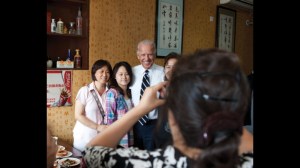
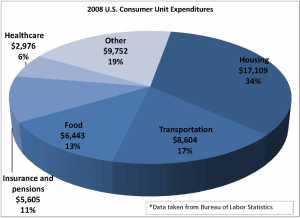
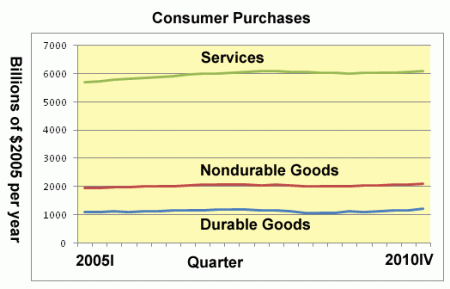




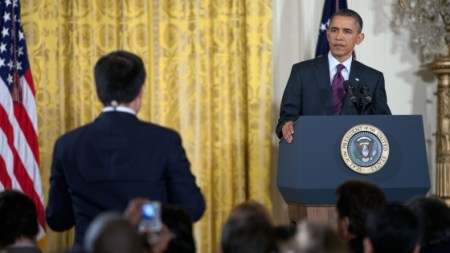

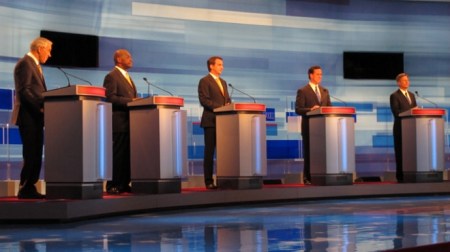
 Short and Sweet Blog