Archive for the ‘Politics’ category

THE TEA PARTY AND POLITICAL LEADERSHIP

May 17, 2011

Why is it so difficult to find good leadership for those who seek less federal government intervention in and control of our lives?

”]
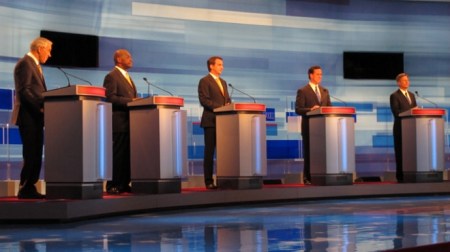
I think that this difficulty is at least partly due to the mind-set of people who adhere to the viewpoint that America would be a better place with a reduced intervention by all facets of the federal government. Such a person firmly believes in both the efficacy and the primacy of individual action over collective action. Therefore, such a person is motivated by his or her personal wish to be free to engage in those acts they deem worthy and efficacious for themselves as well as for the discharge of their responsibilities to the rest of mankind. They prefer to take responsibility to do things and do not want “government” either to preempt their action or siphon away the resources which they could use to accomplish their own view of the bettement of things. They want to be left alone to act personally and responsibly. They look at governmental intervention and its implied threat of force as disrespectful of the individual rights and abilities of both themselves and their neighbors. They do not seek governmental power to compel actions by other people. They would choose to use that power in very limited and constrained areas of life. What would motivate a believer in such philosophy to seek to enter high government office in the first place?

The very difficulty posed by this question is the fundamental flaw with finding leadership from among those claiming to be adherents to this philosophy. No one who prefers individual action to collective action sees their calling in seeking high office in order to use governmental coercion to achieve their vision. By definition they prefer personal action. Indeed they are suspicious of collective action which can only come into being through the coercive powers of government.

For the reason that a true adherent to this philosophy would seek nothing or nearly nothing from being in charge of the Federal government, only a sense of self-sacrifice is capable of motivating such a person, a believer in the primacy of individual action, to undertake leadership of the federal government’s power. George Washington was such a man and probably the only one in the history of the republic. He showed the spirit of sacrifice in his willingness to serve as the first President. The first few sentences of the First Inaugural Address clearly indicate his preference for individual action and his willingness to sacrifice personally for the benefit of his country as well as his profound humility given the task at hand:

Fellow-Citizens of the Senate and of the House of Representatives:

AMONG the vicissitudes incident to life no event could have filled me with greater anxieties than that of which the notification was transmitted by your order, and received on the 14th day of the present month. On the one hand, I was summoned by my country, whose voice I can never hear but with veneration and love, from a retreat which I had chosen with the fondest predilection, and, in my flattering hopes, with an immutable decision, as the asylum of my declining years—a retreat which was rendered every day more necessary as well as more dear to me by the addition of habit to inclination, and of frequent interruptions in my health to the gradual waste committed on it by time. On the other hand, the magnitude and difficulty of the trust to which the voice of my country called me, being sufficient to awaken in the wisest and most experienced of her citizens a distrustful scrutiny into his qualifications, could not but overwhelm with despondence one who (inheriting inferior endowments from nature and unpracticed in the duties of civil administration) ought to be peculiarly conscious of his own deficiencies.

Washington himself, a person who had risked everything to obtain independence for his country and liberty for it’s people, clearly felt himself inadequate to the office of first President of the United States. When approached he wanted nothing more than to be left alone to pursue his own private affairs at Mount Vernon. Nevertheless his heeded the call of his country and agreed to serve it once again. Upon leaving office he significantly remarked to his successor, John Adams, “[y]ou are fairly in and I am fairly out, let’s see which one of us will be happiest.”

How different the idea of “government service” has now become. The loftiness of the idea of sacrifice which was Washington’s idea has now been replaced by the idea, famously expressed by the Washington Post’s late columnist, David Broder, that ‘anyone willing to do what it takes to run for the presidency is automatically unfit for the highest office in the land.’ The idea of sacrifice has grown passe and in it’s place, at least according to the venerable and experienced Broder, has arisen the idea of a willingness to be debased in order to achieve presidential power. What would lead a person to debase themselves in this way in order to achieve something which requires, according to Washington, a separation from that which is personally most pleasing, minding to one’s own business? This drive, given the necessity of being debased, is fueled by human pride. This pridefulness is the belief that they are capable of doing great things if only given the reins of presidential power. The power to force others to submit to their will. For instance, President Obama expressed his own ideas about presidential power unabashedly:

This is why finding good and worthy leadership for the “less is more” crowd is so difficult. Lord Acton observed that:

Liberty and good government do not exclude each other; . . . there are excellent reasons why they should go together. Liberty is not a means to a higher political end. It is itself the highest political end.

He did not, however, explain how to find people to lead a government which values the individual action perpetuated by liberty over the type of collective action perpetuated by the coercion. Such people are the ones to whom the use of power against people who have not harmed them is distasteful even when necessary. This is especially so when the price to be paid for seeking presidential power is personal debasement and that goal, the power, is not sought after for it’s own use but only in order to deny it’s use to another for his time in office.

Given these circumstances it is not surprising that the selection of a candidate must be done with one’s nose held tightly shut and is among a group of politicians who are, because the nature of politics, only partly of the same a mind.
HYPOCRISY AS A POLITICAL ISSUE

May 6, 2011

On Monday super-lawyer Alan Dershowitz had something to say about hypocrisy which I believe rings, at least to some extent, true and is worth listening to by all men and women of goodwill.

Is Dershowitz right? Certainly none of us is pure? May only the pure criticize impurity? How about Cindy Sheehan or Jesse Jackson or Al Sharpton or Franklin Graham or even Pope Benedict? Do any of them claim to be pure?

Jesus Christ himself held up a mirror to the Pharisees, the zealous lawyers of Jewish law, who were ready to criticize him for healing a man on the sabbath in violation the Jewish law barring work on that day. He pointed out to them that they would exempt themselves from this law in times of necessity. His example, their own ox would be pulled out of a ditch if it happened to find itself there on the sabbath. Luke 14: 1-5.

Like the biblical pharisees we are all too ready to accuse our philosophical opponents of “hypocrisy” as if to do so invalidates their arguments as opposed to merely making them human. It is oh so easy to do. Some examples:

Ardent anti-gun advocate Rosie O’Donnell hired armed bodyguards to protect her children. Newt Gingrich pursued President Clinton for perjuring himself about infidelity when Gingrich was himself then actively an adulterer. Barack Obama criticized the Bush administration for unconstitutionally using military power in situations not directly impacting the security of the U.S. and when in power did the very same thing. Sarah Palin strongly defended traditional values while her daughter was bearing a child out of wedlock. Sen. Claire McCaskill strenuously argued for taxing the rich and corporations while her own companies were illegally evading the payment of taxes. Nancy Pelosi, a Roman Catholic, zealously supporting abortion rights for women. Joe Biden advocates for more governmental help to the poor and downtrodden while giving very little of his own income to help the very same poor. Al Gore flies in wasteful and polluting private jets to attend various “global warming” conferences around the world. Michael Moore earns millions of dollars utilizing a system he says is corrupt.

There are innumerable examples of hypocrisy in our political and public classes. Likewise it is rampant in our personal lives and those of our friends and acquaintances. Hypocrisy is the natural state of man. Man, however, has unlimited power to rationalize his own actions to himself. Those who avoid all appearance of hypocrisy are either very good at concealing themselves or perfect. And the latter state is not really an option.

A person can believe strongly in a particular idea of what is right and yet, when confronted with personal circumstances, act in a manner inconsistent with his or her own beliefs. Does this mean that they are wrong in advocating for their particular ideas or does it mean that they are humans trying to do the best that they can? Does acting inconsistent with a principle you hold dear mean that the principle is somehow less true or even false?

It would be too long and arduous a process to analyze even the few examples I detailed above to attempt to determine whether the apparent inconsistencies in the actions of those individuals indicate either: (1) that they do not believe in the principles which they advocate for and advocate them only for political or other expendiency; or (2) that they admit their inconsistency as a human failing and seek forgiveness for their transgressions of the principles which they espouse. Why should hypocrisy, being universal, even be important in our politics? Isn’t it more important to analyze the espoused principles themselves to see if they are well grounded in good policy than to try to determine whether the person who voices principles lives up to the dictates of his or her own conscience 24/7?

We must leave room for honest mistakes and even human weakness rather than always assigning to such behavior the labels of hypocrisy, lying, duplicity and political gamesmanship. For instance, does the commission of a murder indicate that the murderer does not believe that murder is wrong? Does a violation of the speed limit by a person mean that the speeder really thinks all speed limits should be removed? Why do we apparently presume that violation of a given principle by a person necessarily means that, for that person, it is always okay to ignore that principle and hence he or she doesn’t really believe in it? Is perfection the test for voicing your opinion in public?

It appears to me that we pay way too much deference to the news media’s and pundit’s constant harping on charges of the “hypocrisy” of politicians and ideological opponents when what we should be doing is analyzing the merit or lack of merit of the the principle being espoused by judging the arguments for and against it. We prefer, however, to personify these principles in order to justify our own transgressions. If there are no valid standards, there is no bad behavior. We personify these issues because the very imperfections of those advocating high standards exempts us, in our own minds, from striving to achieve those standards in our lives. Judging ourselves against those who espouse high standards yields us a better score than judging ourselves against the standards themselves. Removing all standards upon the justification that nobody’s perfect, however, will inevitably yield rather a bad harvest.

TRY A LITTLE IRONY

April 24, 2011

The Treasury Secretary and other government officials began a full court press in January in order to get the Congress to raise the debt limit on the US national debt. As you know, without counting social security IOU’s, the debt stands now at $14.3 Billion. The interesting argument Obama operatives are using is that increasing the debt limit will somehow show that we are serious about paying our debts. With their adult and serious faces on Obama’s entourage says that passing a “clean” debt increase will assure our creditors that they will be paid. Apparently our creditors will be satisfied even though they are being paid mostly with money manufactured out of thin air by the Fed through its QE2 program. What does this mean for finding real lenders after QE2 is over? Here is what White House Chief economic advisor, Austan Goolsbee, said on ABC in January:

The pressure has continued to mount on the so-called Tea Party Freshmen in the House to raise the debt ceiling without any quid pro quo process to constrain out of control spending. Supposedly, according to the pundits and Obama accolytes, issues of spending are better left to the political process of passing a budget. Of course this wasn’t so easy for FY 2011’s budget which the Democrats, even with overwhelming majorities in both houses in 2010, failed to do.

Does this strike anyone else as ironic or even extremely ironic? Is it not at least a bit incongruous that the administration which ramped up spending to astronomical levels and which lost a mid-term election at least in part because of fiscal issues, is now pointing at the Tea Party Freshmen as lacking concern for the country, now defined as a seriousness about honoring our debt obligations. That the administration has gone out in full campaign mode to advocate a policy of nearly unlimited borrowing in order to “calm” the markets about our debtworthiness also seems a little ironic to me. Remember the old but tried wisdom of George Washington when addressing the issue of debt repayment: “To contract new debts is not the way to pay old ones.” – Letter to James Welch, April 7, 1799. I suppose times and financial fashions have changed in two centuries.

Exactly who is more interested in paying this money back with something of value? Is it the Tea Party Freshmen who came to office on the idea that they would rein in out of control federal government spending? Or is it the administration which is poised to borrow yet another $1.7 or so over the next 12 months? Who will bondholders believe has their best interests in mind even if there is an interruption in the operation of the printing press? Is it administration which is looking to “borrow” the principal and interest from the Fed to pay the maturing debt along with much more to “invest” in domestic priorities or is it those people looking to try to keep the government’s spending within it’s means? Think of yourself as a bank, to which of these two would you rather loan money?

The Administration has tried to frame this debate in political rather than in economic terms. They know that if they can successfully make the Republicans look like politicians seeking a political victory, particularly at the country’s expense, rather than as deficit hawks looking after the public treasury, that they may be able to avoid having to make substantial cuts to the FY 2012 budget. This will provide them a political victory because it will demoralize Tea Party types since their substantial victories in the fall will have counted for little. The Democrats hope the Partiers will either stay home or vote third parties in 2012.

Furthermore, the Democrats are setting up a scenario that even if the Republicans take this issue to the limit and are actually successful in making big inroads in spending but the economy heads into a double dip either because of this or for any other reason before the election, it is the Democrats who will win politically in 2012 and the president will very likely be re-elected with a mandate to spend even more borrowed money to avoid further economic catastrophes. It is quite the political gambit and it looks to me like it may work. Strangely the adminstration in power will be in a position where they can argue that the deficit hawks caused the problem and the problem wouldn’t have happened if the government had “stayed the course” of continued high deficit spending. As a member of the chorus, Treasury Secretary Geithner said in a recent warning to the Republicans concerning using the debt limit vote to force constraint on spending:

(Lawmakers) will say there’s leverage in it, we can advance it. But that would be deeply irresponsible and they will own the risk.

It won’t happen in the end, but if they take it too close to the edge, they will own responsibility for that miscalculation.

Clearly Geithner is saying that Republican lawmakers are intentionally running the risk of economic catastrophe to even take the issue to the brink in order to force spending cuts because they supposedly “. . . understand that you can’t take any risk the world starts to think the United States won’t meet its obligations.”

“There’s no conceivable way that this city, this government can court that basic risk,” Geithner said.

Obama’s argument is: don’t worry about the soaring debt, what you really need to worry about is the possibility that somebody will put a stop to large scale deficit spending upon which our “prosperity” strangely depends. Here is the vice president making the case explicitly:

This is a “Catch 22.” If we keep borrowing to pay for failed ‘stimulus’ we go bankrupt. And according to Biden, if we don’t keep borrowing and spending like crazy, we go bankrupt. The irony is that we go bankrupt either way. For my part I’d rather go bankrupt from being pennywise than pound foolish. I’d rather do with less now and set the stage for future prosperity than leave a growth-defeating debt for future generations to cope with. I hope it’s not just me who feels this way.

MAY 15 UPDATE: Secretary Geithner has now been forced to sadly ‘predict’ that the failure to quickly pass an increase in the debt ceiling will have the effect of creating a “double dip” recession. See: http://nationaljournal.com/economy/geithner-predicts-double-dip-if-congress-fails-to-lift-debt-ceiling-20110514 .

UPPER MIDDLE CLASS NOW THE “ENEMY”

April 14, 2011

I define the upper middle class as those people who have high incomes but who, if they stopped work, would have to substantially reduce their lifestyles. They may have capital gains and dividend income as well, but the bulk of their income comes as a result of their own work and effort. This is the basis on which I distinguish between the upper middle class and the truly wealthy. ”] The truly wealthy, as opposed to the upper middle class, have high incomes but need not work whatsoever to earn them. Their lifestyles are simply not dependent on their own efforts. President Obama sees the distinction between the upper middle class and the truly wealthy but for some inexplicable reason singles out the upper middle class for the harshest treatment in his “austerity budget” priorities. The new Obama plan gores the devil out of the upper middle class while doing little to affect the lifestyles of the truly wealthy. Both the Ryan and the Simpson-Bowles Deficit Commission priorities do substantially less to single out the upper middle class for special tax “punishment.”

Derek Thompson, of the Atlantic, has posted a comparison of the three deficit reduction plans on the table. Thompson compares the highlights of the taxing policies of the three plans, Congressman Ryan’s, President Obama’s and the Simpson-Bowles Deficit Reduction Commission’s. This is what Thompson says about the three:

Tax Reform

White House: Let Bush tax cuts expire for “the wealthy.” Limit itemized deductions for the wealthiest 2% of Americans to reduce the deficit by $320 billion over ten years. Convene a panel on tax reform. (Another part of the speech calls for “tax reform to cut about $1 trillion in spending from the tax code,” that is $1 trillion in tax expenditure cuts.)

Paul Ryan: Extend the Bush tax cuts and enact tax reform. Repeal $800 billion in tax increases imposed by Affordable Care Act simpler, less burdensome tax code for households and small businesses. Consolidate and lowers tax rates for individuals so that the top rate comes down from 35 to 25 percent and pay for it by sweeping out deductions and exemptions. Lower corporate tax rate from 35 percent to 25 percent and pay for it by sweeping out tax expenditures.

Deficit Commission: Enact comprehensive tax reform. Consolidate and lower individual income rates to 12%, 22%, and 28%. Eliminate most tax expenditures that don’t protect the low-income. Tax capital gains and dividends as normal income. Lower corporate income rate to 28%, eliminate most deductions, and move to a territorial tax system, which would not tax profits made by U.S. multinationals overseas.

As you can see, of the three only the Deficit Commission’s plan returns the taxes on Capital Gains to the Reagan era status of treating them like earned incomes. As such the plan proposed by the least politically potent of the three, the Deficit Commission, would actually get at the wealthy by having them pay their income taxes as if they earned those incomes by their own blood, sweat and tears instead of through dividends and capital gains. Remember what candidate Obama once said about this issue and “fairness”:

Apparently the President has changed his mind since his election as to what is fair. He chooses in his own plan to maintain the current gross tax rate advantage for the truly wealthy vis-a-vis the upper middle class. Even stranger, by both raising the tax rate on those in the upper two percent of income earners and eliminating many, if not all, of the itemized tax deductions, the President has singled out the upper middle class to pay much more in tax, not the truly wealthy like his friend Warren Buffet. This is because, other than the charitable contribution deduction, few of the truly wealthy claim the benefit of the other itemized tax deductions. The truly wealthy are likely to own their own homes outright so the deductibility of mortgage interest is of no concern. In addition to the increased tax effect, removing the mortgage interest deduction will actually cause the expensive homes of the upper middle class to lose market value since prospective buyers will be even less interested in owning them. Furthermore, in order to claim other so-called itemized deductions those expenses must exceed 7% of their Adjusted Gross Income. The truly wealthy are much less likely to meet the threshold of 7% to claim medical care deductions or other lesser known deductions subject to the 7% cap than those making at the lower ranges of the $250,000 limit.

The people getting the shaft under Obama’s priorities are the ones who go to work everyday, often at 5:00 a.m. to run their businesses, check on their hospitalized patients or otherwise work for a living. They’re the ones climbing the ladder, they are not at the top yet. They are motivated and personally involved in providing goods and services as well as jobs in the real world. Why would Obama single out those who are climbing the ladder to subject them to the heaviest burden of taxation? Is it truly just politics or is it his ideology? At the next press conference won’t somebody, like Charlie Gibson who did so at a democratic presidential debate, ask him about why this is? Ask him why he’s backed off his campaign rhetoric concerning Capital Gains tax fairness. Of course, this would only be possible if there ever is another news conference with real journalists in attendance!!!

HEAD’S UP IN THE UPCOMING DEBATE OVER FUNDING SOCIAL SECURITY

March 13, 2011

Remember when President Obama, last week, said in a press conference that in the middle of the decade his budget would have us to a point where we would no longer be adding to the deficit? Halleleujah!! Unfortunately, it is indisputable that the Obama budget never once comes close to matching income and outflow. The following is how the President’s new press secretary explained it, and did it without backing down an inch from what the President said:

This is an example of avoiding a plain mathematical truth through application of obfuscation and is just plain tomfoolery. It is true that:

In war, truth is the first casualty. Aeschylus Greek tragic dramatist (525 BC – 456 BC) .

But our politicians, for purposes other than war, have seemed to take this adage and placed it at the service of their intramural debates and elections. This is not a difference of worldviews, a topic often explored by this blog, with it’s attendant differences in context, language and emphasis created by differing worldviews. This is an example of a simple lack of candor. In no one’s world should this be okay. This is not an issue of context, of language or emphasis. It is just not true.

This also gives us a little taste of how we’ll be treated in the upcoming social security debates. An example of this was delivered by a group of Democrat Senators about 30 days ago. These Senators explained that the Republicans are in favor of ‘privatizing’ social security and that social security can pay every dollar of benefits for the next 27 years and that social security is actuarially sound among other important things.

I am unsure whether there have been any post-Bush Republican proposals for “privatizing” social security but I am certain that there is a big problem with calling social security “actuarially sound” and explaining that it has the resources to pay benefits for 27 years without any changes without further explanation. It is a bit like the President’s news conference when he suggested that in 2015 his budget will be balanced and his press secretary had to spin and spin the point until he was dry.

What is the truth? The truth is that in 2011 current social security benefits will exceed current social security taxes. How can it be that social security is “actuarially sound” or able to pay every penny of benefits for the next 27 years without any changes and yet social security has now started to pay out more in benefits than it receives in taxes? Are the Republicans ginning up lies? Are the Democrats now having to courageously put a stop it?

Well, the truth is that the social security system will need to call on non-social security tax revenues in order to pay the difference between current social security benefits and current social security taxes for the foreseeable future. It is a fact that this began in FY 2010. There is no end in sight. Since this is undeniably true, what do the Democrat Senators mean by saying that social security can pay every penny of benefits for the next 27 years? These Senators are only saying that the general tax revenues which are going to have pay the social security benefits will not be used to do so directly, they are saying that something else will happen between cup and lip. What will happen, however, is only on the books of the Social Security Administration. The government’s general revenues will, instead, be used to pay off some of the IOU’s which have been piling up in the SSA for 27 years. The general revenue funds which have redeemed the IOU’s will then be used to pay current social security benefits. In this way there will be two stops for these dollars, not one. The dollars will change status from general revenues to the proceeds from paying off the IOU’s. The net effect will be nothing, zero.

Do you remember the old pragmatic-sounding “pay as you go” Unified government budgets which began in 1983. Under the Unified budget social security taxes were used to pay-as-you-go for non-social security government programs. The surplus between social security outlays and expenditures in those years was used to make the federal budget deficit look smaller or the budget surplus look larger, including during the years of Mr. Clinton’s magic “budget surpluses” of FY 1998, 99 and 2000. See the chart below for a graphic example of what was going on.

For instance, as the chart shows, in FY 2000 approximately $200 billion was added to the trust fund as a result of this social security surplus. The accumulated surplus is what the Democratic Party’s Senators are actually talking about in terms of the “solvency” and “actuarial soundness” of the program. The existence of these IOU’s will not lessen the difficulty and the reality of coming up with the difference between the social security taxes and the social security benefits to pay retirees on an ongoing year to year basis.
This is a fact that everyone needs to know so that when politicians deny that social security amounts to a fiscal problem at the present time, you’ll know that they are trying to tell you something about accounting, not about reality. Because the general tax revenues will first be used to pay off the IOU’s which the SSA has been accumulating in it’s filing cabinets before being used to pay benefits doesn’t make a hill of beans to the painful reality that somebody will have to pay the bill.

Oh and by the way, as to the partisan politics of this. Control of Congress has been split almost evenly during the period since FY 1984 between Democrat and Republican. The presidency a bit more Republican at 16 years to 10. It should also be noted that during the legendary Clinton “budget surpluses” the Congress was Republican. In short, this not a partisan problem (notwithstanding the rather duplicitous grandstanding and fear-mongering by the Democratic Senators featured above) it’s a government problem. The only reason that the Social Security system didn’t collapse in the 1980’s, after nearly 40 years of Congressional control by the Democrats, the party whose Senators are now yoohooing about how the Republicans are all for putting granny out on the street, was because the government used it’s power to raise taxes not because it used it’s head to properly administer the taxes it had to fund the social security entitlement it had created!!!!!!

THE IMPERATIVE OF POWER

March 9, 2011

Libyan Dictator Gaddafi

It is clear to me as I watch the pressures increase on President Obama to somehow become militarily involved in the Libyan “civil war” that at this time in history this is only one in a long line of uniquely American situations. The US is the indispensible nation in every sense. Britain, France and Italy, together or in any forseeable combination with others including China and/or Russia, could not project force into the region in sufficient quantity and quality to impose a “no fly zone” or to deploy and supply land forces to intervene in this part or any part of northern Africa. Hence, the decision as to what to do with Col. Gaddafi is ours and ours alone.

What mounting pressures? First, there are the news stories of the dictator Gadaffi’s airplanes attacking civilians and images of the injured. Second, there is the economic problem of the potential interruption of exports of Libyan crude and natural gas which is causing a spike in oil prices. Third, there is the Hitler problem, i.e. this idea is that leaving a brutal dictator in power is a bad thing, if he can be removed, since the dictator is, by definition, brutal. The fact that leaving him in power may not be the worst thing that could happen is disregarded or never even entertained. Last, there is the political pressure applied by John McCain and others on the President to “do something.” The political benefit of the latter’s course is that after having come out publically for a “no fly zone,” in subsequent days if the President does nothing and anything bad happens in Libya, it can politically be spun as being the “President’s fault.”

As the American public we simply must become less idealistic and more realistic. First, American armed forces are not and should not be used as the policemen of the world. They have been raised and are supported by us to advance the interests of the United States. If the mere fact of their existence creates irresistable political pressure for them to be deployed unwisely and in ways not directly related to the interests of the United States of America, then it might very well be better if they did not exist in the first place. In short, as the father of a soldier, I suggest that it may be better to be France which has no power to do anything so they can simply sit back and criticize and complain which ever way it turns out.

As Strafor’s George Friedman observed recently:

It should also be remembered that the same international community that condemned Saddam Hussein as a brutal dictator quite easily turned to condemn the United States both for deposing him and for the steps its military took in trying to deal with the subsequent insurgency. It is not difficult to imagine a situation where there is extended Libyan resistance to the occupying force followed by international condemnation of the counterinsurgency effort.

As much as I may disagree with President Obama on many things, I do not envy him his job. He has no way to go where he will not be castigated and criticized for what he does or doesn’t do. He simply cannot win. There is no outcome, other than full fledged western-style democracy, which will unambiguously please everyone and that is very unlikely indeed.

It reminds me of discussions I have had with friends and acquaintances about the wars in Afghanistan and Iraq. Some of them criticize former President Bush for going into these wars, others criticize him for mishandling them but almost no one refrains from criticizing him under the philosophy that “he did his best to do what was right for the US” and leave it at that. They also refuse even to engage in the “hypothetical situations” which I pose. Usually they simply snort and act as if my hypothetical and indeed any such hypothetical is ridiculous. An example, assume that President Bush failed to take aggressive military action against those who attacked us from Afghanistan, what further mischief would those miscreants have been encouraged and enabled to inflict and who would have been blamed? Would Osama Bin Laden have been able to take up the mantle of Salladin, having defeated and humiliated the obviously weak infidel enemies, and been able to earlier and even more thoroughly radicalize south Asian and north African Muslims in their opposition to the West. Would Mubarak have fallen earlier? Where did the Bush go who promised no “nation building” and a humble foreign policy when the crap hit the fan?

Obviously, it is far too complex an exercise for a 10 minute conversation to rerun history with all it’s moving parts possibly moving differently. The problem is, however, that we prefer to act (and vote) as if the one variable that we would like to modify would have been the only change in the entire situation and that if our preferred choice had been made ‘things’ would have obviously turned out better. We like to think only about the opportunity costs of the roads not taken without giving any credit to the beneficial effects of the road actually taken.

This same kind of analysis could be applied to the folks who opposed the Obama stimulus. They don’t like to talk about the probability that without it the US and much of the world could have been plunged into a rather lengthy depression with attendant deflation with far more unemployment for a substantial period of time. They simply assume that the last two years would have been the exactly same (or maybe even better) except we wouldn’t have borrowed 3 trillion dollars. This is a ridiculous assumption. On the other hand, the pro-stimulus group prefers to leave to later the question of the future costs of having borrowed trillions to provide the present liquidity which has kept transactions happening and prices from falling. That this may very well cause a Japan style lost decade or worse is dismissed out of hand by the gogo-stimulus crowd (namely Paul Krugman) as being unthinkable. The opponent in Krugman’s mind is a repeat of the Great Depression and anything is better than that. The only possible problem with borrowing these trillions in Krug-world is that you may not borrow enough to keep everyone happy until the bandwagon starts rolling again.

I guess what I am really saying is that the existence of power–whether to project substantial military force into Libya or the power to borrow and spend trillions of dollars–creates it’s own imperative to use that power and let the future care for the future. It may be better policy in the long run to have our leaders constrained by laws and other circumstances which do not allow them the freedom to engage in the “big thing.” As it stands, our leaders, rather than being subject to a future of being second guessed as to what the world would have looked like if they had used the power they had, they are very likely to be overtempted to simply use it and see what happens.

UNION-BUSTING OR JUST POLITICS?

March 2, 2011

You have undoubtedly heard the saying: ‘Live by the sword, die by the sword.’ You probably know that it is actually a paraphrased biblical reference from Matt 26:52:

Then said Jesus unto him, ‘put up again thy sword into his place: for all they that take the sword shall perish with the sword.’

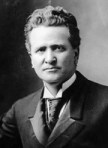
Today in Wisconsin, a historically labor-friendly state actually closely associated with the beginnings of the progressive movement and the home of the Progessive Party’s 1924 presidential candidate, Sen Robert Follette, Sr., the truth of this statement comes into sharp relief.


Politics is a winner take all business. Party politicians are all about gathering political power in whatever way they can. What is their motivation for engaging in this process? Of course, it is so that they will have more and more power to exercise in a manner which will benefit their friends and reduce the ability of their opponents to fight back. How would officeholders who decided not to “dance with who brung’um” ever successfully achieve a re-election when their friends would now be tepid or hostile to that re-election and their “enemies” would smell blood in the water? The world just doesn’t work like that. The more power that officeholders have the more is at stake in an election. Therefore, as government power increases more money is attracted to the process and the losing side has more to lose if it candidate does not win. And yet somehow we’re surprised at the hyper-partisanship and vitriol which enters the system. Higher stakes makes it less likely that the tone will be civil and the process run by Marquess of Queensberry rules. There will be winners and losers and to the victors belong the spoils.

As President Obama summed up so clearly when addressing Latinos just before the 2010 elections:

. . . . We’re gonna punish our enemies and we’re gonna reward our friends who stand with us . . . .

Just as clearly, three days after the 2008 election, with Republicans gathered at the White House to discuss potential bipartisan ideas for a stimulus bill, President Obama said: “Elections have consequences. I won.”

Public employee unions have long been in the business of electoral politics. They have provided hundreds of millions if not billions of dollars for campaigns, nearly all of it going to Democratic party candidates in state and federal elections. These unions have also provided countless hours of work for these candidates. Through election cycle after election cycle the union-supported Democratic candidates have won. As such, for decades the Democratic party has been generally in charge of state governments from Trenton, NJ to Madison, WI to Sacramento, CA. After Democratic victory public employee unions could “negotiate” their wages and benefits with the officeholders whom they had helped place into power. It worked for everybody, at least for everybody who was on the inside.

In Wisconsin after the 2010 election the number of Republicans in the 99 member State Assembly went from 38 to 60. Similarly in the Wisconsin State Senate Republican representation went from 14 to 19 of the total of 33 members. The governor’s chair also switched from Democrat to Republican. When a similar re-alignment at the federal level occurred we got a one-sided stimulus bill and a vast expansion of the federal government through reformation of our entire health care system. Both occurred with virtually no Republican votes.

In politics, when a regime falls the supporters of the old regime run the risk of being too closely linked to the previous leadership and they may have some or all of the deals that they previously struck taken away. They will doubtless lose access to the resources they had grown used to having. The public employees unions have been very closely linked to the Democratic party. They have prospered as a result of their insider status. Acting aggrieved when they are attacked by political opponents who have succeeded in achieving political victory is a little too much to stomach when the unions had engaged in the game full force for years and won victory after victory. This is especially so when they had previously received benefit after benefit at the public trough as a result of these victories.

Let’s try to be objective. Do you really believe that public sector unions were motivated in their support for Democratic candidates solely as support for “good government” divorced from any “personal benefit” from the victory of those candidates? How can they actually expect us to cry crocodile tears when they lose one and must now pay the piper?

That leads me to my final point. We have heard lots of talk about how Republicans would pay for this “union-busting tactic.” The unions suggest vocally that it is somehow shameful to pass a law limiting the public employee unions, particularly teachers, to collectively bargain only about wages and not about benefits. But nobody forces them to work in the jobs they now hold. If the pasture is greener elsewhere, union members are free to leave anytime. They don’t want to leave, however, because the benefits of their public-private partnership with the Democratic party and the government of Wisconsin has been too lucrative to give up without a fight.

Tactically, the unions position themselves as if they are innocent victims of the political process and the budget shortfalls which are totally not their fault. Say they: “You can’t balance the budget on the back of the hard-working union members.” It is as if they believe that as union members they are somehow morally superior and that lawmakers should be ashamed of themselves for voting in a way to limit their ability to “collectively bargain” in the future with their political cronies.

It is always possible that the voters who put the Republicans in power this time will turn on them over this issue and return them to the political wilderness in 2012. But why should the members of the Wisconsin Senate’s Democratic minority be avoiding even a vote on this issue if they truly believe that passage would be so damaging to Republicans. See what happened to the Democrats in the federal elections in 2010 after passage of the stimulus and health care bills. If the bill passes they will really put a whipping on the Republicans for this overreaching, won’t they? Plus, when the Democrats return to power in a couple of years they can always put it back the way it was, can’t they? On the other hand, is it possible that what the Democrats and unions are really afraid of is that these reforms will work and the budget will be balanced and, rather than the blame, the Republicans will get the politcial credit and a longer lease on political power in Wisconsin? Oh politics, politics.