Europeans and Americans sacrifice in order to make the lives of poor Africans better. That’s a picture we all have in our minds about the practice of altruism. Could this ever be anything other than good? Why is it that we focus on the “sacrifices” of Europeans and Americans” rather than upon the lives of Africans whom we seek to make better? What does this say about Americans and Europeans and what does it say about Africans?
First of all have a look at this Der Spiegel interview with African economist James Shikwati.
The reality of aid to Africa says something both good and bad about Europeans and Americans. First, it says that Americans and Europeans are willing to live less well than they could in order to provide a better life to Africans. We are virtuous, willing to sacrifice, that’s good right? Yes, that’s good but the other thing which it says about us is that we don’t really care about the real world effect our aid has upon the Africans whom we seek to help. We focus on the sacrifice which we are willing to make which makes us good persons in our own minds without focusing upon the real world effects of this sacrifice. In order to link our sacrifice to actual good outcomes of the Africans whom we seek to help we would actually have to do a good bit of personal work and this is where we fall down. We will give our money but we won’t give our consistent time and attention in order to see that our money is used in a way which improves African outcomes. We care more about how we feel having made a sacrifice than we care about how the Africans feel after being “helped” by us. We outsource the job of taking care of our neighbors, the Africans. We’re still good people, aren’t we, even if our aid dollars do some real damage to the people who we supposedly want to help by our sacrifice? I’m not so sure. Like the Hippocratic oath taken by doctors, shouldn’t we first seek to do no harm.
But what does this situation say about Africans? Why do they accept the aid if it actually harms them? It says that the Africans who suffer are not the same Africans who have a voice in the acceptance and allocation of aid. Some Africans, of course, are better off by reason of aid, the people in charge, and some people are not better off, the followers and people who lose jobs and who don’t really receive much, if any, benefit from that “aid” anyway. Remember the good intentions of our intervention in Somalia, to see that our aid got to the people and not to the warlords. It says that Africans are not any different than Americans. Those in charge seek to maintain the status quo and those who are not in charge don’t really know how to change that.
I think that this also says something about our recent national election. Americans seem to have voted for a nation where the poor population is helped by the government. I believe that the majority of people who voted for the current Democratic President really want the country to be a place where national sacrifice is somehow connected to bettering conditions for the Americans who are now in poverty or otherwise disadvantaged. The problem is that as a population we really don’t understand how the economy works for us all as an integral whole. We divorce jobs from entrepreneurs. We divorce success from incentive. We divorce work from money. We don’t understand (or apparently even care about) the concept, actually the law, of unintended consequences. We just have no hard headed education in economics even though we are regularly asked to vote about what economic policies to enact through our government. We vote our emotions. We don’t connect good outcomes with good intentions because we don’t understand how and the price of doing so is too high, personal study. We prefer to rely on people we “trust” to study these issues for us and tell us what to think. Can you blame a good hearted people, sorely lacking in economic understanding, for voting for the highest minded altruistic soundbite? Can you blame us for voting to take money from some selfish “rich” or “ultra-rich” people “who don’t really need the money” even though they are not quite sure how, exactly, this will improve the lot of the poor and disadvantaged? What has been a problem for Africa for decades, unintended consequences, will undoubtedly have a similar effect on us here in the U.S. in the wake of the 2012 election. Good intentions are not the same as sound economics. I’m afraid we’ll be finding out how this works and in fact are even now experiencing this reality. I pray that we will learn from our mistakes and make better decisions, as individuals when deciding where to send our aid, and as a population when deciding who to elect, in the future.
The 2012 election is over. Barack Obama will be president for four more years. The Democratic party still controls the U.S. Senate and the Republican party still controls the House of Representatives. Not much will change, right? Not so fast.
The Obamacare law, the fate of which was explicitly placed into the hands of the electorate by Chief Justice Roberts, will be implemented and the federal government will now slowly or maybe not so slowly take over the entire health care industry here in the good old U S of A. The Dodd Frank Financial overhaul bill will be implemented completely with a host of already written and a further host of as yet unwritten regulations including provision for another bailout fund and procedures to provide explicit governmental access to records of your credit card use (only to be used for good purposes of course). The EPA will be free to regulate greenhouse gas emissions as well as oil and gas fracking procedures. Large automatic cuts will be made to the U.S. defense budget and many taxes (including income, Obamacare and estate and gift varieties) will be going up substantially. Also, President Obama will be able to use his newly acquired flexibility to reach constructive agreements with Mr. Putin and Russia to say nothing of China and its new leadership. The Catholic Church will probably either have to abandon its outreach to those in need or decide how it can provide direct funding of abortions and still be Catholic. Two conservative justices who were born in 1936 will hopefully find themselves to be healthy 80 years olds in Mr. Obama’s final year in office. Yes, I observe that many very important things can and will change over the next four years even though the political parties are in essentially the same political juxtaposition that they occupied coming out of the 2010 elections.
I’ll tell you this though. If in the coming biennium the economy gets better in terms of the real unemployment rate (currently well over 15%) and there is a significant increase in real after-tax per family income, I may have to start believing in Keynes’s idea that it is animal (or other) spirits which move our economy. I will also be forced to stop believing that capital formation matters to economic growth as well as in the baseless and outworn concept that a free people prefer economic freedom to the illusion of economic security. I may even come to believe in flying monkeys in the next few years since I will be in such a state of flux.
While I believe that miracles can and do happen, I doubt that I’ll have to make these changes to my worldview between now and 2014 or even 2016. I doubt that the world as we know it will change. Therefore I am deeply concerned about what will happen. Destruction of our economy and way of life is one thing but in particular I pray, as the father of two strong young men, that our program of military disinvestment which is likely to be taken by our adversaries as a show of weakness, does not lead us into an unwanted and unnecessary war sometime during the next four years. Yes, while I seriously doubt that we will enter into a whole new world on January 21, 2013, here’s hoping in Hope for a Change in human nature.
Did you watch the Vice Presidential Debate last week? I caught part of it on radio and came in about half way on the TV coverage. What immediately caught my eye, as well as every one else’s, was that the Vice President was acting like a tantrum throwing bully rather than a respectable member of our federal government. He appeared to be someone who thought the only way he could get his points in was to insert his points directly into the points being made by his adversary, Congressman Ryan. Does he really think that we’re all so stupid that we won’t remember what point he’s responding to unless he marks it by his derisive body language following it up by inserting his point into the middle of his opponent’s point?
I wonder who is really stupid though. Why is it that the Vice President couldn’t wait until Ryan was finished in order to make his points? Is he simply impatient or does he have ADHD or does he feel that he has a right to dominate the entire process without giving us a chance to fairly hear both sides of the arguments? Could it be an indication of his actual awareness of the weakness of his Progessive ideas? Is it possible that he really just worried that he will be unable to deal with a Ryan who is allowed to complete his thoughts uninterrupted? It’s either that or he has so little respect for the people he’s trying to convince to fairly judge between his arguments and those of Congressman Ryan that he decided to adapt his debate style to pre-empt Ryan’s thoughts. What other reasonable explanation is there?
As a lawyer I can tell you that such tactics are very emotionally inviting for advocates in a courtroom setting. Most judges, however, know that this really shows either the lawyer’s lack of respect for the ability of the judge to remember and discern the validity of his arguments or a fear that his own arguments are weak and he needs to interfere with the presentation of his opponent’s argument. Such conduct, because it is suspicious, usually indicates the inexperience and lack of expertise of the lawyer who does it, or if not, the uncomfortable awareness of the weakness of his or her own case. There is a well known saying about arguments and debates, ‘if you can’t dazzle them with your brilliance, baffle them with your BS.’ I think that there is a more accurate saying about Vice Presidential Debate 2012 which is that ‘if you can’t dazzle them with your brilliance, make sure that the other guy can’t dazzle them either.’
After Paul Ryan’s selection as Mitt Romney’s number two the Joe Soptic laid off steelworker ad comes into sharper focus. In the ad Mr. Soptic chastises the Republican presidential candidate for his wife’s death some five or six years after a Romney-less Bain Capital closed his steel plant. Seems like a pretty stupid ad, right? The facts make the ad silly even more a lie about Mitt, right? Maybe not silly, it depends on what message the ad is trying to convey. With the selection of Paul Ryan as a running mate it appears clear that the battle will be fought on what the fundamentals of the American economy will be going forward. Will we be a free market economy with a bit of regulation or are we a command and control economy with a little freedom permitted to provide a bit of efficiency?
First let’s watch it one more time to get it fresh in our minds.
The first thing the ad does is to make the point that Mitt Romney doesn’t know the damage he does to other people when he makes economic decisions, such as whether to close a plant etc. Is this an attack on Romney or an attack upon the decision makers in a free market economy generally. Isn’t it really just an implied suggestion that individuals making financial decisions that affect others should have to be supervised or regulated in order to protect the innocent people who are employed in uneconomical businesses. It is clearly an attack on the very idea that there are economic decisions which must be made on mainly economic bases.
The ad goes on to charge that, “Mitt Romney and Bain Capital made millions for themselves and then closed this steel plant.” Is that possible? Can a corporate raider firm really make a great deal of money out of bankrupting a company while at the same time avoiding charges of theft or lawsuits for fraud? I won’t go into great detail but I doubt this very much what with tax laws, securities laws, bankruptcy laws, fraudulent transfer laws, stockholder derivative suits and the rights of bond creditors (at least when the bond creditors are not investors in GM) I don’t think that business owners make money by destroying their businesses. The facts are dense and difficult to understand in such cases and can therefore be spun to make people believe all sorts of silly things. If there were no successful prosecutions or lawsuits arising from Soptic’s plant closing, I think that we can safely believe that nothing quite as untoward as Soptic suggests actually went on there.
Now we get to the meat of the story. After Joe unfortunately lost his insurance because of the plant closing, a decision in which he had no input, his wife was taken to the hospital with pneumonia and her lung cancer was discovered. There is no doubt that this is a tragedy. But Joe pins this tragedy on someone in particular, Bain and Romney. The fact that there was a five-year lag time between the lay off and the pneumonia is not referenced. This fact indisputably exonerates Bain and Romney. In response to the implied question as to why his late wife didn’t seek any medical advice for symptoms of the lung cancer, Joe channels his late wife and suggests that she knew they couldn’t afford insurance. This ad is a dual indictment against the owners of the company. Joe’s first charge is that because the owners had previously made a profit from the plant that they were morally required to keep the plant open regardless of its present profitability. Second, and somewhat more subtly, he charges that the owners, including Bain, took the best part of his working life and that he shouldn’t have been laid off and left as a man who could only get a custodian’s job when the plant closed. I feel sorry for Mr. Soptic and his many losses but I think he is clearly allowing his anger to be used as a tool in a political campaign. He is a man in pain, looking for answers as to why God has allowed these things to happen to him and the people he loves, and he should not be so abused by cynical political people who should know better.
Was Bain supposed to keep an unprofitable steel plant in business for five years to provide high paying jobs and medical insurance to the plant’s employees? Were Bain and Romney legally or morally required to indefinitely pay people’s insurance who had worked at a plant closed because it was unprofitable? Why was a fund to provide continued insurance in the event of a plant closing not a benefit negotiated in the union contract? Is it possible that the employees knew at the time of the takeover that they would have been worse off without Bain’s involvement? I doubt that many in this country would hold Bain and Romney morally responsible for Mrs. Soptic’s unfortunate death. By missing Romney, however, this ad makes the system of free markets, for which Romney is a poster boy, the malefactor in the Soptic story. Misfortunes abound in a free market economy as they do everywhere else. Ending the free market system, however, would be a profound misfortune for everyone who values their individual initiative and the right to pursue their own happiness as they each see fit. This ad is nothing more than Michael Moore’s brand of half-truths and innuendos brought to the small screen. I pray that Mitt and Paul can overcome the Obama assault on our cherished freedoms, economic, religious or whatever, and halt the progress of the endlessly dehumanizing bureaucracy of the social welfare state.
I’m sure that you all remember the giant brouhaha which ensued after the President said:
While I agree with the actual words which the President used, I profoundly disagree with his unspoken agenda.
The government of the United States was organized to protect the society, not to change or manage it. This seems to be entirely lost upon our President. He suggests that we owe something for the opportunities which we have had. I couldn’t agree more. He implies that we should be prepared to pay more in taxes in order to discharge this obligation. I could not disagree more. Taxes are the price we pay for a government to protect and serve us as a nation, not to serve us as individuals. It is only as a collective that our government is intended to provide for the general welfare. Otherwise the term ‘welfare’ would not have been modified by the adjective general. Our system, the one which the President actually says is so great, is based upon freedom. We are free to cooperate and compete among ourselves as we see the need. The government was not formed in order to mold our society or we as citizens, it is this free society within which free individuals thrive which is to be protected by the government.
The apparent source of the disconnect is that President Obama equates the government with American society generally. Therefore, he concludes that if we owe something to society we pay for it in taxes. The dual nature of our free society, one which fosters both cooperation and competition as the people see fit, is the very foundation of the system. It is not a part of the system to be redesigned or overcome. It is not a good which the government provides and which should therefore be taxed, it is something which the government protects and is obligated so to do. It is the sort of spontaneous and informally organized caring, sharing and cooperating which is at the very heart of our national character and will remain so so long as freedom reigns. It is fostered by the very freedom we have to either share or not share, as we ourselves see fit. It is not fostered by the heavy hand of the government. In fact the heavy hand of government will tear it apart.
Read this account in which a fellow blogger tells of one informal and voluntary association and a transfer between a businessman and a young student as told by the student. Had the businessman been required by the government to provide money or a job for the student it would likely have engendered resentment on the business owner’s part and the student would have taken it as his due. The results would have been wholly negative other than that the money would have ended up in the same place. Resentment and entitlement are not emotions to be fostered. Generosity and gratitude are. I wonder whether the President sees this or whether he is so focused in transferring wealth from one group of Americans to another that he is blinded by the beauty of his preferred ends and is unaware of or unwilling to see the moral questionableness and destructiveness of the means.
After allowing my shock and anger to subside, I believe that it is now safe for me to share some calm reflections on Chief Justice and his decision. First of all, it should be clearly understood that the Affordable Care Act (ACA) decision was the Chief Justice’s decision and his alone. Everything about the ACA hung on his vote in a Court in which cases involving questions about the original intent of the framers (or amenders) of the constitution are balanced on a knife-edge.
The issue I see presented in this case is one of justice. Is our country and its judiciary fundamentally committed to the rule of law and the idea of justice? In that regard the first question is whether the Chief Justice truly believes that the constitutional power to tax covers the ACA “tax penalty” or did he base his vote upon other considerations? The second is, what is the likely effect of this decision on our form of government and the future of our politics?
Of course no other person actually gets into the mind of any judge to determine the basis upon which he or she makes decisions. Appellate court judges, like Supreme Court Justices, do have to write opinions which legally support the rulings they make but they don’t have to tell the truth or the whole truth about the basis of the decision.* The Chief Justice’s opinion contains the following quotations, to wit:
“We do not consider whether the act embodies sound policies. That judgment is entrusted to the nation’s elected leaders. We ask only whether Congress has the power under the Constitution to enact the challenged provisions,”
and,
Members of this court are vested with the authority to interpret the law; we possess neither the expertise nor the prerogative to make policy judgments. Those decisions are entrusted to our nation’s elected leaders, who can be thrown out of office if the people disagree with them. It is not our job to protect the people from the consequences of their political choices.
The language of these quotes signifies the Chief’s awareness of the politics of the situation. Does he really believe deeply in the idea that the ACA is constitutionally permissible? I doubt it. Why not? Most importantly, according to reports, he changed his vote to “constitutional” very late in the process. He first voted for unconstitutionality at the Justices’ conference immediately after oral argument. At that point he voted to overturn the ACA. He voted ‘unconstitutional’ right after having heard three days of oral arguments, read and digested the record and studied in-depth the legal briefing of the parties. Then, sometime later, he moved into the ‘constitutional’ camp. This alone creates a lot of suspicion as to his motivations. Did he really discover a new point of view after the conference which he had not considered and rejected before?
In order to see it as a tax, it seems to me, that one has to believe that everyone is actually being fictionally taxed and that those who purchase conforming insurance get a 100% exemption from paying that tax. If this is true, this should have been clear to the Chief early in the process. This can not be an unexpected twist in legal thinking which may not have occurred to him previously. Here’s a quote from the Chief’s opinion, the justification for his position that the “penalty tax” is in fact enough of a tax to qualify as constitutional:
Indeed, it is estimated that 4 million people each year will choose to pay the IRS rather than buy insurance … That Congress apparently regards such extensive failure to comply with the mandate as tolerable suggests that Congress did not think it was creating 4 million outlaws. It suggests instead that the shared responsibility payment merely imposes a tax citizens may lawfully choose to pay in lieu of buying health insurance.
This statistically based analysis is very questionable. It is questionable enough to wonder how it even got into a Supreme Court opinion. The Chief is allowing his view of the intentions of Congress to overshadow the words of Congress and the Congressmen and Congresswomen who argued about it and voted on it. What is the relevance of a statistical analysis like this? Is it true that there could not possibly be that many scofflaws to whom Congress would have intended to assess a penalty? What? There are at least that many people who fail to file required income tax returns in the first place.** Are these non-filers penalized for their bad behavior or taxed an extra amount? Non-filers are definitely punished, not taxed, for their failure. The bad behavior is the failure to file and the penalty is both monetary and potentially physical incarceration. Can a less convincing argument actually be made about the tax versus penalty question? Isn’t this especially true when the administration officials and supportive Congresspersons continue to state, even after the opinion, that this is not a TAX but is a PENALTY. The Chief’s rationale just seems a little theoretical and not exactly legally overwhelming. When viewed as very a late change of position it seems likely to be a rationalization. Perhaps not, but it reasonably creates serious suspicions.
Then why the change you ask? Is it possible that the Chief wishes to retain for the Court its lofty position in the politics of this country as the final arbiter of all important decisions. Does the Chief believe that a 5-4 vote overturning of the ACA would seriously degrade the public’s opinion of the Court and the legitimacy of its role in declaring the terms of constitutional law as applicable to the State and Federal governments and the people themselves? Is Chief Justice Roberts worried about whether it may become politically palatable for Congress to insulate the laws it makes from review by the federal courts pursuant to the authority of Article III Sections 1 and 2 of the Constitution. That is possible and it is frightening when viewed from the perspective of those of us who have seen the Chief as a straight arrow from the first. We’ve seen him, perhaps now it seems naively, as a man who stands up for the constitutional oath which he took to:
. . . {S]upport and defend the Constitution of the United States against all enemies, foreign and domestic; that I will bear true faith and allegiance to the same; that I take this obligation freely, without any mental reservation or purpose.”
How could a serious and honorable man having taken this oath give primacy to the political position of the Court over enforcing the terms of the Constitution itself? This is the question. Does the Chief see his role as a man sitting astride history who must act politically to protect the constitutional prerogatives which the Court has arrogated to itself (See Marbury v. Madison) or as an impartial arbiter of the law, including constitutional law? If the latter I am content to live with the results of this decision in every respect because this is how the system was designed. Let the chips fall where they may in the event of human error. Stuff happens. But if the former and it turns out to be just another cynical example of people making political calculations in the short run which often, if not always, turn out to be very destructive in the long one then I’m afraid that this time it will be taken as a blatant affront to justice and the rule of law itself. This may be the straw which breaks the backs and the hearts of those trying to protect and re-energize the constitutional idea of limited government. This is particularly true when the one perceived as practicing the cynicism was previously revered for his extensive and demonstrated knowledge of the law and his stated commitment to the rule of law.
The purpose of the Constitution was stated by the framers in the following terms,
. . . [T]o form a more perfect union, establish justice, insure domestic tranquility, provide for the common defense, promote the general welfare, and secure the blessings of liberty to ourselves and our posterity, . . . .
This Constitution was written for a nation of laws, a nation dedicated to justice. Not cynical case by case justice, but a nation in which the laws are sacred and are treated that way. I, one of the naive ones, believe that if the decisions of the Supreme Court are based upon the Constitution and its founding [and amending] principles we will remain a successful law-abiding republic even if we don’t like the laws. Our dedication to justice will save us. On the other hand, twisting and manipulating the constitution in order to fit the personal or institutional political agendas of the players of the day does damage to the idea of justice and the commitment of the people to that justice. If decisions about constitutionality, like this one, are done with an obvious judicial thumb on the scales of justice we have truly gone beyond the tipping point and may actually have irreparably eroded our nation’s ideal of justice and the rule of law. Once respect for law is gone, we’re done for as a nation of laws and we will almost inevitably become a free for all democracy, a nation of men. In such a democracy, a nation untethered to republican limitations on the power of government, the might will make the right. That implies that our future will be one of great and ongoing struggles for the raw political power to impose the will of the winners upon everyone else.
*”Limitations” is an interesting novel written by legal-thriller author Scott Turow which follows the events and ideas which understandably affect the decision-making process of an appellate court judge.
**In 2001 the IRS estimated it was losing $30 Billion due to non-filers, this would be an average of $10,000 in unpaid taxes from at least 3 Million non-filers. Most taxpayers don’t owe that much so the number of non-filers is likely to be much higher as of 2012.
I wish that Trayvon Martin was not dead. His young life ended far too soon. Who knows what he could have been or done in his life? I feel deep distress for his parents. Losing a child is probably the hardest thing a person can undergo. I will pray for Trayvon and his parents. We all should.
For most of the last month the public focus has not been on Trayvon or his parents but upon Trayvon’s status as a proposed martyr. The President of the United States weighed in on Trayvon’s case in terms both measured and cool emphasizing that he had to be careful as chief magistrate of the country and further calling for a comprehensive investigation. That is he set the right tone right up until the point that he ratified a link between Trayvon’s race and his death by describing him as a young man who would have looked a lot like an Obama son, in other words a young black man. Wow, 90 seconds of good sense followed by a few seconds of spewing gasoline in a room full of matchbooks.
Then there is Rep. Frederica Wilson who takes to the floor of the House of Representatives every day with her poster which bears a four year old photo of Trayvon while she calls for justice against his “murderer” who is still “at large.” Prejudgment? Incitement? Political hay?
Next, we have the New Black Panther Party whose spokesman calls for the collection of reward cash for the capture of George Zimmerman, the admitted shooter. Is the implication that he be captured and “brought to justice” dead or alive? Is this a reasonable course of action in a situation in which charges are not even pending against Zimmerman? I am aware of no evidence that he is in hiding from authorities. Is this a crime, calling for the kidnapping or murder of another, or is this just free speech exercised in a very confrontational way?
And then there is the Reverend Louis Farrakahn. He tweeted as follows:
“Where there is no justice; there will be no peace. Soon and very soon, the law of retaliation may very well be applied.”
Is Rev. Farrakahn race-baiting? Since that term suggests a verbal attack upon members of a racial group, it appears not. Rather it appears to me that this tweet is a form of permission given by Farrakahn to the black citizens of our country to feel personally aggrieved by Trayvon’s death, based solely upon the the idea that Trayvon was just walking while black. That is Trayvon’s death is allegedly due to being racially profiled. A blogger whose blog is dedicated to defending Farrakahn had to say about whether he was race-baiting:
His words are clear . . . , these types of acts of violence against blacks, against youths; can result in the increased spirit of immediate retribution in the family of victims, because waiting on a justice will prove to be a double dose pain and heartache. Where not only have you lost a family member but even the justice system that is supposed to aid the victim, actually victimize the victims even more through loop holes, prejudices, and racism as well.
But is this blogger’s version any better? Where is the call for calm and cool reason? Why no call to await the results of the investigation? Who will lose out if there is a full and dispassionate investigation leading to a reasoned and just result?
We ought to view this volatile situation through the lens of the writings of famous Christian writer C.S. Lewis. Lewis has a good deal to say about what’s going on in the aftermath of Trayvon Martin’s death.
Even a good emotion, pity, if not controlled by charity and justice leads through anger to cruelty. Most atrocities are stimulated by accounts of the enemy’s atrocities and pity for the oppressed classes, when separated from the moral law as a whole, leads by a very natural process to the unremitting brutalities of a reign of terror.
Is Lewis right that anger leads to cruelty? Are people inciting new atrocities to “make up for” the Trayvon atrocity? Where is provision made for the moral law as a whole? Don’t we all know that anger, as stimulated by atrocities, leads to the loss of moral reflection and control by the aggrieved and their enraged defenders? Why would anyone want to stir up anger before all the facts are in? Again, the words of C.S. Lewis:
Suppose one reads a story of filthy atrocities in the paper. Then suppose that something turns up suggesting that the story might not be quite true, or not quite so bad as it was made out. Is one’s first feeling, `Thank God, even they aren’t quite so bad as that,’ or is it a feeling of disappointment, and even a determination to cling to the first story for the sheer pleasure of thinking your enemies as bad as possible? If it is the second then it is, I am afraid, the first step in a process which, if followed to the end, will make us into devils. You see, one is beginning to wish that black was a little blacker. If we give that wish its head, later on we shall wish to see grey as black, and then to see white itself as black. Finally, we shall insist on seeing everything – God and our friends and ourselves included – as bad, and not be able to stop doing it: we shall be fixed for ever in a universe of pure hatred.
What happens when we give in to the hatred and anger sought to be stoked by those seeking retribution for the presumed “racial profiling” death of Trayvon at the hands of George Zimmerman? Don’t we, as Lewis suggests, lose sight of our “enemies” as people with all of the rights of people. Anger will trigger in our minds a deadly revenge process for previous atrocities. And, as C.S. Lewis observed, these feelings will linger long after the Zimmerman case is resolved one way or the other. They will linger even if the evidence shows that Zimmerman is a man innocent of racially motivated murder even if guilty of atrocious judgment. That is why, I’m afraid, we are being subjected to a constant barrage of anger inciting images and rhetoric. As someone previously said, no crisis can be allowed to pass without being used. Here there is no denying that the crisis is being manufactured for the purpose of inflaming passions. That is not Christian and I doubt it is properly Muslim either.
Post Script:
A little addition on the question of why. Communist Revolutionary Che Guevara once said: “To send men to the firing squad, judicial proof is unnecessary. These procedures are an archaic bourgeois detail. This is a revolution! And a revolutionary must become a cold killing machine motivated by pure hate.” [Emphasis added]. Is this attempt to make Trayvon a martyr a step towards fomenting some sort of revolution or is it just about political business as usual using it as fuel to keep people in an inflamed state so that they and their votes can be more easily manipulated?
Just thought I’d let you know where the foremost apostle of the gospel of robustness is putting his political money. Nassim Taleb assures us that it is not because of the chances of Paul winning the presidency but because of the fact that he’s the only one who even gets the problem. He was on CNBC last week and this is what he had to say.
The gravity of our problems seems to me, as it does to Taleb, extreme. How can we continue to go about printing and spending money without ever having to pay for it? Frighteningly, the foremost spokesman for building a robust economic system capable of withstanding severe shocks thinks that Romney and Santorum are no different than Obama in any substantial way. Wow. What does that tell you? Taleb is mentally ill? If not, how does our way of life survive? Ron Paul as president is our only chance according to Taleb. Remember, he was one of the few people who criticized the pre-2007 financial world for creating a house of cards which was bound to fall. If the chance of Ron Paul winning is the same as the chance Taleb thinks that we can avoid another 2008-10, what does that tell you? Whatever it is, I think it’s safe to say that he’s telling us that it is not a pretty picture.
Obama’s Regulatory Czar, Cass Sunstein, wrote this book, “Nudge: Improving Decisions About Health, Wealth and Happiness.” Generally speaking the book explains how enlightening “choice architecture” can inspire decisions which will make people happier. Some such choices are decisions about broccoli consumption, increasing retirement savings and reducing strip mining inter alia. Says Sunstein to an interviewer:
A nudge is a small change in the social context that makes behavior very different without forcing anyone to do anything. The concept behind libertarian paternalism is that it is possible to maintain freedom of choice–that’s libertarianism–while also moving people in the directions that make their own lives a bit better–that’s paternalism.
What does this say about the “nudgeability” of the new regulation making contraceptives, abortifacients and sterilization free of charge to the recipients? On the other hand, Santorum says:
Sunstein believes that it is right to nudge folks into being happier and he expressly wields the federal government’s nudge powers in order to achieve that result. Santorum believes that generally taking more care with respect to the procreative power of the sex act will make people happier and will be better for our society to boot. Santorum emphasizes that he would not eliminate the availability of contraceptives for anyone who wishes to obtain them but would only deny the federal government the power to make people of faith subsidize contraceptives His aim, I suppose, is to nudge people into being less promiscuous by driving up the cost. (Of course, contraceptives are pretty inexpensive anyway so the expense of birth control would seem to be rather minimal in that decision-making calculus). According to Sunstein though small “architectural” changes can have a big impact. Maybe Santorum is just using Sunstein as his model? In any event, what is the difference, if any, between these guys? We’ll get to that in a minute.
Another enlightening exchange between his interviewer and Sunstein is this:
Q. Paternalism implies that there’s some notion of what “good” is. How does anyone determine what ‘s “good”?How do we determine what is good for the environment?
A. For most nudges, we’re thinking of people’s good by reference to their own judgments and evaluations. We’re not thinking that the government should make up its own decision about what’s good for people. The environment can fit within that framework to a substantial extent, but it has a wrinkle, which is that often when we buy certain goods or use certain energy or drive certain cars. . . we inflict harm on others, so our own judgment about our own welfare aren’t complete. We want nudges that do help people who are being nudged but also help people who are harmed by those who are not taking adequate account of the risks they are imposing on other people.
Emphasis added.
Isn’t there likewise, to use Sunstein’s language, a ‘wrinkle’ in the idea of contraception which leads to more uncommitted sex which is itself having negative effects on the society as a whole? Shouldn’t this risk be taken into account as well? Or is the difference between Santorum and Sunstein related to the idea that catastrophic and anthropomorphic global warming is now such a firmly established scientific principle that there can be no legitimate debate about what behaviors cause this result? But isn’t there also scientific evidence that a major cause of the breakdown of the family and society can be laid at the doorstep of contraception, promiscuity and over 40 million abortions? Why can’t the freedom to be promiscuous be somehow nudged against in the same way that it is apparently okay to nudge people against driving certain cars or buying too many appliances? It is certainly not about disagreement about the nudging itself, both men are open to that. In fact Sunstein espouses it much more forthrightly than Santorum. For his part Santorum takes pains to deny that he would refuse the right to purchase contraceptives to anyone.
The new HHS regulations must have been approved by Czar Sunstein, the President’s regulatory Czar. What nudging was he engaging in with these HHS requirements requiring employers/insurers to provide free birth control, abortifacients and sterilizations to their employees? Was he attempting to nudge more people to act more freely with respect to sharing their sexuality? To be fair he, Sunstein, may believe or at least hope that making contraceptives, abortifacients and sterilizations free will have no effect on increasing promiscuity? If he’s wrong in his belief and hope, won’t “nudged” promiscuity impact the institution of the family, the raising of children in an intact home, and the general breakdown of society? And what would he penalize by reason of the counter-nudge? Sunstein, of course, is okay with burdening the opposite side of the “free contraceptives” argument who refuse to financially contribute to this culture of sexual freedom. In fact, he would financially destroy those who would take a principled stand against paying for things which their religion tells them are damaging to the dignity of individual men and women and to the society itself. And his mandate for employers is not a “libertarian nudge” but an devastating attack against those who are religiously motivated to refuse to comply.
What we have here is an example of nudging in favor of the secular morality which advocates for “free love” (pun intended) coupled with enforcing a destructive mandate which can only harm those holding a principled religious morality. And, as indicated, Santorum wouldn’t even ban contraceptives or sterilizations yet he is the one who stands accused of wishing to deny contraceptives to women and men who wish to use them. On the other hand Czar Sunstein is not even accused by the media of trying to ‘nudge’ an increase in uncommitted sex and general promiscuity. Sunstein and Obama seem to be making a political decision to support an increase in uncommitted sexuality while reducing fecundity because it is politically popular. Secular morality, because it is political, enhances a tendency to do what feels good even if it is actually bad for people and their society in the long run. Why is one of these men called mainstream and filled with wisdom while the other is labelled as being out of the mainstream and laughable? Has anyone else read “The Brave New World?”
As you may recall, I’m a big proponent of dialogue, civil dialogue, between people who disagree. I recently complimented Steven Attewell of the Realignment Project blog as a progressive willing to engage without labeling or demonizing his opposition. My idea that our current politics amounts to nothing more than a clash of tightly held world views underlies much of my thinking and my advocacy of a more civil dialogue.
Today on the Bill Moyers program, Moyers and Company, we were introduced to a bright social psychology scholar named Jon Haidt, Ph.D. of UVA’s Department of Psychology. I am impressed and amazed that Moyers invited him. I am impressed and amazed that Moyers conducted the interview with a general air of civility and without obvious (other than his facial expressions) rancor.*
I’ve got to say that I await Haidt’s book, “The Righteous Mind: Why Good People are Divided by Politics and Religion,” with much anticipation. Anyone who espouses the twin ideas that human beings are are all hypocrites and that the human brain is first and foremost a rationalization generator, has my attention. Moyers almost swallowed his tongue when Haidt said that we should stop idealizing his holy ‘reason.’This interview with Moyers just whetted my appetite for more.
By the way, here’s a link to Haidt’s home page if you care to look into this guy and it appears to contain a link to the Moyers interview.
See Haidt’s homepage at: http://people.virginia.edu/~jdh6n/.
At the end of the interview Haidt expresses some pessimism with our ability to make political changes which would encourage a more civil dialogue. He points to the practical difficulty of changing systemic electoral mechanisms in a world where both parties have incentives for keeping them as is. Nevertheless he pronounces two prescriptions to improve our present political situation which we can individually adopt. First he recommends that we, as a matter of personal morality, refuse to demonize or to impugn the motivations of those who oppose us on policy grounds. Second he suggests that we develop a complete intolerance for political corruption, whether it be on our own side or on an opponent’s side. We need to abandon the idea that, “Sure he’s a scoundrel but he’s our scoundrel.” Who knows but this could even bring an end to the truthfulness of the common Washington quip, “If you want a friend, get a dog.” I couldn’t agree more strongly with Haidt’s proposals. If the book lives up to the promise of the interview, I hope that people across the spectrum of ideas and ideologies will really listen to him and internalize his ideas.
*There was one moment during which Moyers could not keep himself from demonizing Republicans. Haidt was using the recent conflict over raising the debt limit to characterize the difficulty the parties had in reaching a compromise over the debt ceiling. Haidt was explaining that there are certain things which have been “sacrilized” (made sacred) for each of the parties. In posing a question about this situation, Moyers described it in this manner: “So John Boehner and the Republicans find it immoral to compromise and President Obama finds it immoral not to compromise.” This was hardly Haidt’s point, but I think that it was a stark shaft of light illuminating the interior of the Moyers brain.
In the last few years the term “American Exceptionalism” has come to the political forefront. As with any other term which moves into the political arena, it takes on the character of a political football. Whoever can define it in the public mind has control of the football. In preparing to run for the presidency Newt Gingrich wrote an entire book about it. In his introduction Mr. Gingrich describes the idea like this:
Belief in American Exceptionalism leads inevitably to smaller, more effective, accountable and limited government. The American Revolutionaries did not shed their blood for the welfare state; nor did they aim to replace the arbitrary rule of King George . . . with their own oppressive bureaucracy. Instead they fought for individual liberty–that made America an exception among all other nations.
But this individual liberty which Next speaks of is not altogether clear since it is likewise a term carrying a lot of political weight. To some people, like the President of the United States, I believe that liberty is merely a synonym for fairness which is the least clear term I can imagine.
As to his own idea of the meaning of American Exceptionalism, the President has said that he, as an American, believes in American Exceptionalism,
. . . just as I suspect that the Brits believe in British exceptionalism, and the Greeks believe in Greek exceptionalism.
A less than clear exposition but clearly not in agreement with Mr. Gingrich’s view, I believe it is fair to say, since it seems to deprecate the very concept of exceptionalism itself.
First, Mr. Gingrich.
Then, President Obama.
I would like to tell you what I think about the source of the American Exceptionalism. I will start where our exceptionalism started, with the founding of the country. Our country was born in a war which was declared by a Continental Congress. A formal body of men elected by their peers from the 13 American colonies. In this elected Continental Congress effectively resided, in the minds of the people, the sovereignty of the American people. This elected congress appointed the officers to serve in its continental army, it declared the independence of itself and its constituent colonies and it appointed ambassadors and other officials to effect its will. It was not an army with a political arm but a civilian political entity with an army. The army, and its commander in chief reported to Congress and was expected to serve Congress. At the conclusion of the war the commander in chief resigned his commission to the Continental Congress and went home to Mount Vernon. This view of the role of civilian versus military power was thus established in the United States But why? Why was it that General Washington effectively bowed to the civilian government of the United States? The underlying thought process on the part of all concerned flowed naturally from the general view in the colonies as to the proper role of governmental power, including military power, in the country and an implicit agreement as to the ends it should serve. The result of these views was a Declaration of Independence which is one of the most elegant documents in all history especially when you understand that it was drafted by a committee and submitted to a vote. It acknowledged, as it must have, both unalienable rights of the people and the ultimate purpose of government itself, which was to secure those rights to the people. It further acknowledged that governments derive their just powers through the consent of this people, in this context — those who are governed. This was from the beginning in the DNA of the country, not because of the words chosen by Jefferson and Franklin and Adams et al, but because of innate characteristics and opinions held by the majority of the American people.
The next step in the creation of our country was the drafting and adoption of the United States Constitution. Every state had input into the drafting of the constitution. After it was drafted and available for all to read and digest, every state had a choice as to whether or not to adopt or reject the constitution. The notes of the convention kept by James Madison show the full range of the debate in the convention. And let me tell you something else about the ratification which you may not know. Each state selected the members for the ratifying conventions of the states. It was not a decision made by the state legislatures, bodies of general jurisdiction, but was made by a group of people selected for the sole purpose of adopting or rejecting the constitution as drafted.
Some states withheld their ratification until they received a promise that a bill of rights protecting individual and institutional rights from national interference would be added to the seven articles which outline and constitute our form of government. Once again, consent, not force, was the basis of the decision of how the country was to be governed and the decision to join the government by each of the states. The oath of office for officers of the government specified that it was the constitution, the form of government, that was to be upheld and protected by those officers. There was no dividing line recognized between the constitution and the nation itself. And since the constitution was the law of the land, which could be read and understood by every one of its citizens, we became a nation ruled by laws and not by men. This constitution and the history behind it became part of the DNA of the country.
The requirement that the consent of the governed was necessary in order to legitimate the government was a third element of the DNA of this country. And the model of government which they chose was a constitutional republic, a style of government providing through that constitution for protection of the rights of people and institutions through the separation of powers, the bill of rights and use of enumerated powers describing the functions to be undertaken by the national government.
This process of adopting a national constitution was a reflection of the character of the American people. The end product, which was adopted by the ratifying conventions of all 13 states, was a roadmap for how the future consent of the governed was to be obtained. Hence the people, those in whom the declaration of independence acknowledged the power to form governments as well as to change or abolish them, rested, created a government like no other for the United States of America through adoption of the constitution and the bill of rights.
What does this all have to do with American Exceptionalism, you may ask?
American Exceptionalism in my opinion, is very much about where the remaining power lies after a part of the power has been ceded to the government. The power which was not ceded to the government by the people continues to lie in the hands of the people themselves. This fact is embodied in the tenth amendment to the constitution, the last of the bill of rights. That is the most important element of the idea of American Exceptionalism. The people have ceded only so much power to the government as is necessary in order to establish peace and the rule of law so as to permit them, the people of the United States, to govern their own affairs as they see fit. This, rather than the idea of government by elected legislators and officers, is the idea behind “self government.” Self government is often misunderstood as the idea of being able to vote into office those who we believe should be there so that they can govern us under the fiction that we are acting through them. This, in my view, is not the main point of self-government. Self-government, correctly understood, is the idea that we citizens, acting within the law and in reliance upon the guidance of our own consciences, retain the right to govern our own individual affairs. We remain the sovereigns or governors of ourselves. This does not mean anarchy, far from it. it means that the people are entitled to pursue what they desire in the context of a free and civil society. Of course, as John Adams observed,
Our Constitution was made only for a moral and religious people. It is wholly inadequate to the government of any other.
As such our churches, the ones which the government was to stay out of pursuant to the terms of the first amendment, have been, to a great extent, the voluntary “re-education camps” required in a free country for it to exist and prosper. This concept of self government, coupled with personal restraint, which I believe flowed from a well-spring deep in the hearts of the American people from the very founding of our country, is the source of the concept underlying the term ‘American Exceptionalism.’
Remember my last post? It was all about the daylight which has appeared between Buffett and Obama on dividend and capital gains taxes. Buffet clearly thinks that people who already pay ordinary income taxes, as opposed to capital gains taxes, are taxed enough. Buffett’s thought is that people who make money in manipulating financial instruments, thereby paying an income tax rate of 15% on capital gains and dividends, should pay more. Mr. Obama has let the capital gains tax issue gather dust. Perhaps he has overlooked it or perhaps his connected financial backers don’t want that tax boondoggle to go away. Instead, this week, the president gave a speech on the ‘New Nationalism’ in which he once again tries to make us believe that everyone who makes a lot of money doesn’t pay his fair share. He actually suggests that Buffett agrees with him on this. Here is what our President said while attempting to emulate Progressive Party presidential candidate Theodore Roosevelt:
Under President Clinton, the top rate was only about 39 percent. Today, thanks to loopholes and shelters, a quarter of all millionaires now pay lower tax rates than millions of you, millions of middle-class families. Some billionaires have a tax rate as low as 1 percent. One percent.
That is the height of unfairness. It is wrong. (Applause.) It’s wrong that in the United States of America, a teacher or a nurse or a construction worker, maybe earns $50,000 a year, should pay a higher tax rate than somebody raking in $50 million. (Applause.) It’s wrong for Warren Buffett’s secretary to pay a higher tax rate than Warren Buffett. (Applause.) And by the way, Warren Buffett agrees with me. (Laughter.) So do most Americans — Democrats, independents and Republicans. And I know that many of our wealthiest citizens would agree to contribute a little more if it meant reducing the deficit and strengthening the economy that made their success possible.
It’s enough to make a person cringe. The President of the United States seems to be fudging to the favor of his high dollar backers who, like Buffett, make their money in the financial business. I think he should be quiet about fairness until he returns to the issue of capital gains and to the position he forthrightly took in his campaign; that capital gains should be taxed at the same rate as all other income. When you do that, President Obama, come to the rest of the high income citizens, those who make their money in the real economy, and ask them for more. Until then, please just shut up.
Sorry about the six weeks of silence. Been busy. First, let me clean up some unfinished business on Warren Buffett and what he thinks about taxing “high earners” much more.
Billionaire Mayor Michael Bloomberg’s media operation has outed Warren Buffett’s real views concerning the need to raise taxes on the wealthy. Do you believe you already know them? Who exactly does he think should pay more in income tax? Have a look for the answer to this question.
Now, have you heard of the Buffet rule? The millionaire surtax? The Occupy Wall Street rule — “Let’s Eat the Rich”? Each of these ideas seems to be supported by the president. First, let’s see about the millionaire surtax idea. The democratic party’s own senate majority leader has proposed a 5.6 surtax on all income above $1,000,000 in order to fund the president’s job program. A permanent tax of this type, of course, would fly directly in the face of Mr. Buffett’s position as stated in the clip above that people who already pay tax at the ordinary income rate should not see their taxes raised. Reid, though, proposed this when he saw that the president’s taxing proposals to fund his so-called jobs bill weren’t going to fly.
How about this Buffett rule? What is that? The Buffett Rule is a rule which would make the tax rates levied upon dividends and capital gains up to the level applicable to ordinary earned incomes. Remember Buffett’s secretary? Yeah, it would actually do what Buffett says he wants. You’ll remember that I blogged about Obama’s hesitance to do this very thing back in April.
Well, this is what Mr. Obama said last month to a CNBC reporter in response to a question as to whether he would support the surtax proposed by the senate majority leader:
So, the approach that the Senate is taking, I’m comfortable with in order to deal with the jobs bill.
We’re still going to need to reform this tax code to make sure that we’re closing loopholes, closing special interest tax breaks, making sure that the very simple principle, what we call the Buffett Rule, which is that millionaires and billionaires aren’t paying lower tax rates than ordinary families, that that’s in place.
This gets really confusing. In April Mr. Obama’s proposed tax plan did not include a return the Reagan Rule of taxing all incomes equally. In fact of the three players, Rep. Ryan, the president and the Debt Commission, it was only the Debt Commission which did that. Now, however, Mr. Obama says something which sounds a lot like he is adopting at least the taxation part of the Commission’s proposal. Is there any indication that he is serious about this? Shouldn’t this be touted by the press as big news? A change in the president’s position vis-a-vis taxes on capital gains and dividends? Why isn’t this big news?
I propose to you that it is not big news precisely because it is just a big fudge (I would have said something else but look at the abuse Joe Wilson got when he said something unkind about the president’s health care bill which apparently is turning out to be a reality). Even the rosy glass wearing news media sees it as a fudge and therefore is just not interested in reporting it as a change in position. Wouldn’t the famously liberal media prefer that taxes on the “paper rich” be raised to at least the level of the “working rich?” All this is confusing if you pay attention to what is being said but watch what is being done on this score when the “super committee” which is tasked with reducing the budget reports in the day before Thanksgiving. That will be action, not words. By the way, isn’t Thanksgiving Wednesday the least important news day of the year. Everyone is traveling or cooking. Can you imagine anyone paying more than just passing attention? Why did they set this day for issuing their report? Washington is such a strange place. And we have a strange president who first rails against the mega-rich both directly and through his OWS surrogates but perversely won’t raise their taxes. He even seems to prefer their company (i.e. Martha’s Vineyard) to the company of his old ChiTown crew.
Bravo Mr. Buffett!! At least you cleared up the ambiguity in your own position. On the other hand, even if the President is ignoring your sage advice on this score apparently you’re still bundling lots of money for him. What do you think that this might be about? I know, I know, I’m may be a bit too cynical about a really nice man like Mr. Buffett.
Let me recommend for the contrast of ideas a blogger who disagrees with me on many, if not most, ideas on political economy. Steve Attewell is a fellow WordPress blogger at the Realignment Project. He has written much more than I have and is a very accomplished
Steve Attewell's Bio Pic
blogger. He is a very bright and articulate Ph.D. student in the history of public policy at UC Santa Barbara. Steve is a progressive by his own definition, a definition which can be found in the archives of his blog. Lest one believe that there is a lack of good faith on the other side of economic and political debates of our time, Steve’s blog shows this to be a demonstrably false notion. People of intellectual integrity, thoughtfulness and good will do exist on all sides of the debate (assuming that he would consider me and others of like mind as having the equivalent qualities) and I am happy to say, Steve is obviously a man possessing them. This is a pre-requisite for fruitful and informative discussion of any issue.
He recently wrote a blog post, ‘Living in the Age of Magical Austerity Thinking.’ He argues that those who believe that austerity is the answer to our current economic problems are incorrect. He can be forgiven if he goes a bit over the top when characterizing his intellectual opponents as those who feel, “. . . solicitude of the have-muches, distaste for redistribution, fear of state capacity, and fear for the rights of the managing classes . . .” since his economic thinking is largely informed by Nobel Laureate Paul Krugman. Krugman’s own ideas go beyond Steve’s tepid castigation, calling austerity adherents and their political representatives the equivalent of sadists. Some of my own ideas concerning austerity can be found here.
I recommend Steve to anyone who reads this blog as a balance to my own ideas. Incidentally, I admit to being McCurious, Steve’s interlocutor in the comments section of his Magical Thinking post. I also appear in the comments section of his post on GM’s ‘recovery’ as being indicative of the success of “Industrial Policy.”
I’ll be on vacay for a couple weeks. This is unfortunate because there is so much to talk about with the President’s jobs bill, the new “minimum tax on millionaires” and the Republican search for a presidential candidate in the air. I particularly look forward to seeing how the millionaire tax does in the Senate where there are so many wealthy paragons among the Democratic majority. Forgive my cynicism for doubting that they will pass this measure even while many of them will give strong lip service to it. They’ll prefer to attack the House, trying to put the “blame” on the Republicans for being shills for the ultra-wealthy. I hope that this is going to be the fight. I would like full hearings in Congress which investigate the underlying question: the real benefits of taxing capital gains at a lower rate than ordinary incomes.
Rep. Paul Ryan Courtesy SpeakerBoehner
I normally like Representative Paul Ryan’s take on things but this morning on the Fox News Sunday public affairs program is an exception. When defending the tax rate differential for capital gains Ryan could only fall back on the saying that, “when you tax something more you get less of it.” Exactly what does that mean in this context? Why doesn’t the same adage apply to all incomes????? Wouldn’t increasing all incomes be good? Why the advantage for capital gains? Let’s have the question of benefitting capital gains in relation to ordinary income put to the test out in the open meeting rooms of capital (pun intended) hill with C-Span covering the full proceedings. Ryan, who I believe has previously described himself as a Ronald Reagan Republican, will need to explain to the viewers why Ronald Reagan’s tax reform pegged the top marginal rate on all incomes, whether capital or ordinary, at 28%. Did that make economic sense then? Why not now? That’s the sort of political fight that I’d like to see.
At least the President is finally being true to his campaign position that taxing capital gains like ordinary incomes is a “matter of fairness.” You may remember my previous posts on the President and Warren Buffett’s view of the appopriate tax rates which should be applied to capital gains and dividend-type income, here, here, here and here. See you in a couple of weeks.
Tonight’s the big night. A joint session of Congress and the President will present (at least part of) a plan to create more jobs to reduce the 9.? unemployment rate. Is the air electric with anticipation? Well, uhuh, it’s not, unless you mean about the NFL opener between the last two Super Bowl champs, the Packers and Saints, which will start shortly after the President leaves the speaker’s podium.
What’s happening? It’s just another chance for the President to get on TV and use his teleprompter jiujitsu on his opponents. What will likely transpire is an announcement that there is an exciting list of things which will receive federal money so that “we the people can have jobs.”
Afraid of the moniker that he’s just a big spending liberal, the President will “pay for” at least some of these expenses with “revenue enhancements” paid for by the people who still have a little money left in 2011. The President will seek to tax away any money that might have been “saved” and make sure that it is spent productively, as is always the federal way. Although the Republicans in Congress have already indicated their refusal to go along with this, the motive behind the plan is so that the President can say in his re-election bid that it is the Republican refusal to go along with his brilliant plan that is causing the continuing malaise in the economy. And, he and his surrogates will go on, the Republican refusal is because they love the “rich” so very much and don’t care about the poor unemployed. There will be no discussion about why the plan would have worked or whether there would have been some job losses to offset the job gains if he had gotten his way. It’s the perfect political plan, make it look like you’re trying to do something while making the other guy look like he’s resisting for political purposes, not economic ones. Same old playbook. It worked with the debate over increasing the national debt limit. The Tea Party label is permanently damaged and they got less than a 2% reduction in spending for the fiscal year beginning October 1. He made them pay a pretty high price for that hollow “victory.” Same plan, phase II.
The President, I predict, will not suggest increasing the capital gains or divident taxes on the very wealthy, he will target instead the upper middle class. Tiresome and predictable but it’s worked (politically) before. So why not again?
I know one thing for sure. Mr. Obama doesn’t understand or, perhaps, care about the TANSTAAFL rule. The TANSTAAFL rule provides that there is no such thing as a free lunch, someboy always has to pay. And the only interest group which he feels should not pay in order to build up the economy is the massive and growing government sector.
Coils of USPS Stamps - Courtesy USPS Website
The government does actually produce things but mostly not things that the public would pay for at the prices it charges. It uses either monopolies or taxes to corral the resources to make it run. If we don’t watch out, though, plans like President’s will create an entire country in the image of the U.S. Postal System. And that would be a helluva shame.
U.S. vice president, Joe Biden, a practicing Roman Catholic, said something in “prepared remarks” during his China visit on Tuesday which I have difficulty understanding.
“But as I was talking to some of your leaders, you share a similar concern here in China. You have no safety net. Your policy
Biden in China Image Courtesy of Whitehouse.gov
has been one which I fully understand — I’m not second-guessing — of one child per family. The result being that you’re in a position where one wage earner will be taking care of four retired people. Not sustainable. So hopefully we can act in a way on a problem that’s much less severe than yours, and maybe we can learn together from how we can do that.”
Under that country’s “one child policy” the Chinese are restricted to having small families. In urban areas they are permitted a single child. In rural areas they are permitted two, but only if the first is a girl.
The vice president’s office responded to the growing controversy concerning these remarks through its spokewoman, Kendra Barkoff.
The Obama administration strongly opposes all aspects of China’s coercive birth limitation policies, including forced abortion and sterilization. The vice president believes such practices are repugnant.
All of this made me think. Assuming the office of the vice president is correct in saying that he views these practices as repugnant, how could he have been so deaf to the implications when delivering his prepared remarks on this issue?
I think that it is very clear, though he may find forced abortions personally abhorent, that Mr. Biden really more deeply believes that the Chinese Communist government has the legal and rightful power to inflict this policy upon it’s own people. I admit that, on examination of my own conscience, this is also the basic flawed mind-set under which I have been operating.
We need to spend a moment examining the conflict here. This is no small problem, a forced abortion occurs in China, according to a panel of experts, astoundingly every 2.4 seconds. Phillips, M. (2010/06/02), Women forced to abort under China’s one child policy. Washington Times. http://www.washingtontimes.com/news/2010/jun/2/women-forced-abort-under-chinas-one-child-policy/. That amounts to millions per year. Can this be true? If it is true, isn’t this entire controversy really about the inviolability of national sovereignty and the virtually unlimited authority of governments over their own people? Is it also about our government or perhaps any government’s right and, perhaps even, obligation to be values neutral in setting policy? Do ends in this case justify means? Are the ends, a smaller population of humans, an unfettered good thing? If so, what government policies can be tolerated in a civilized world even for the sake of achieving this good? Where is the line which cannot be crossed between governmental authority and personal human reproductive rights? Is it different for different countries? Do the citizens of one country have the obligation to try to effect change in the policies of another country if they violate personal human rights? What is the role of the government of one country vis-a-vis protection of the citizens of another country against the cruel or inhumane use of power by the government against citizens of that other country? Is this a legal issue or a moral issue?
I am thrust back into my youthful self-debates about national sovereignty and when and under what circumstances it should yield to other ideals. What burdens should be borne for those not of our own nation? Should we have forcefully confronted Germany on behalf of defending the Jews before most of those European Jews were murdered? Would that intervention have been legal? Should our government give much more in foreign aid to prevent starvation and poverty around the world? Can we use force against governments which refuse to take this aid on our terms, i.e. giving directly to the people of that nation bypassing the, usually corrupt, government? Or is the obligation to intervene more of an individual moral obligation animated by individual religious faith or other moral conviction? I am reminded of the woeful response we made to genocide in Rawanda. Should we have sent our military to prevent this genocide? How long would they have had to stay? At what cost in lives and treasure? Wouldn’t we be accused of being colonialists? And our military, is it intended to be used only in situations of threats which at least theoretically involve the United States? If not, and if it is seen as a vehicle for righting wrongs, shouldn’t we tell those in uniform that they are signing up for a job which is not solely protecting their country, but to be the world’s policeman? Should we, as a nation, at least embargo trade with China to try to end this repugnant “one-child policy”, as we did in an attempt to end apartheid in South Africa and communism in Cuba? This would obviously cost all of us in terms of the increased prices we would have to pay for things we now take for granted as being cheap or cheaper. The Chinese government would try to get back at us though using the trillion dollars worth of U.S. Treasury bonds that they hold. Is this a risk which is incumbent on the U.S. government to take or should we be left to taking individual steps against this abhorent Chinese policy? If we firmly believe that forced abortion is among the most repugnant and inhumane acts which can be committed regardless of who the perpetrators are, are we obligated to agitate to impose these potential burdens and risks on our fellow U.S. citizens who don’t share our view of morality or of human dignity? After all we are ultimately doing so in order to give women, Chinese women, the right to control their own uteruses. Sort of seems like a strangely reversed Roe v. Wade, doesn’t it? Is it a matter of the dignity of life for which the United States, in my own view, should always stand? But what of the lives of the Tutsi in Rawanda? Were the Tutsi blameless victims? Did we owe them a duty of protection? If so, why did we let them down? And then what of our own country, the right to life and the dignity of the fetus as a potential human person is not exactly respected here either, what of that contradiction? What is the moral difference between having a policy of forced tonsilectomies and a policy of forced abortions? Aren’t they both, under the theory of abortion used in this country, simply forcing women to render a bit of their own tissue?
I know the debate over the right to abortion in this country has scarred me. It has apparently scarred the vice president as well. He has pushed it down inside himself so far that the implications of what he was saying didn’t even occur to him. Bringing this issue of forced abortions in China out of the shadows will lead to an even more emotion laden debate between us and within us. It’s probably not what the vice president had in mind, but it is very a good thing. When we push it down and leave it out of our everyday thoughts and prayers, it just festers inside us. One thing I know is true and this is the point from which I will start, human dignity is human dignity regardless of the sovereign country in which the persons involved reside or of which they are citizens.
Last Monday the President of the United States blamed the debt ceiling impasse on the so-called Tea Party Caucus in the House of Representatives. Said Mr. Obama in his nationwide prime time televised address, they can be compared to a scattering of others before them who “held fast to rigid ideologies and who refused to listen to those who disagreed.” Here’s the segment of Mr. Obama’s address from which this quote was taken.
The Tea Party members, for their part, seem to be refusing to go along with a debt limit increase when the quid pro quo is Mr. Obama’s promise that there will be cuts, trust me. The Tea Party apparently asks for promised cuts and also Congressional approval of a balanced budget constitutional amendment which does not become law until it is adopted by 3/4 of the states.
In the view of the President, the rigid ones, the Tea Partyers, won’t be remembered for their ideological stand for less debt or a balanced budget amendment. Instead, according to Mr. Obama, the ones we should and do remember are those, supposedly like him I guess, who “put country above self . . . .” and who “. . . set personal grievances aside for the greater good.” This is nonsensical. The Tea Party has no animosity towards anyone. Most of the Tea Partyers are not even interested in being re-elected if they don’t achieve this goal. They want to balance the books. Plain and simple, their goal is to put this country on track to live within it’s means.
The public is apparently mad at the Tea Party. The public is, according to the polls, clamoring for a “compromise” which I think means simply that they want to go back to life as usual. Stop messing with the credit markets. A plague on both your houses. Stop threatening us with fewer benefits or more taxes. Just stop, stop, stop.
The people calling for compromise now are the same ones as those who called for compromise when Bill Clinton faced down a Republican Congress back in 1995. Clinton faced a Congress which wanted a significant change in the business of government as usual. This Congress, the first Republican Congress in 40 years, passed budgets with significantly lower budget deficits and no tax cuts. President Clinton, however, vetoed several of the budgets they passed and shut down the government before the Congress gave him what he liked. The ones we remember, President Obama says, are those who set aside pride and party to “form a more perfect union.” Mr. Clinton is, however, now widely revered and Mr. Gingrich, the leader of that Congress, is still largely reviled.
If the current situation is a replay of 1995 the Tea Party insurgents are playing the role of the fiscally conservative Republicans who came to Washington to cut the budget that year. The 1995 insurgents were pilloried in the press as being too extreme and in seeking to balance the budget on the backs of the poor. They just wanted to cut too much. Mr. Clinton shut down the government rather than give in to the Republican congress. In 1995 the people called for compromise, they just wanted to be left alone. And they got it and 16 years later we’re much worse off than we were then.
I think that President Clinton beat the 1995 Congress because we the people knew that the Congress was calling for something like austerity. Something like a balanced budget. Something which would change our cushy lives. We the people have reached the same point today only the Congress is divided. And the Tea Party holds a significant power base in only one chamber. We the people, however, want to go back to what we had before. We don’t want to be bothered by budget cuts and other revenue enhancements.
In 2011 when we answer our phones to talk to pollsters we say we want compromise. We act superior and tell them that we just want the politicians to act like adults!!! But we know, in our hearts, that what we really want is just business as usual. We’re happy to shoot the messenger. We wish to eat drink and be merry for tomorrow we may die!!! In the present case, as it was in 1995, the money we are spending will be paid back, after we die, by our children and grandchildren. We don’t want to cut the budget today or over the next eight years or ever for that matter. We avoid this because it will hurt. That is the bottom line. We the People aren’t really weary of the ‘ideological warfare’ between spenders and savers, we just don’t want to cut up the credit card just yet. We erroneously thought that we were willing to cut up the card when we elected fiscally concerned members in November of 1994 as well as in November of 2010. Now, when it comes to the pointy end of the spear or the sharp edge of the budget axe, we really just prefer not to change.
Unfortunately, either a minority like the Tea Party is going to need to hang tough and make us fix this although they’ll be acting in a throroughly undemocratic way. Or alternatively things will change when someone comes from the outside, like the rating agencies, and forces us to change. But we won’t believe that they will do it until they do do it. Until then we will continue to believe that we can be rich by collecting the printed dollar bills dropped from airplanes and helicopters. In fact if gold itself, all of a sudden, became as commonplace as paper, we couldn’t get rich by picking that up off the ground either. We will only stop when we have no ability to fool ourselves and stop looking to others to pay our bills. This, I think, is the meaning of what the rating agencies are telling us. They, the agencies, are just losing confidence in our willingness to be grown ups, and by that I mean somebody willing to cut back on their current expenses in order to pay the debts they incurred for goods and services previously provided. In the end we’ll get what we deserve unless we decide to support this strange ideology which believes that we need to pay our own bills now and stop putting the hard things off.
This is what Rep. Sheila Jackson Lee (D – Tex) says about Republicans who disagree that raising the borrowing limit of the federal government is a good idea no strings attached. To my mind she labels it as outright racism.
Is she in disagreement with Hillary Clinton on the right to debate and disagree with an administration? While it is possibly true that Hillary was overstating her own opinion while stating that we all, as Americans, have a right to disagree with any administration, to wit:
I could use the word hypocritical in relation to Lee’s outburst but as I’ve said in an earlier post, just because a person acts hypocritically does not make her wrong. Unfortunately, other than pointing out the idea that the forces against raising the debt limit have aligned during the term of President Obama as never before, she provides no detail about her reasoning. Therefore, it is hard to assess the correctness of her charge as a matter of fact. Without more we’re left with a charge unsupported by any evidence other than half the race of the current president. I wonder what Rep. West (R -FL) would have to say about the charge of racism in regard to his own vehement opposition to the president’s proposed policy regarding the debt ceiling?
Left in the air is a salient question. Why would people choose to disagree with a president over a budget issue solely in relation to the president’s race? I just can’t see it no matter how hard I try. Perhaps if Rep. Lee provided more background, like Rep. Clyburn did when he went after Sarah Palin in the wake of the Arizona shooting in January, we’d have more to go on. As it is though I am unable to determine whether there is an issue of different worldviews in this matter, as was the case with Clyburn’s charge which I addressed here, or whether this is just an instance of a powerful federal politician harshly speaking out against political opponents. In the last analysis it appears to me that Lee may very well just be in disagreement with Hillary Clinton on a fundamental issue of rights. She may disagree that all Americans have the right to disagree and debate with a black president if the history of their group (a group of nearly all white Republicans) somehow makes them suspect of having done so purely on racial grounds.
In an interesting twist, given her own race, it is theoretically possible that Rep. Lee is agreeing with the president solely on the basis of identity politics and therefore is actually the pot calling the kettle black (relax, this is just a saying not a negative comment on Lee’s or Obama’s race). Without more information it’s hard to know what the truth is on the matter. It is not hard, however, to label Lee’s position, stated as it was on the floor of the House of Representatives, as intolerant!!!! In fact in the future, every time I hear a charge of racism being made without the necessary groundwork having been laid by the person levelling the charge, my response will be an equally impassioned – “your intolerance is showing!!!!” How is that for a progressive comeback?
As I write this the Debt Ceiling talks are on life support. The president has become involved in order to revive the talks. Although the nominal focus of the talks is upon raising the borrowing limit, the nuts and bolts actually concern budgetary reform.
A few days ago Republican talk participants withdrew. The withdrawal was apparently caused by the insistence of Democratic members on raising taxes. The president met with congressional leaders from both sides. At his press conference Wednesday he chastised the Republicans for being unwilling to raise taxes on some, including jet owners, in order to pay for things like student loans and other high priority federal government programs.
June 29 Press Conference (Courtesy WhiteHouse.gov)
Just before the 2008 Democratic landslide election it was Fox News’ resident liberal, Juan Williams, who said, and I paraphrase, if the Democrats win this election in the numbers it appears that they will (and they did) there is one thing that won’t matter — the deficit. How prescient was Williams? The question is, though, do the deficit and the federal debt really matter?
To answer this question you must first understand what a dollar is. We all know that a dollar is a unit of value. It is the unit which we use to facilitate our economy. How does this work in practice? It is only paper after all. It works because on every dollar bill there is the legend, “This note is legal tender for all debts, public and private.” In that phrase is the value. By federal law you use the dollar as the means of paying your debts. But what if the transaction doesn’t involve dollars at all, though, what is the role of the dollar then? How is the dollar involved?
Let me give you an example, what if you and I agree to trade my Kawasaki dirt bike for your 1994 Ford Thunderbird. After the transaction, under IRS rules, the the party which received the vehicle with the greater market value in dollars must report that as a gain on his Form 1040 and pay income taxes denominated in dollars on the gain. But let’s suppose that one of us backs out of the exchange, what happens then? The one wishing to perform takes the other one to court. In the typical court proceeding the judge will not order the physical exchange to occur but will issue an order that the party refusing to perform must pay the performing party the difference in market value between the two vehicles plus, in many instances, attorneys fees, all of which are reckoned in dollars. Hence, even in situations not involving dollars per se, the dollar is ever present.
What then backs our dollars? Where do they come from? Is it just a big secret or a fiction we all agree on or does it really have something to do with the real world?
FDIC "Teller Sign"
Our dollars, at least the greater part of them which are in banks, are backed by the full faith and credit of the USA through a federal agency called the FDIC. FDIC provides deposit insurance to bank depositors. This insurance says that if the bank goes bust that the vast majority of dollar deposits will be made good by the federal government. If the bank doesn’t have the money then the FDIC will stand good for their debt to you which is represented by your deposit in the bank (up to $250,000 per depositor).
Where does the FDIC get it’s money? It gets the money first from premium payments by banks and when reserves from those premium revenues fall short the FDIC can draw on the borrowing power of the USA and if the borrowing power of the USA falls short the Federal Reserve Bank will simply print the money (although the Fed will receive a federal bond in the amount of the cash created like it did during QE and QE2) and the FDIC will in turn give it to the disappointed depositors. Problem solved?
As our president is finding out, however, the ability to print bonds and dollars does not mean that you have unlimited wealth. You cannot print them at will and in any amounts you wish without consequence. The government may have access to dollars (through an increase in the national debt limit which is simply the ability to print more bonds) but the actual value is not in the ability to print bonds and inject the dollars into the system. That process is clearly limited only by the availability of paper and ink. The real value of the dollar relies in a very real sense on the resolve and dependableness of the USA to make the hard choice of choosing to pay it’s creditors first out of it’s income and consume only what is left. A reputation for dependability in seeing that creditors are paid is what gives the dollar it’s value.
In seeking to raise the debt limit the government is not showing the world we are as dependable as we have always been. We are not seeking to pay our creditors out of our income. We seek to borrow some more in order to pay our creditors back. In seeking to raise the debt limit today the government is really just putting off the day when the dependability of the USA will really be tested. And ideally for this government, that ultimate test will happen only after the current crop of debt-increasing politicians has left office. Now, after a bit, we get to the real point of this post.
How is it possible that passing a resolution to create more federal debt, basically just printing more greenbacks, indicates that the US is a dependable nation? It simply doesn’t. It shows nothing but a devil may care attitude towards being dependable and hence towards the value of the dollar itself.
Well then, how is it that the US can show that it is a dependable nation? How do we demonstrate that the value of the dollar should be relied upon now and in the future because it is backed by our full faith and credit? We must do something which is hard. We must show that we can endure the pain of taking responsbility for the debt. We must make what the president calls the “hard choices.”
Showing dependability cannot be achieved to any great extent by extending the depreciation schedules for jet plane owners, or by “making the tax code more progressive” or by taking itemized deductions away from all those who make $250,000 or more. Raising taxes, while possibly being helpful in reducing the debt, will actually be counterproductive to the idea that the majority of people in this country have the resolve to do something hard. It will demonstrate that a majority are not interested in giving but are interested only in taking!!!!
That the top 10 per cent of income earners in the US already pay around 70% of all US personal income taxes is well known. What is not so well known is that a trememdous part of the US government’s budget is made up of “transfer payments.” Transfer payments are payments which are made without the government getting anything valuable (except a vote I guess) in return. Federal transfer payments make up these percentages of the total federal budget: 20% in social security payments; 21 % in medicare, medicaid and CHIP payments; and, 14% in safety net programs.
If we do not show a willingness to fundamentally change ourselves by rejecting the idea that the federal budget should predominately be a vehicle for transfer payments, we will simply not show that we are willing to accept hard choices. We will give evidence that we are a people who want someone else to pay our bills and are not, therefore, very dependable at all except in our wants. We will show that we are willing to raise the taxes of a few in order to pay the bills of the many. Perhaps raising taxes, an outcome apparently desired by the president, will help balance the books in the short run however it will do nothing about the long run problem of a country which is interested in living at the expense of someone else. Unless we show that we, as a people, reject the belief that our federal government is mainly a vehicle for transfer payments, we will prove that our full faith and credit is just not worth very much and the dollar will eventually be valued accordingly.
A cynic might say, ‘what other decision would one expect from a form of government which has no effective protection for the property right of the minority in their own income?’ This nation has been exceptional so far and I fervently hope that it will remain so by debunking this voice of the cynic. In fact our country must debunk the cynic or risk allowing the entire idea of self-government to perish along with the value of the dollar.



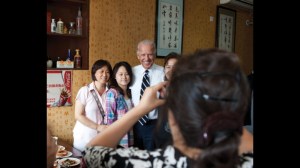
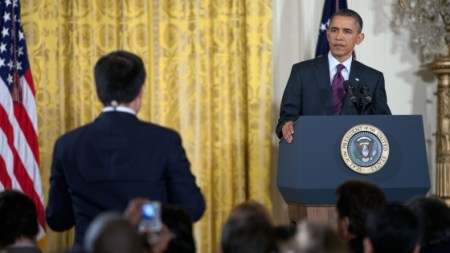

 Short and Sweet Blog