The U.S. Supreme Court heard arguments on the Hobby Lobby case yesterday. Hobby Lobby is a closely held (family owned) for-profit corporation. If you’re unaware or only vaguely aware of it, this case concerns whether a for-profit business corporation or its owners can claim the protection of the federal Religious Freedom Restoration Act (RFRA). Specifically, the question to be decided is whether RFRA permits a corporation to avoid compliance with the so-called HHS Mandate requiring businesses to supply cost-free contraceptives, sterilizations and abortifascients to their insured employees under the Obamacare law if compliance would offend the religious sensibilities of the owners of the corporation.
The for-profit corporation is our ubiquitous legally created “servant” but I believe that the unique nature of this type of servant is little understood. Most Americans see these servants rather as oligarchs and overlords. According to the 1919 Michigan Supreme Court case, Ford Motor Company v. Dodge, the nature of the corporation and its governance can be described as follows:
A business corporation is organized and carried on primarily for the profit of the stockholders. The powers of the directors are to be employed for that end. The discretion of directors is to be exercised in the choice of means to attain that end, and does not extend to a change in the end itself, to the reduction of profits, or to the nondistribution of profits among stockholders in order to devote them to other purposes.
There is committed to the discretion of directors, a discretion to be exercised in good faith, the infinite details of business, including the wages which shall be paid to employees, the number of hours they shall work, the conditions under which labor shall be carried on, and the price for which products shall be offered to the public.
It is pretty simple according to the law, a corporation is a “good man of business” which is the term used by Ebeneezer Scrooge to describe his late partner Jacob Marley in Charles Dickens’s A Christmas Carol. Corporations are our servants because we have created them to serve our needs. Corporations were conceived of as a method by which men could accomplish economically desirable ends for society which would otherwise be impossible or exceedingly difficult to achieve. Corporations are empowered to accomplish these economically desirable ends by means of a fictional personhood which permits organization of large amounts of capital and numerous employees. In contrast to humans as owners, who have inherent limitations chief among them being their mortality and other human frailties, corporations renew themselves with fresh blood whenever necessary and they can do so eternally. Corporate investors are provided with limited liability and, for this benefit, they surrender the control of the details of the business to a board of directors who themselves can be replaced whenever necessary or convenient. The limited liability aspect of the corporate ownership facilitates accumulation of large amounts of capital since the investors are not generally liable for anything other than their original investments. The corporation’s employees and customers can work for it and contract with it as if it were a person in its own right. In concept the corporation is just that simple. We shall see, however, in upcoming installments that there are unintended and un-envisioned complications of utilizing the corporate form including the possibility that a family like the one which owns Hobby Lobby, can be forced to use its money is ways which would clearly violate the “free exercise of religion” clause of the First Amendment and the Religious Freedom Restoration Act if the family owned the business other than through the use of the corporate form.
Well we’re back here again. In the middle of 2011 I wrote about budget cuts versus tax increases. The ideas haven’t changed much. The alignment of the parties in power hasn’t changed much. What has changed? The only major changes are that the US government has borrowed another $1.5 Trillion since then (about a 10% increase in the debt previously owed) and a so-called “fiscal cliff” looms on December 31.
What does the President have to say about avoiding this “fiscal cliff?”
It appears that cutting tax rates on the so-called middle class (the under $250K earners) so that these folks can get ahead will be defined as accomplishing the “urgent business” of avoiding the present “fiscal cliff.” Clearly, this “fiscal cliff” has little to nothing to do with the $100+ Million per month of additional debt we are still incurring (an additional .8% of additional debt per month). This “fiscal cliff” which the President is talking about has mostly to do with the expiration of the Bush tax rates, which will revert to the higher rates set under President Clinton in 1994 with the assistance of a Democratically controlled congress. This “hard choice” by the President cuts the guts out of the idea that revenue can be used to significantly reduce the amount of debt we are continuing to incur since the proceeds of an increase in taxes on the wealthy are paltry when compared with the tax bonanza of allowing all the Bush rates return to their Clinton-era alternatives. This ‘solution’ has the virtue, however, of being politically kind of easy since the “not middle class” don’t have very many votes. And, anyway, the capital gains tax rates on the real multi millionaires (many if not mostly being members of the Democratic party) will only go up from 15 to 20%, retaining quite the advantage over the folks who earn their income through their own personal effort. Even so, the President’s multi-millionaire constituents won’t fare so badly since the capital gains rate will still be quite a bit below Reagan’s capital gains rate of 28% even though the tax rates on the people who earn their living at work will be significantly above the 28% rate enjoyed under the same Reagan.
What wasn’t directly mentioned by the President was that this “fiscal cliff” also includes automatic spending cuts, half of them being taken out of the defense budget (a cut of nearly 10% in a single year). It may be a “defense cliff” but it just doesn’t seem like much of a generalized “fiscal cliff” when the $130 Billion in cuts is compared to the sheer size of a $3.7 Trillion federal government budget (3%). Maybe that part of the “fiscal cliff” doesn’t really bother him so much, you think?
The administration has also just opened a new front on the “fiscal cliff.” Through Treasury Secretary Geithner the administration is pushing for Congress to permanently forsake its authority to control the extension of credit by the United States. It is actually one of the 17 enumerated powers of the Congress, specifically Art. I Sec. 8.2, which provides that Congress has the authority,”[t]o borrow money on the credit of the United States.” Put this alongside the question of whether the Congress has the power to completely take over the health care system of the United States which is nowhere to be found, but that’s another question for another day. Here’s Secretary Geithner being interviewed by Al Hunt about it.
Talk about frightening. The executive branch is proposing a modification to the basic power structure of the constitution without attempting to amend it. Oh well, what else is new?
My conclusion is the same as it was 1.5 Trillion borrowed dollars ago. We must show that we can do the hard things in order to maintain our credibility as a nation. The hard things would include letting tax rates go up and stay up on everyone and cutting the budget in a way which is hard and painful for a large number of folks. We’ve got to do it in order to maintain the value of the dollar. In order to keep our credit rating. In order to maintain our self respect. In order to keep from destroying the good and healthy aspects of a government, of, by and for the people.
The 2012 election is over. Barack Obama will be president for four more years. The Democratic party still controls the U.S. Senate and the Republican party still controls the House of Representatives. Not much will change, right? Not so fast.
The Obamacare law, the fate of which was explicitly placed into the hands of the electorate by Chief Justice Roberts, will be implemented and the federal government will now slowly or maybe not so slowly take over the entire health care industry here in the good old U S of A. The Dodd Frank Financial overhaul bill will be implemented completely with a host of already written and a further host of as yet unwritten regulations including provision for another bailout fund and procedures to provide explicit governmental access to records of your credit card use (only to be used for good purposes of course). The EPA will be free to regulate greenhouse gas emissions as well as oil and gas fracking procedures. Large automatic cuts will be made to the U.S. defense budget and many taxes (including income, Obamacare and estate and gift varieties) will be going up substantially. Also, President Obama will be able to use his newly acquired flexibility to reach constructive agreements with Mr. Putin and Russia to say nothing of China and its new leadership. The Catholic Church will probably either have to abandon its outreach to those in need or decide how it can provide direct funding of abortions and still be Catholic. Two conservative justices who were born in 1936 will hopefully find themselves to be healthy 80 years olds in Mr. Obama’s final year in office. Yes, I observe that many very important things can and will change over the next four years even though the political parties are in essentially the same political juxtaposition that they occupied coming out of the 2010 elections.
I’ll tell you this though. If in the coming biennium the economy gets better in terms of the real unemployment rate (currently well over 15%) and there is a significant increase in real after-tax per family income, I may have to start believing in Keynes’s idea that it is animal (or other) spirits which move our economy. I will also be forced to stop believing that capital formation matters to economic growth as well as in the baseless and outworn concept that a free people prefer economic freedom to the illusion of economic security. I may even come to believe in flying monkeys in the next few years since I will be in such a state of flux.
While I believe that miracles can and do happen, I doubt that I’ll have to make these changes to my worldview between now and 2014 or even 2016. I doubt that the world as we know it will change. Therefore I am deeply concerned about what will happen. Destruction of our economy and way of life is one thing but in particular I pray, as the father of two strong young men, that our program of military disinvestment which is likely to be taken by our adversaries as a show of weakness, does not lead us into an unwanted and unnecessary war sometime during the next four years. Yes, while I seriously doubt that we will enter into a whole new world on January 21, 2013, here’s hoping in Hope for a Change in human nature.
After Paul Ryan’s selection as Mitt Romney’s number two the Joe Soptic laid off steelworker ad comes into sharper focus. In the ad Mr. Soptic chastises the Republican presidential candidate for his wife’s death some five or six years after a Romney-less Bain Capital closed his steel plant. Seems like a pretty stupid ad, right? The facts make the ad silly even more a lie about Mitt, right? Maybe not silly, it depends on what message the ad is trying to convey. With the selection of Paul Ryan as a running mate it appears clear that the battle will be fought on what the fundamentals of the American economy will be going forward. Will we be a free market economy with a bit of regulation or are we a command and control economy with a little freedom permitted to provide a bit of efficiency?
First let’s watch it one more time to get it fresh in our minds.
The first thing the ad does is to make the point that Mitt Romney doesn’t know the damage he does to other people when he makes economic decisions, such as whether to close a plant etc. Is this an attack on Romney or an attack upon the decision makers in a free market economy generally. Isn’t it really just an implied suggestion that individuals making financial decisions that affect others should have to be supervised or regulated in order to protect the innocent people who are employed in uneconomical businesses. It is clearly an attack on the very idea that there are economic decisions which must be made on mainly economic bases.
The ad goes on to charge that, “Mitt Romney and Bain Capital made millions for themselves and then closed this steel plant.” Is that possible? Can a corporate raider firm really make a great deal of money out of bankrupting a company while at the same time avoiding charges of theft or lawsuits for fraud? I won’t go into great detail but I doubt this very much what with tax laws, securities laws, bankruptcy laws, fraudulent transfer laws, stockholder derivative suits and the rights of bond creditors (at least when the bond creditors are not investors in GM) I don’t think that business owners make money by destroying their businesses. The facts are dense and difficult to understand in such cases and can therefore be spun to make people believe all sorts of silly things. If there were no successful prosecutions or lawsuits arising from Soptic’s plant closing, I think that we can safely believe that nothing quite as untoward as Soptic suggests actually went on there.
Now we get to the meat of the story. After Joe unfortunately lost his insurance because of the plant closing, a decision in which he had no input, his wife was taken to the hospital with pneumonia and her lung cancer was discovered. There is no doubt that this is a tragedy. But Joe pins this tragedy on someone in particular, Bain and Romney. The fact that there was a five-year lag time between the lay off and the pneumonia is not referenced. This fact indisputably exonerates Bain and Romney. In response to the implied question as to why his late wife didn’t seek any medical advice for symptoms of the lung cancer, Joe channels his late wife and suggests that she knew they couldn’t afford insurance. This ad is a dual indictment against the owners of the company. Joe’s first charge is that because the owners had previously made a profit from the plant that they were morally required to keep the plant open regardless of its present profitability. Second, and somewhat more subtly, he charges that the owners, including Bain, took the best part of his working life and that he shouldn’t have been laid off and left as a man who could only get a custodian’s job when the plant closed. I feel sorry for Mr. Soptic and his many losses but I think he is clearly allowing his anger to be used as a tool in a political campaign. He is a man in pain, looking for answers as to why God has allowed these things to happen to him and the people he loves, and he should not be so abused by cynical political people who should know better.
Was Bain supposed to keep an unprofitable steel plant in business for five years to provide high paying jobs and medical insurance to the plant’s employees? Were Bain and Romney legally or morally required to indefinitely pay people’s insurance who had worked at a plant closed because it was unprofitable? Why was a fund to provide continued insurance in the event of a plant closing not a benefit negotiated in the union contract? Is it possible that the employees knew at the time of the takeover that they would have been worse off without Bain’s involvement? I doubt that many in this country would hold Bain and Romney morally responsible for Mrs. Soptic’s unfortunate death. By missing Romney, however, this ad makes the system of free markets, for which Romney is a poster boy, the malefactor in the Soptic story. Misfortunes abound in a free market economy as they do everywhere else. Ending the free market system, however, would be a profound misfortune for everyone who values their individual initiative and the right to pursue their own happiness as they each see fit. This ad is nothing more than Michael Moore’s brand of half-truths and innuendos brought to the small screen. I pray that Mitt and Paul can overcome the Obama assault on our cherished freedoms, economic, religious or whatever, and halt the progress of the endlessly dehumanizing bureaucracy of the social welfare state.
Just thought I’d let you know where the foremost apostle of the gospel of robustness is putting his political money. Nassim Taleb assures us that it is not because of the chances of Paul winning the presidency but because of the fact that he’s the only one who even gets the problem. He was on CNBC last week and this is what he had to say.
The gravity of our problems seems to me, as it does to Taleb, extreme. How can we continue to go about printing and spending money without ever having to pay for it? Frighteningly, the foremost spokesman for building a robust economic system capable of withstanding severe shocks thinks that Romney and Santorum are no different than Obama in any substantial way. Wow. What does that tell you? Taleb is mentally ill? If not, how does our way of life survive? Ron Paul as president is our only chance according to Taleb. Remember, he was one of the few people who criticized the pre-2007 financial world for creating a house of cards which was bound to fall. If the chance of Ron Paul winning is the same as the chance Taleb thinks that we can avoid another 2008-10, what does that tell you? Whatever it is, I think it’s safe to say that he’s telling us that it is not a pretty picture.
I’ll bet that you’ve noticed that oil prices and gas prices have been increasing lately. The president and his Republican potential opponents have noticed too. Not surprisingly the president and the Republicans disagree about solutions. The president proposes a bold-sounding “all of the above” strategy which involves government intervention on multiple levels and a free hand for government to pick economic winners and losers. The Republicans on the other hand generally propose a much greater role for the free market in their strategies although they are also far from eschewing all government intervention in the free market. In response to the Republicans’ free market arguments the president suggests that the free market strategies are as mythical and fallacious as the idea of a flat earth.* Hear he is (yes it’s a pun).
The president’s “all of the above” strategy includes loans and guarantees for solar companies like Solyndra and the latest bankrupt, Beacon Power Corp. He likes wind power, as provided by the windmills his policies subsidize which are produced by his buddies like Jeff Immelt at General Electric. He also likes the Chevy Volt, which made by Government Motors, which is now subsidized by a $10,000 federal tax credit and which has been purchased in quantity only by his friend Jeff Immellt at General Electric.
If you haven’t heard of it I would like to introduce you to a discipline called public choice theory or public policy economics. It deals with political choices made about economic matters when it appears that the “market fails.” Rather than actually describing it for you, I’d like to leave it to Dr. Mark Pennington to talk about public choice theory and the idea that the manner in which politicians and voters engage in public policy decision-making often results in outcomes which are counter-productive.
The president’s “all of the above” strategy is nothing other than embracing the idea that the government should deeply involve itself in economics and markets in ways which will definitely affect outcomes for us all. He, of course, believes, that the free market in energy has ‘failed’ or is at least in the process of ‘failing.’ He also apparently believed this even before the recent spate of gasoline price rises.** Following his heart he has tried his hand at passing carbon trading (cap and trade), fostering green “start ups” like the aforementioned Solyndra and getting on the bandwagon for the electric car. He may very well believe in what he says he believes in, but even if the government is right that the market has in some ways failed, public choice theory asks the next logical question, why should we believe that the government should effectively take over all or a majority of the decision-making about this issue? At least one outcome, probably the highest probability outcome, is that government will only end up spreading the costs of these policies among all citizens and inhabitants and focusing the benefits of the government’s action upon those who are supporters of the politically powerful, like the CEO of Solyndra and Jeff Immelt and the union members of GM whose pension plans are still being funded while the common stockholders of GM lost their entire investment.
Let’s go a bit farther about the president’s idea of flat earthers. Flat earthers saw that the ground around them appeared to be flat, hence they reasoned that that flatness continued on ad infinitum. Was this rational? Yes. Was it correct? No.
The president and his ilk believe in macroeconomic planning. They know that people can make plans, like plans for a house, and that those plans usually work out, more or less. So, is it rational for them to believe that they can make a plan to achieve what is best for everyone in the country? I’d give them a very questionable yes on this only because not to do so would be too cynical even for me. Are they right about it though? No. Why are they wrong? There are several reasons. The first and easiest to understand is that the world is simply too complex to effectively plan for, because it has at its most simply understood level six billion moving parts. Beyond the sheer complexity of macroeconomic planning, how does Dr. Pennington see the effectiveness of government intervention in economic issues versus private decision-making?
I hope you’ve found the idea of public policy theory at least interesting if not wholly persuasive. The rest of Dr. Pennington’s talk at the Adam Smith conference in 2010 is on Youtube and I hope you’ll take a few minutes to become more familiar with these common sense theories.
*I do agree that there is a limited amount which the president can do to alter the pricing structure of gas at the pump for the near term. Interestingly, however, while the president as a candidate argued that what was necessary was a long term energy strategy to wean us off foreign sources of oil and increase use of green energy alternatives. at almost every turn this has meant that he has acted to slow down the development and exploitation of existing and newly discovered sources of hydrocarbon supply. Unfortunately (or it could be fortunately for the deficit) it appears that much of the potential for future exploitation and development is under government land or water over which the government has supervision and stands to make money. It is also curious that the president while at the same time touting his green energy strategy also touts the fact that he the US is actually producing more of its own energy resources than at any time in the last eight years due I might add to nothing of his doing. In fact his go slow strategy will only bear its own bitter fruit over the next half decade.
**Of course, Pres. Obama’s energy secretary Chu has previously been on record saying that he wants U.S. gasoline prices to increase until they reach those paid by the citizens of Western European nations, currently about $10 a gallon. In fact, the President himself has said that he doesn’t mind increasing gas prices, he just doesn’t want them to increase “too fast.”
Let me recommend for the contrast of ideas a blogger who disagrees with me on many, if not most, ideas on political economy. Steve Attewell is a fellow WordPress blogger at the Realignment Project. He has written much more than I have and is a very accomplished
Steve Attewell's Bio Pic
blogger. He is a very bright and articulate Ph.D. student in the history of public policy at UC Santa Barbara. Steve is a progressive by his own definition, a definition which can be found in the archives of his blog. Lest one believe that there is a lack of good faith on the other side of economic and political debates of our time, Steve’s blog shows this to be a demonstrably false notion. People of intellectual integrity, thoughtfulness and good will do exist on all sides of the debate (assuming that he would consider me and others of like mind as having the equivalent qualities) and I am happy to say, Steve is obviously a man possessing them. This is a pre-requisite for fruitful and informative discussion of any issue.
He recently wrote a blog post, ‘Living in the Age of Magical Austerity Thinking.’ He argues that those who believe that austerity is the answer to our current economic problems are incorrect. He can be forgiven if he goes a bit over the top when characterizing his intellectual opponents as those who feel, “. . . solicitude of the have-muches, distaste for redistribution, fear of state capacity, and fear for the rights of the managing classes . . .” since his economic thinking is largely informed by Nobel Laureate Paul Krugman. Krugman’s own ideas go beyond Steve’s tepid castigation, calling austerity adherents and their political representatives the equivalent of sadists. Some of my own ideas concerning austerity can be found here.
I recommend Steve to anyone who reads this blog as a balance to my own ideas. Incidentally, I admit to being McCurious, Steve’s interlocutor in the comments section of his Magical Thinking post. I also appear in the comments section of his post on GM’s ‘recovery’ as being indicative of the success of “Industrial Policy.”
I’ll be on vacay for a couple weeks. This is unfortunate because there is so much to talk about with the President’s jobs bill, the new “minimum tax on millionaires” and the Republican search for a presidential candidate in the air. I particularly look forward to seeing how the millionaire tax does in the Senate where there are so many wealthy paragons among the Democratic majority. Forgive my cynicism for doubting that they will pass this measure even while many of them will give strong lip service to it. They’ll prefer to attack the House, trying to put the “blame” on the Republicans for being shills for the ultra-wealthy. I hope that this is going to be the fight. I would like full hearings in Congress which investigate the underlying question: the real benefits of taxing capital gains at a lower rate than ordinary incomes.
Rep. Paul Ryan Courtesy SpeakerBoehner
I normally like Representative Paul Ryan’s take on things but this morning on the Fox News Sunday public affairs program is an exception. When defending the tax rate differential for capital gains Ryan could only fall back on the saying that, “when you tax something more you get less of it.” Exactly what does that mean in this context? Why doesn’t the same adage apply to all incomes????? Wouldn’t increasing all incomes be good? Why the advantage for capital gains? Let’s have the question of benefitting capital gains in relation to ordinary income put to the test out in the open meeting rooms of capital (pun intended) hill with C-Span covering the full proceedings. Ryan, who I believe has previously described himself as a Ronald Reagan Republican, will need to explain to the viewers why Ronald Reagan’s tax reform pegged the top marginal rate on all incomes, whether capital or ordinary, at 28%. Did that make economic sense then? Why not now? That’s the sort of political fight that I’d like to see.
At least the President is finally being true to his campaign position that taxing capital gains like ordinary incomes is a “matter of fairness.” You may remember my previous posts on the President and Warren Buffett’s view of the appopriate tax rates which should be applied to capital gains and dividend-type income, here, here, here and here. See you in a couple of weeks.
Tonight’s the big night. A joint session of Congress and the President will present (at least part of) a plan to create more jobs to reduce the 9.? unemployment rate. Is the air electric with anticipation? Well, uhuh, it’s not, unless you mean about the NFL opener between the last two Super Bowl champs, the Packers and Saints, which will start shortly after the President leaves the speaker’s podium.
What’s happening? It’s just another chance for the President to get on TV and use his teleprompter jiujitsu on his opponents. What will likely transpire is an announcement that there is an exciting list of things which will receive federal money so that “we the people can have jobs.”
Afraid of the moniker that he’s just a big spending liberal, the President will “pay for” at least some of these expenses with “revenue enhancements” paid for by the people who still have a little money left in 2011. The President will seek to tax away any money that might have been “saved” and make sure that it is spent productively, as is always the federal way. Although the Republicans in Congress have already indicated their refusal to go along with this, the motive behind the plan is so that the President can say in his re-election bid that it is the Republican refusal to go along with his brilliant plan that is causing the continuing malaise in the economy. And, he and his surrogates will go on, the Republican refusal is because they love the “rich” so very much and don’t care about the poor unemployed. There will be no discussion about why the plan would have worked or whether there would have been some job losses to offset the job gains if he had gotten his way. It’s the perfect political plan, make it look like you’re trying to do something while making the other guy look like he’s resisting for political purposes, not economic ones. Same old playbook. It worked with the debate over increasing the national debt limit. The Tea Party label is permanently damaged and they got less than a 2% reduction in spending for the fiscal year beginning October 1. He made them pay a pretty high price for that hollow “victory.” Same plan, phase II.
The President, I predict, will not suggest increasing the capital gains or divident taxes on the very wealthy, he will target instead the upper middle class. Tiresome and predictable but it’s worked (politically) before. So why not again?
I know one thing for sure. Mr. Obama doesn’t understand or, perhaps, care about the TANSTAAFL rule. The TANSTAAFL rule provides that there is no such thing as a free lunch, someboy always has to pay. And the only interest group which he feels should not pay in order to build up the economy is the massive and growing government sector.
Coils of USPS Stamps - Courtesy USPS Website
The government does actually produce things but mostly not things that the public would pay for at the prices it charges. It uses either monopolies or taxes to corral the resources to make it run. If we don’t watch out, though, plans like President’s will create an entire country in the image of the U.S. Postal System. And that would be a helluva shame.
U.S. vice president, Joe Biden, a practicing Roman Catholic, said something in “prepared remarks” during his China visit on Tuesday which I have difficulty understanding.
“But as I was talking to some of your leaders, you share a similar concern here in China. You have no safety net. Your policy
Biden in China Image Courtesy of Whitehouse.gov
has been one which I fully understand — I’m not second-guessing — of one child per family. The result being that you’re in a position where one wage earner will be taking care of four retired people. Not sustainable. So hopefully we can act in a way on a problem that’s much less severe than yours, and maybe we can learn together from how we can do that.”
Under that country’s “one child policy” the Chinese are restricted to having small families. In urban areas they are permitted a single child. In rural areas they are permitted two, but only if the first is a girl.
The vice president’s office responded to the growing controversy concerning these remarks through its spokewoman, Kendra Barkoff.
The Obama administration strongly opposes all aspects of China’s coercive birth limitation policies, including forced abortion and sterilization. The vice president believes such practices are repugnant.
All of this made me think. Assuming the office of the vice president is correct in saying that he views these practices as repugnant, how could he have been so deaf to the implications when delivering his prepared remarks on this issue?
I think that it is very clear, though he may find forced abortions personally abhorent, that Mr. Biden really more deeply believes that the Chinese Communist government has the legal and rightful power to inflict this policy upon it’s own people. I admit that, on examination of my own conscience, this is also the basic flawed mind-set under which I have been operating.
We need to spend a moment examining the conflict here. This is no small problem, a forced abortion occurs in China, according to a panel of experts, astoundingly every 2.4 seconds. Phillips, M. (2010/06/02), Women forced to abort under China’s one child policy. Washington Times. http://www.washingtontimes.com/news/2010/jun/2/women-forced-abort-under-chinas-one-child-policy/. That amounts to millions per year. Can this be true? If it is true, isn’t this entire controversy really about the inviolability of national sovereignty and the virtually unlimited authority of governments over their own people? Is it also about our government or perhaps any government’s right and, perhaps even, obligation to be values neutral in setting policy? Do ends in this case justify means? Are the ends, a smaller population of humans, an unfettered good thing? If so, what government policies can be tolerated in a civilized world even for the sake of achieving this good? Where is the line which cannot be crossed between governmental authority and personal human reproductive rights? Is it different for different countries? Do the citizens of one country have the obligation to try to effect change in the policies of another country if they violate personal human rights? What is the role of the government of one country vis-a-vis protection of the citizens of another country against the cruel or inhumane use of power by the government against citizens of that other country? Is this a legal issue or a moral issue?
I am thrust back into my youthful self-debates about national sovereignty and when and under what circumstances it should yield to other ideals. What burdens should be borne for those not of our own nation? Should we have forcefully confronted Germany on behalf of defending the Jews before most of those European Jews were murdered? Would that intervention have been legal? Should our government give much more in foreign aid to prevent starvation and poverty around the world? Can we use force against governments which refuse to take this aid on our terms, i.e. giving directly to the people of that nation bypassing the, usually corrupt, government? Or is the obligation to intervene more of an individual moral obligation animated by individual religious faith or other moral conviction? I am reminded of the woeful response we made to genocide in Rawanda. Should we have sent our military to prevent this genocide? How long would they have had to stay? At what cost in lives and treasure? Wouldn’t we be accused of being colonialists? And our military, is it intended to be used only in situations of threats which at least theoretically involve the United States? If not, and if it is seen as a vehicle for righting wrongs, shouldn’t we tell those in uniform that they are signing up for a job which is not solely protecting their country, but to be the world’s policeman? Should we, as a nation, at least embargo trade with China to try to end this repugnant “one-child policy”, as we did in an attempt to end apartheid in South Africa and communism in Cuba? This would obviously cost all of us in terms of the increased prices we would have to pay for things we now take for granted as being cheap or cheaper. The Chinese government would try to get back at us though using the trillion dollars worth of U.S. Treasury bonds that they hold. Is this a risk which is incumbent on the U.S. government to take or should we be left to taking individual steps against this abhorent Chinese policy? If we firmly believe that forced abortion is among the most repugnant and inhumane acts which can be committed regardless of who the perpetrators are, are we obligated to agitate to impose these potential burdens and risks on our fellow U.S. citizens who don’t share our view of morality or of human dignity? After all we are ultimately doing so in order to give women, Chinese women, the right to control their own uteruses. Sort of seems like a strangely reversed Roe v. Wade, doesn’t it? Is it a matter of the dignity of life for which the United States, in my own view, should always stand? But what of the lives of the Tutsi in Rawanda? Were the Tutsi blameless victims? Did we owe them a duty of protection? If so, why did we let them down? And then what of our own country, the right to life and the dignity of the fetus as a potential human person is not exactly respected here either, what of that contradiction? What is the moral difference between having a policy of forced tonsilectomies and a policy of forced abortions? Aren’t they both, under the theory of abortion used in this country, simply forcing women to render a bit of their own tissue?
I know the debate over the right to abortion in this country has scarred me. It has apparently scarred the vice president as well. He has pushed it down inside himself so far that the implications of what he was saying didn’t even occur to him. Bringing this issue of forced abortions in China out of the shadows will lead to an even more emotion laden debate between us and within us. It’s probably not what the vice president had in mind, but it is very a good thing. When we push it down and leave it out of our everyday thoughts and prayers, it just festers inside us. One thing I know is true and this is the point from which I will start, human dignity is human dignity regardless of the sovereign country in which the persons involved reside or of which they are citizens.
This post will begin a series of posts addressing the economic “common knowledge” of the American voter. The American voter has, particularly over the last 70 years, been asked to cast votes which require an education on basic economic matters. The level of education and interest which most voters have on matters of economics is frighteningly low. This leads to a public which can be easily manipulated to their own detriment. People don’t need to be Ph.D.’s in economics in order to vote intelligently but they must have a basic knowledge of how the economy works. They must know two things above and beyond all others. First, all resources are scarce and therefore cannot be put to every use imaginable. Second, never forget the TANSTAAFL rule. [There Ain’t No Such Thing As AFree Lunch, somebody always has to pay.] I will start this series by debunking, with the help of professor Mark Skousen, the profound myth that consumer spending makes up 70% of all spending in the United States in any given year.
The single most ubiquitous macro-economic “fact” known to most people in this country is that consumer spending is the most important element of the U.S. economy because it makes up 70% of all U.S. spending. Armed with this unimpeachable knowledge and intuitively knowing that economic activity is good for everyone, the average U.S. voter embraces the idea that spending money on consumption is an
Average Family Consumption 2008
economic virtue. In keeping with their own personal “common sense,” they embrace the idea that the best macro-economic policies for the government to follow are those which cause consumption to increase. This policy provides both goods and jobs for everybody and let the good times roll!!!! Nancy Pelosi, Chris Matthews and Jay Carney are but a few of those in the media and high government service who have recently articulated this idea in public. Here is Jay Carney ‘schooling’ a Wall Street Journal reporter on this subject:
But what if this “fact” is not actually true but only true because of the way a statistic, the GDP, is calculated? How would this change our preferred policies?
Let’s first deal with the “fact.” Ph.D. economist and professor, Mark Skousen, has made this analysis:
[P]ersonal consumption expenditures represent 70 percent of gross domestic product, but journalists should know from Econ 101 that GDP only measures the value of final output. It deliberately leaves out a big chunk of the economy — intermediate production or goods-in-process at the commodity, manufacturing, and wholesale stages — to avoid double counting. I calculated total spending (sales or receipts) in the economy at all stages to be more than double GDP (using gross business receipts compiled annually by the IRS). By this measure — which I have dubbed gross domestic expenditures, or GDE — consumption represents only about 30 percent of the economy, while business investment (including intermediate output) represents over 50 percent.
Let’s look at the economic statistics. The following graph is courtesy of the San Jose State University Department of Economics website (http://www.applet-magic.com/) which shows the relatively stable amount of consumption spending occurring in the economy during boom times and lean times.
U.S. Consumption 2005-2010
Whoa, that may blow a few minds so let’s see what this means. This means that subsidizing consumption is not actually the most important thing to American pocketbooks. The most important thing in the economic world is facilitating exchanges or trades of all kinds, including investments. This is because each trade leads to increases in the total of perceived value held by Americans because with each trade the parties believe that they have each gotten more than they parted with or the trade would not have occurred.
What public policies does this suggest? First, and most important, it suggests that government should adopt as few policies as possible which create incentive or disincentives for any particular type of economic trade over others. The more decisions and options which the American people themselves have without the government’s factoring into the equation, the more transactions and trades they will engage in overall. Following this prescription will lead, over time, to an increase in absolute number of trades among Americans and by definition an increase in the perceived value which exists in the economy overall. Over time this will allow the energy and creativity of Americans to be used in ways which create for themselves the world they want to see. If they are left to their own devices, they will work harder and longer to achieve their vision, it is human nature. This, in turn, will provide lift to all boats. That is what public policies on economic matters ought to do. But, pursuant to the TANSTAAFL rule, who will pay for this sort of freedom? The government and those who derive their sustenance from the government will pay, because the government will become less and less relevant to the economy and hence will lose some of the resources it now collects for itself. And who thinks this would be a bad thing?
BREAKING NEWS:
Secretary of Agriculture Vilsack was also touting Food Stamps as stimulus this morning on TV. Hey guys, why not just send every man, woman and child a check for a million dollars, on condition that they agree to spend it within one month, and $1.84 million in economic activity will be stimulated? If this transfer payment is such a good boon for the economy because people spend it immediately, let’s not stop with food stamps. Why not???? Man, these guys are so smart.
I want to share a thought I’ve had but is not yet fully cooked. I look forward to hearing from you if you have any insights or criticisms.
It is my hypothesis that in the last eight decades and particularly in the last four, the US has actually undertaken policies which have encouraged and subsidized current consumption on the basis that this is “good” for the economy. The corrollary is that saving is bad for the economy. Can this non-intuitive argument hold water?
Check out Chris Matthews spouting the party line and the commonly held belief about the economics of public policy.
In following the preferred economic policies of Chris Matthews and his “well informed” (those who took economics in school) brethren U.S. economic and job growth has been retarded and following this prescription over a number of years has led, albeit not obviously or intentionally, to the current financial meltdown we are experiencing.
First I should define my terms. Wealth means any thing which is valued primarily for it’s capacity to create a future stream of income in a competitive economic environment. Consumption means any thing which is valued primarily for the physical or psychic benefit of the creator or purchaser rather than for it’s capacity to create a future stream of income.
Everything which can be labeled either wealth or consumption is created by the application of human ingenuity or skill to the environment or context in which they live. Consumption is required to continue life. Wealth is built when there is excess over and above what is needed to maintain life and that excess is put to the creation of wealth. In the hunter gatherer societies, wealth may have been created by inventing and building a bow and arrow or a ladder for picking fruit from high branches. Whoever owned these tools could use them to create a stream of income in the future, income in terms of additional food animals and fresh fruits unavailable to other humans. The inventors of these products had to have had a bit of time to work on their ideas which was not absolutely required for subsistence activities. This “extra time” is something which, at it’s basic level, can be seen as savings. The results of these inventions created yet greater savings since it increased the productiveness of the people who used them and made still more time available to invent other things. Wealth (at least by this definition) and savings, in whatever form they may appear, are clearly inextricably intertwined.
As to savings, why do modern people, if they do, spend less than they make? First, they believe in saving for a rainy day. Second, they want to save because they would like to buy something in the future. Third, they desire to be free of having to live on current earnings, i.e. living from hand to mouth, and would prefer more leisure or other consumption in the future, i.e. luxury and/or retirement.
What do modern folks do with that which they don’t spend? First, they put it at interest with a bank. Second, they invest in businesses owned by them or people they know. Third, they invest in financial instruments. Fourth, they put it under a mattress or it’s equivalent, buying gold or government debt.
What do the first three of these have in common. They represent an investment in or purchase of productive capacity which amounts to wealth. Putting money in the bank has this effect because it is loaned out (or is used to support loans) to others who, at least sometimes, purchase productive capacity. The fourth, “putting money under the mattress,” is an attempt to the preserve the value of their savings when there appear to be unacceptable (to them) risks or disincentives in following the other alternatives.
Since the New Deal we have decided to make it government policy to increase consumption which it is my contention amounts to a decrease in wealth building which would have otherwise occurred. It is a trade off. In this undertaking the government decided to subsidize or otherwise advantage consumption over wealth building. This has led to predictable results which we all see.
It is understandable that the Roosevelt administration focused on the problem of deflation because once begun it becomes a sort of self fulfilling prophecy for “negative economic growth.” People wouldn’t spend money today because what they want to buy will be even cheaper tomorrow. This is true of both consumer items and wealth. People were trying to keep what they had because they were afraid of what was going to happen next. They thought it might be impossible to replace what they had. The “sure thing” in the minds of many was that over time their money would be more valuable tomorrow. The longer it went on the more fear there was and consequently the more reticence to spend money. Remember old FDR’s “The only thing we have to fear is fear itself” speech? FDR concluded that a government remedy was needed, as if the government hadn’t begun it in the first place, which would force or subsidize people into spending money. Enhancing consumption was good then, in the 1930’s, and this idea has persisted as the economic gospel for decades.
The first of the permanent government policies begun by the FDR administration was the social security system. In keeping with Matthews’ view and as explained by FDR in the following quote this was but a toe dipping foray into forced spending, to wit:
The Social Security Act offers to all our citizens a workable and working method of meeting urgent present day needs and of forestalling future need. It utilizes the familiar machinery of our Federal-State government to promote the common welfare and the economic stability of our nation.
The Act does not offer anyone, either individually or collectively, an easy life–nor was it ever intended to do so. None of the sums of money paid out to individuals in assistance or in insurance will spell anything approaching abundance. But they will furnish that minimum necessity to keep a foothold; and that is the kind of protection American’s want.
1938 FDR Address on the 3rd Anniversary of the SSA.
Okay, what am I complaining about? What incentives and disincentives did Social Security introduce with encouraging the spending of money? It had several effects on the Rational Economic Actors (REA) among us. First, it factually shifted the economic burden of providing an income to retirees from the retirees themselves to their children, grandchildren and great grandchildren. Second, it removed some of the economic benefit of having and raising children because it required those children etc. to pay a percentage of their incomes to people who had not borne the vast majority of the burden of raising them. Third, it tended to change the perception of children from necessities to secure old age into expensive luxury items provided to the public. Acknowledging this subsidy for the childless, the Rational Economic Actor [REA] tends to have fewer or no children. The REA will also reduce their personal savings during their working years in proportion to what their social security benefits are expected to provide. With this need for savings reduced the tendency of the taxpayer will also tend to more consumption. Furthermore, the government did not invest any of the funds obtained from working Americans in the form of current taxes in creating wealth for the future. If it were an insurance company from which a policy of old age insurance was purchased, the company would have had to invest the “premiums” paid by its customers in order to be able to pay the future claims for benefits. On the other hand, the social security administration received govenment IOU’s for the excess of taxes over expenditures which actually reduced the need for raising other taxes to defray day to day government expenses, hence further enhancing what was available to consume. As opposed to the requirement that an insurance company must save and invest to pay future benefits, the government simply raised taxes in order to defray any shortfall between “premiums” and “benefit claims.” When fewer children are born, as the REA reacts to the government’s subsidy, even more consumption is available to the parent. In short, there is nothing in the effects of this law which increases savings and the creation of wealth although it does reach it’s goal of subsidizing consumption.
The extension of the social security system from a supplemental income system to a rather more full pension system has increased the perverse incentives over time. The, in FDR’s words, “American” desire for a minimalist approach as indicated in the quote above, has morphed over time. None other than Frances Perkins, Secretary of Labor under President Franklin Delano Roosevelt, noted this in 1960.
“When I saw this bill adopted by Congress with a large majority of the votes of both parties and when I saw after a few flurries of opposition in later years, both parties to continue to improve it and to broaden it’s coverage and to make more generous it’s benefits, I have come to realize that not only was it the crowning act of my working life, but that it was perhaps one of the most useful blessings time has brought to the American people.”
As noted by Perkins, over time the social security system benefits were enhanced. In this, it is clearly the way of all government entitlements. They constantly evolve and grow. Their constituency becomes more organized and single issue motivated and their opposition becomes, effectively, politically suicidal. With every new benefit the incentive to save, invest and have children is reduced. Over time payroll taxes to pay the increased benefits are raised but since that tax money is not saved but is spent to pay ongoing government bills there is more consumption.
Then came the great Medicare benefit of Lyndon B. Johnson.
Even as late as 2004 additional benefits were added to Medicare in the form of Part D, a system of drug benefits paid for out of general revenues, i.e. with no new taxes to pay for it. And this was in a Republican Congress with a Republican President. How much clearer can this be? We are buying drugs now and the future tax payers are going to have to pay for them. This increases current consumption but does nothing about paying for it. Can it really be free?
The creation of the Medicare entitlement had the same effect as social security and it was based on the same funding mechanism, payroll taxes. The presence of Medicare emphasized the freedom from the need to save for a rainy day and actually enhanced the consumption effects created by social security and for the same reasons. It reduced the necessity of embracing the gift of children who, if they were raised them right, might pay for our future health care. About this aspect of Medicare President Lyndon Johnson said:
And through this new law, Mr. President [referring to President Truman], every citizen will be able, in his productive years when he is earning, to insure himself against the ravages of illness in his old age.
And in fact President Johnson specifically noted that government requirement would replace the filial bond between the generations, to wit:
No longer will young families see their own incomes, and their own hopes, eaten away simply because they are carrying out their deep moral obligations to their parents, and to their uncles, and their aunts.
Concluded LBJ in a speech in 1966 on the eve of Medicare’s debut:
Medical care will free millions from their miseries. It will signal a deep and lasting change in the American way of life. It will take it’s place beside Social Security and together they will form the twin pillars of protection upon which all our people can safely build their lives and their hope.
He was certainly right that it would forever change the American way of life. Perhaps not in positive ways, but certainly deeply and lasting.
And there is the creation of a trillion or more in underfunded liabilities in state and local public pension systems to say nothing of the federal system. According to Pew Charitable Trust:
All told, states already have set aside about $2 trillion to meet their long-term obligations. But they still need to come up with about $731 billion—a conservative figure that does not include all costs for teachers and local government employees.
How does this idea of underfunded public employee pensions work into my hypothesis? Well it works the same way. A public pension is a promise by a public entity to pay money for current services at some time in the future. When the public entity is not saving and investing enough to make the agreed upon future payment, the public entity is actually consuming more in public services than it can afford to pay for currently. Therefore future tax payers, largely different people, will have to make payments even though the previous and current tax payers have received the benefit of the services provided by the public employees. We have, in this way, enhanced current consumption (in terms of increasing government services) and not set aside enough money to pay the future costs of the retired workers who have provided or are providing those services. In a way, by making an unfunded promise, we have actually found a way of having our cake and eating it too.
Likewise, something which has been discussed extensively on this blog, tax policy has been favorable to current consumption. High wage earners have been taxed at the highest rates for both payroll and income taxes. Hence, the excess which the high income earners would have had available to save and invest was taxed away and made into current consumption by way of government spending. The larger the house which is purchased, the greater tax benefit from the mortgage interest deduction, which is another incentive to consume. The high wage earner sees what is actually nothing but consumption as a way to save on his taxes and buy something which is likely to appreciate in value (up until recently that is). It works the same way for second homes. The second home’s mortgage interest is deductible and hence subsidized by the tax code. It appeared for years to the REA that it was more likely that she would receive a big pay off when she sold her home or second home than if she would have paid the taxes on the mortgage interest and invested the difference in productive assets. This was particularly true when the tax law permitted appreciation on a home, up to $500,000, to be received totally tax free without requiring the money to be reinvested in a new home. Deductions such as the charitable deduction also tends to direct spending towards current consumption (what the charity will do with the money) over long term after tax savings and investment. The only tax benefit which favors savings and investment are the reduced rates for those who receive dividends or create profitable asset sales in the form of a 15% cap on taxes paid on dividends or long term capital gains. But given the rather small amounts left after most people, even high wage earners, have paid their federal taxes, only those who already have a great deal of wealth and savings to invest are the only real beneficiaries of this law. And of course, when such individuals die their estates are generally taxed at large percentages, thus converting savings into consumption. So there are clear limits on the actual benefit to saving and investing of the current capital gains law.
And then there is our preferred manner of keeping us out of “depression” which amounts to no more than borrowing huge amounts of money from future Americans in order to keep the “economy moving now.” As Chairman Bernanke said recently of his latest Quantitative Easing [QE] program (QE just amounts to buying government debt with money freshly off the printing press) and after the government has already issued more than 5 Trillion in public debt in just the last two years:
“By easing conditions in credit and financial markets, these actions encourage spending by households and businesses,” Bernanke said. “A wide range of market indicators suggest that the Federal Reserve’s securities purchases have been effective at easing financial conditions, lending credence to the view that these actions are providing significant support to job creation and economic growth.”
Emphasis added.
There is example after example of the public policies of this country directed at consumer spending at the expense of savings and wealth buidling. This has built a country which is focused on the here and now and completely forgets about the long term effects of anything. Even the idea of a depression is unthinkable. We’ve had a significant number of depressions in this country’s economic history and only one lasted more than a few years. And that depression is called the Great Depression because it was greatly extended by nearly every public policy initiative undertaken in a vain attempt to halt it.
Government has little power to affect the economy as a whole in a way which creates only winners. Our understandable aversion to short term pain has created a governmental policy which has limited our country’s creation of productive assets and wealth in favor of ever more consumption. The focus has been on consumption, Starbucks, luxury housing, second homes, expensive cars, and gadgets for everything has been the result. This means when it comes time to hire people to make and do things, there has been little invested in productive assets which would give them something to make or do. We haven’t applied a large amount of our wealth to create more wealth, we’ve consumed it. It’s been spent. All those luxury houses which have been foreclosed may never be used. Even maintaining and paying the utilities on them may be too much of a strain on our much poorer nation. Jay Carney, White House spokesman, is the poster boy for the idea that debt doesn’t matter, thwarting savings and increasing consumption is the RIGHT THING to do.
In the same way I suppose that riots are the RIGHT THING to do since they create damage which must be repaired. Maybe this explains his thinking on a whole range of destructive and freedom destroying government policies. Hey Jay, there is no such thing as a free lunch, somebody always has to pay.
Last Monday the President of the United States blamed the debt ceiling impasse on the so-called Tea Party Caucus in the House of Representatives. Said Mr. Obama in his nationwide prime time televised address, they can be compared to a scattering of others before them who “held fast to rigid ideologies and who refused to listen to those who disagreed.” Here’s the segment of Mr. Obama’s address from which this quote was taken.
The Tea Party members, for their part, seem to be refusing to go along with a debt limit increase when the quid pro quo is Mr. Obama’s promise that there will be cuts, trust me. The Tea Party apparently asks for promised cuts and also Congressional approval of a balanced budget constitutional amendment which does not become law until it is adopted by 3/4 of the states.
In the view of the President, the rigid ones, the Tea Partyers, won’t be remembered for their ideological stand for less debt or a balanced budget amendment. Instead, according to Mr. Obama, the ones we should and do remember are those, supposedly like him I guess, who “put country above self . . . .” and who “. . . set personal grievances aside for the greater good.” This is nonsensical. The Tea Party has no animosity towards anyone. Most of the Tea Partyers are not even interested in being re-elected if they don’t achieve this goal. They want to balance the books. Plain and simple, their goal is to put this country on track to live within it’s means.
The public is apparently mad at the Tea Party. The public is, according to the polls, clamoring for a “compromise” which I think means simply that they want to go back to life as usual. Stop messing with the credit markets. A plague on both your houses. Stop threatening us with fewer benefits or more taxes. Just stop, stop, stop.
The people calling for compromise now are the same ones as those who called for compromise when Bill Clinton faced down a Republican Congress back in 1995. Clinton faced a Congress which wanted a significant change in the business of government as usual. This Congress, the first Republican Congress in 40 years, passed budgets with significantly lower budget deficits and no tax cuts. President Clinton, however, vetoed several of the budgets they passed and shut down the government before the Congress gave him what he liked. The ones we remember, President Obama says, are those who set aside pride and party to “form a more perfect union.” Mr. Clinton is, however, now widely revered and Mr. Gingrich, the leader of that Congress, is still largely reviled.
If the current situation is a replay of 1995 the Tea Party insurgents are playing the role of the fiscally conservative Republicans who came to Washington to cut the budget that year. The 1995 insurgents were pilloried in the press as being too extreme and in seeking to balance the budget on the backs of the poor. They just wanted to cut too much. Mr. Clinton shut down the government rather than give in to the Republican congress. In 1995 the people called for compromise, they just wanted to be left alone. And they got it and 16 years later we’re much worse off than we were then.
I think that President Clinton beat the 1995 Congress because we the people knew that the Congress was calling for something like austerity. Something like a balanced budget. Something which would change our cushy lives. We the people have reached the same point today only the Congress is divided. And the Tea Party holds a significant power base in only one chamber. We the people, however, want to go back to what we had before. We don’t want to be bothered by budget cuts and other revenue enhancements.
In 2011 when we answer our phones to talk to pollsters we say we want compromise. We act superior and tell them that we just want the politicians to act like adults!!! But we know, in our hearts, that what we really want is just business as usual. We’re happy to shoot the messenger. We wish to eat drink and be merry for tomorrow we may die!!! In the present case, as it was in 1995, the money we are spending will be paid back, after we die, by our children and grandchildren. We don’t want to cut the budget today or over the next eight years or ever for that matter. We avoid this because it will hurt. That is the bottom line. We the People aren’t really weary of the ‘ideological warfare’ between spenders and savers, we just don’t want to cut up the credit card just yet. We erroneously thought that we were willing to cut up the card when we elected fiscally concerned members in November of 1994 as well as in November of 2010. Now, when it comes to the pointy end of the spear or the sharp edge of the budget axe, we really just prefer not to change.
Unfortunately, either a minority like the Tea Party is going to need to hang tough and make us fix this although they’ll be acting in a throroughly undemocratic way. Or alternatively things will change when someone comes from the outside, like the rating agencies, and forces us to change. But we won’t believe that they will do it until they do do it. Until then we will continue to believe that we can be rich by collecting the printed dollar bills dropped from airplanes and helicopters. In fact if gold itself, all of a sudden, became as commonplace as paper, we couldn’t get rich by picking that up off the ground either. We will only stop when we have no ability to fool ourselves and stop looking to others to pay our bills. This, I think, is the meaning of what the rating agencies are telling us. They, the agencies, are just losing confidence in our willingness to be grown ups, and by that I mean somebody willing to cut back on their current expenses in order to pay the debts they incurred for goods and services previously provided. In the end we’ll get what we deserve unless we decide to support this strange ideology which believes that we need to pay our own bills now and stop putting the hard things off.
As I write this the Debt Ceiling talks are on life support. The president has become involved in order to revive the talks. Although the nominal focus of the talks is upon raising the borrowing limit, the nuts and bolts actually concern budgetary reform.
A few days ago Republican talk participants withdrew. The withdrawal was apparently caused by the insistence of Democratic members on raising taxes. The president met with congressional leaders from both sides. At his press conference Wednesday he chastised the Republicans for being unwilling to raise taxes on some, including jet owners, in order to pay for things like student loans and other high priority federal government programs.
June 29 Press Conference (Courtesy WhiteHouse.gov)
Just before the 2008 Democratic landslide election it was Fox News’ resident liberal, Juan Williams, who said, and I paraphrase, if the Democrats win this election in the numbers it appears that they will (and they did) there is one thing that won’t matter — the deficit. How prescient was Williams? The question is, though, do the deficit and the federal debt really matter?
To answer this question you must first understand what a dollar is. We all know that a dollar is a unit of value. It is the unit which we use to facilitate our economy. How does this work in practice? It is only paper after all. It works because on every dollar bill there is the legend, “This note is legal tender for all debts, public and private.” In that phrase is the value. By federal law you use the dollar as the means of paying your debts. But what if the transaction doesn’t involve dollars at all, though, what is the role of the dollar then? How is the dollar involved?
Let me give you an example, what if you and I agree to trade my Kawasaki dirt bike for your 1994 Ford Thunderbird. After the transaction, under IRS rules, the the party which received the vehicle with the greater market value in dollars must report that as a gain on his Form 1040 and pay income taxes denominated in dollars on the gain. But let’s suppose that one of us backs out of the exchange, what happens then? The one wishing to perform takes the other one to court. In the typical court proceeding the judge will not order the physical exchange to occur but will issue an order that the party refusing to perform must pay the performing party the difference in market value between the two vehicles plus, in many instances, attorneys fees, all of which are reckoned in dollars. Hence, even in situations not involving dollars per se, the dollar is ever present.
What then backs our dollars? Where do they come from? Is it just a big secret or a fiction we all agree on or does it really have something to do with the real world?
FDIC "Teller Sign"
Our dollars, at least the greater part of them which are in banks, are backed by the full faith and credit of the USA through a federal agency called the FDIC. FDIC provides deposit insurance to bank depositors. This insurance says that if the bank goes bust that the vast majority of dollar deposits will be made good by the federal government. If the bank doesn’t have the money then the FDIC will stand good for their debt to you which is represented by your deposit in the bank (up to $250,000 per depositor).
Where does the FDIC get it’s money? It gets the money first from premium payments by banks and when reserves from those premium revenues fall short the FDIC can draw on the borrowing power of the USA and if the borrowing power of the USA falls short the Federal Reserve Bank will simply print the money (although the Fed will receive a federal bond in the amount of the cash created like it did during QE and QE2) and the FDIC will in turn give it to the disappointed depositors. Problem solved?
As our president is finding out, however, the ability to print bonds and dollars does not mean that you have unlimited wealth. You cannot print them at will and in any amounts you wish without consequence. The government may have access to dollars (through an increase in the national debt limit which is simply the ability to print more bonds) but the actual value is not in the ability to print bonds and inject the dollars into the system. That process is clearly limited only by the availability of paper and ink. The real value of the dollar relies in a very real sense on the resolve and dependableness of the USA to make the hard choice of choosing to pay it’s creditors first out of it’s income and consume only what is left. A reputation for dependability in seeing that creditors are paid is what gives the dollar it’s value.
In seeking to raise the debt limit the government is not showing the world we are as dependable as we have always been. We are not seeking to pay our creditors out of our income. We seek to borrow some more in order to pay our creditors back. In seeking to raise the debt limit today the government is really just putting off the day when the dependability of the USA will really be tested. And ideally for this government, that ultimate test will happen only after the current crop of debt-increasing politicians has left office. Now, after a bit, we get to the real point of this post.
How is it possible that passing a resolution to create more federal debt, basically just printing more greenbacks, indicates that the US is a dependable nation? It simply doesn’t. It shows nothing but a devil may care attitude towards being dependable and hence towards the value of the dollar itself.
Well then, how is it that the US can show that it is a dependable nation? How do we demonstrate that the value of the dollar should be relied upon now and in the future because it is backed by our full faith and credit? We must do something which is hard. We must show that we can endure the pain of taking responsbility for the debt. We must make what the president calls the “hard choices.”
Showing dependability cannot be achieved to any great extent by extending the depreciation schedules for jet plane owners, or by “making the tax code more progressive” or by taking itemized deductions away from all those who make $250,000 or more. Raising taxes, while possibly being helpful in reducing the debt, will actually be counterproductive to the idea that the majority of people in this country have the resolve to do something hard. It will demonstrate that a majority are not interested in giving but are interested only in taking!!!!
That the top 10 per cent of income earners in the US already pay around 70% of all US personal income taxes is well known. What is not so well known is that a trememdous part of the US government’s budget is made up of “transfer payments.” Transfer payments are payments which are made without the government getting anything valuable (except a vote I guess) in return. Federal transfer payments make up these percentages of the total federal budget: 20% in social security payments; 21 % in medicare, medicaid and CHIP payments; and, 14% in safety net programs.
If we do not show a willingness to fundamentally change ourselves by rejecting the idea that the federal budget should predominately be a vehicle for transfer payments, we will simply not show that we are willing to accept hard choices. We will give evidence that we are a people who want someone else to pay our bills and are not, therefore, very dependable at all except in our wants. We will show that we are willing to raise the taxes of a few in order to pay the bills of the many. Perhaps raising taxes, an outcome apparently desired by the president, will help balance the books in the short run however it will do nothing about the long run problem of a country which is interested in living at the expense of someone else. Unless we show that we, as a people, reject the belief that our federal government is mainly a vehicle for transfer payments, we will prove that our full faith and credit is just not worth very much and the dollar will eventually be valued accordingly.
A cynic might say, ‘what other decision would one expect from a form of government which has no effective protection for the property right of the minority in their own income?’ This nation has been exceptional so far and I fervently hope that it will remain so by debunking this voice of the cynic. In fact our country must debunk the cynic or risk allowing the entire idea of self-government to perish along with the value of the dollar.
The Treasury Secretary and other government officials began a full court press in January in order to get the Congress to raise the debt limit on the US national debt. As you know, without counting social security IOU’s, the debt stands now at $14.3 Billion. The interesting argument Obama operatives are using is that increasing the debt limit will somehow show that we are serious about paying our debts. With their adult and serious faces on Obama’s entourage says that passing a “clean” debt increase will assure our creditors that they will be paid. Apparently our creditors will be satisfied even though they are being paid mostly with money manufactured out of thin air by the Fed through its QE2 program. What does this mean for finding real lenders after QE2 is over? Here is what White House Chief economic advisor, Austan Goolsbee, said on ABC in January:
The pressure has continued to mount on the so-called Tea Party Freshmen in the House to raise the debt ceiling without any quid pro quo process to constrain out of control spending. Supposedly, according to the pundits and Obama accolytes, issues of spending are better left to the political process of passing a budget. Of course this wasn’t so easy for FY 2011’s budget which the Democrats, even with overwhelming majorities in both houses in 2010, failed to do.
Does this strike anyone else as ironic or even extremely ironic? Is it not at least a bit incongruous that the administration which ramped up spending to astronomical levels and which lost a mid-term election at least in part because of fiscal issues, is now pointing at the Tea Party Freshmen as lacking concern for the country, now defined as a seriousness about honoring our debt obligations. That the administration has gone out in full campaign mode to advocate a policy of nearly unlimited borrowing in order to “calm” the markets about our debtworthiness also seems a little ironic to me. Remember the old but tried wisdom of George Washington when addressing the issue of debt repayment: “To contract new debts is not the way to pay old ones.” – Letter to James Welch, April 7, 1799. I suppose times and financial fashions have changed in two centuries.
Exactly who is more interested in paying this money back with something of value? Is it the Tea Party Freshmen who came to office on the idea that they would rein in out of control federal government spending? Or is it the administration which is poised to borrow yet another $1.7 or so over the next 12 months? Who will bondholders believe has their best interests in mind even if there is an interruption in the operation of the printing press? Is it administration which is looking to “borrow” the principal and interest from the Fed to pay the maturing debt along with much more to “invest” in domestic priorities or is it those people looking to try to keep the government’s spending within it’s means? Think of yourself as a bank, to which of these two would you rather loan money?
The Administration has tried to frame this debate in political rather than in economic terms. They know that if they can successfully make the Republicans look like politicians seeking a political victory, particularly at the country’s expense, rather than as deficit hawks looking after the public treasury, that they may be able to avoid having to make substantial cuts to the FY 2012 budget. This will provide them a political victory because it will demoralize Tea Party types since their substantial victories in the fall will have counted for little. The Democrats hope the Partiers will either stay home or vote third parties in 2012.
Furthermore, the Democrats are setting up a scenario that even if the Republicans take this issue to the limit and are actually successful in making big inroads in spending but the economy heads into a double dip either because of this or for any other reason before the election, it is the Democrats who will win politically in 2012 and the president will very likely be re-elected with a mandate to spend even more borrowed money to avoid further economic catastrophes. It is quite the political gambit and it looks to me like it may work. Strangely the adminstration in power will be in a position where they can argue that the deficit hawks caused the problem and the problem wouldn’t have happened if the government had “stayed the course” of continued high deficit spending. As a member of the chorus, Treasury Secretary Geithner said in a recent warning to the Republicans concerning using the debt limit vote to force constraint on spending:
(Lawmakers) will say there’s leverage in it, we can advance it. But that would be deeply irresponsible and they will own the risk.
It won’t happen in the end, but if they take it too close to the edge, they will own responsibility for that miscalculation.
”
Clearly Geithner is saying that Republican lawmakers are intentionally running the risk of economic catastrophe to even take the issue to the brink in order to force spending cuts because they supposedly “. . . understand that you can’t take any risk the world starts to think the United States won’t meet its obligations.”
“There’s no conceivable way that this city, this government can court that basic risk,” Geithner said.
Obama’s argument is: don’t worry about the soaring debt, what you really need to worry about is the possibility that somebody will put a stop to large scale deficit spending upon which our “prosperity” strangely depends. Here is the vice president making the case explicitly:
This is a “Catch 22.” If we keep borrowing to pay for failed ‘stimulus’ we go bankrupt. And according to Biden, if we don’t keep borrowing and spending like crazy, we go bankrupt. The irony is that we go bankrupt either way. For my part I’d rather go bankrupt from being pennywise than pound foolish. I’d rather do with less now and set the stage for future prosperity than leave a growth-defeating debt for future generations to cope with. I hope it’s not just me who feels this way.
It is widely believed that the Obama “budget plan” to be announced today will call for an increase in tax rates on the “wealthy.” Wow, what a difference four months makes. As readers of this blog know there are two forms of income received by the “wealthy.” Ordinary income, obtained through personal work and effort and “capital gains and dividend” income, obtained through investments. A fellow blogger, Chad Aldeman of “The Quick and the Ed Blog,” has analyzed the effective tax rates of US top 400 income earners for 2007. This is what he reports:
. . . . [T]hat the super rich have been paying smaller and smaller portions of their incomes to taxes*. The chart below shows the effective tax rate for the richest 400 American filers from 1992 and 2007. The blue line represents the highest income tax bracket, the red line is the tax rate on long-term capital gains, and the orange line is the average tax rate that the richest 400 filers actually paid.
There are two important things to note from this chart. The first, and most visually apparent, is that the tax rates of the rich are far more closely linked to the capital gains taxes than income taxes. Salaries and wages, the source of income taxed at the blue line, represented only 6.5 percent of these filers’ income. Nearly two-thirds of their income comes from capital gains, and this is why you see a much tighter coupling between the orange and red lines.
As provided by the Tax Foundation, taxfoundation.org, in 2008 the total Adjusted Gross Income for all filers with incomes above $380,000 (the top 1%) was $1.685 Trillion dollars. These people already pay about $392 Billion in income tax. Therefore, even if we took 100% of all the money earned by everyone in the top 1% of filers, we would still have a deficit of about $400 Billion for FY2011. As with the effective rate figures for the top 400 income earners in the chart above, the effective income tax rate for the top 1% is far below the 35% maximum rate. In fact it was 23.27% for the entire top 1% in 2007. This is less than halfway between the capital gains/dividend tax rate of 15% and the top income tax rate of 35%. In fact it is only 40% of the way.
What these facts mean, I believe, is that we need to look at increasing the capital gains tax rate (as well as limiting the exclusion from taxation for municipal bond interest) as a means for increasing the government’s take. There is a lot of room here for higher taxes, don’t you think? This is especially true when you understand that higher wage earners pay, in addition to income tax, 12% social security tax on the first $110,000 of earned income and 3% medicare tax on everything they earn from personal work. On the other hand, the capital gain/dividend crowd, the truly wealthy, pay 0% in either “entitlement” category.
I wonder what President Obama is going say about taxes. Maybe he’ll go for goring the capital gains/dividend crowd by 5% more, from 15% to 20%. Well, La Dee Dah. How about proposing that this preferred tax rate rise to it’s Reagan era level of 28%? Or might this proposal hurt Obama sponsors like Mrs. Heinz Kerry, Mr. Soros, Mr. Buffet, Mr. Gates, or even Mr. Gore? Therefore, I doubt very much that Mr. Obama will suggest that the capital gains tax rate should rise to more than the Clinton era’s level of 20%. This, it should be noted, is in stark contrast to the words of candidate Obama who declared that increasing capital gains tax rates was a “fairness” issue. I, of course, would advocate heavy congressional scrutiny of any proposal to increase anyone’s taxes to make sure the increase is not self defeating for the country, however, if we are going to consider raising taxes on the wealthy, let’s consider more than a single aspect of the “taxing the wealthy” issue.
I have a question. Is it easier to make a living by competing against other hard nosed competitors for the success of having the best and most economical product or by forming “partnerships” with the federal government furthering the government’s purposes in exchange for a share of the pie guaranteed by government power? The latter has the additional advantage of raising the prestige of the corporate power players. I think I know the answer. Let’s see how it works in real life.
Did you hear how many Chevy Volts have been sold by GM dealers in the last three months? It seems to be about a thousand or so and this is with a very generous federal government subsidy of $7500 per vehicle. Did you also hear recently that GE’s Jeff Immelt has agreed to purchase either 25,000 or 50,000 GM hybrid products over the next two years, including Volts.
Chevy Volt courtesy Swirlspice
That’s quite a jumpstart for a car that seems to be having some trouble getting into people’s garages. Perhaps the trouble for consumers is the price tag of over $40,000. Perhaps even more important than the premium price tag is the fact that Consumer Reports found a few significant problems with the Volt when they tested it and published their review. In any case it is undisputable that the public has yet to catch on to the benefits of owning a Volt.
Enter GE, stage right. The GE purchase from GM (government motors) is a big deal for all concerned. I wonder why it happened? Maybe GM has given GE real special pricing (like 30 or 40% off) or maybe something else has happened? Is it possible that GM and GE are now secret partners of some kind? Or is GE just somehow dumber than the ordinary consumer spending his own money and reading Consumer Reports. Or is GE’s Immelt perhaps just way smarter than those consumers who resist the $7500 tax incentive, after all GE’s Immelt was recently named Chairman of Mr. Obama’s Economic Advisory Board. From this vantage point at the top of Washington’s business heap, I’m sure Immelt sees information which tells him that the price of oil is going up (but uh oh, on the other hand, what will happen to the economics of this purchase if the price of electricity goes up along with the price of oil)? It’s hard to figure what real economic benefits GE receives for making this nearly $2 Billion purchase and GE isn’t letting us in on Immelt’s thoughts.
Is it possible, though, that the real source of the impetus for this purchase lies in the fact that GM and GE are both closely connected with federal government–otherwise known as the source of all power and largesse in the universe, and that these two behemoths of industry have found this to be a compelling interest they have in common?
Are GE and GM cooperating because they are being operated as subsidiaries of the federal government? Remember GM is still owned to a large extent by the feds. Remember also that GE is real big into green energy technologies. GE is in the business of making wind generators. They also make all sorts of high tech electrical devices as well as the lowly lightbulb and are positioned to rake in vast profits in any federal subsidy or mandate program designed to support the green energy industry. Such mandates and subsidies might even be designed by the government to target products in which GE has the advantage. It is also true, as you may recall NBC, the formerly GE owned network, constantly beat the political (public education) drum for green energy. Are these things just coincidences?
Can this be the interest which both of these giant companies have in common?
Remember Mr. Obama’s “business friendly” statement during his state of the union address:
Clean energy breakthroughs will only translate into clean energy jobs if businesses know there will be a market for what they’re selling.
In Washingtonese this means that if the public is forced or induced to buy GE’s products, this will encourage and profit GE to make those products. In this way the government can create an unlimited market for “inventions” whether the public would willingly buy them with their own money or not. This statement had to be music to the ears of GE and Jeff Imelt, it’s CEO, since you may know that in the last five years the stock price of GE has fallen over 40% and was at one point in 2009 down over 70%. In that regard, it seems that President Obama at his State of the Union addressv was preaching to his choir, Immelt and GE.
Jeff Immelt, CEO of GE
Even before the President’s speech, but after the 2010 midterm election victory by Republicans, Immelt publicly suggested that he would be willing to use the economic clout of GE to support other companys’ high tech inventions when he said:
Business backing for new technology such as advanced autos is going to be more important as government spending wanes.
What use does a business like GE have for “backing [the] new technology” of other companies for the technology’s own sake? Aren’t corporations like GE in business to make profits for their own shareholders? Can it be true that Immelt and other corporate power players are just adding to their own prestige as deal-makers with stockholders’ money? Or is it possible that their main motivation is to lay the groundwork for important future “public private partnerships” where the government can lay the competition low through it’s regulatory and taxing power?
Whether this is just synergy in business or corporatism Mussolini-style is not unambiguously clear but it does bear close watching. In view of the price tag and the report by Consumer Reports, one should look skeptically at the idea that GE acted because it found the Volt a compellingly efficient piece of equipment rather than because it saw the opportunity to make a deal with the current interventionist administration.
I generally like unions which are formed by the workers of a single enterprise. It gives people who have worked at a job for some time a voice vis-a-vis management. It also binds the workers to being realistic and to avoiding outrageous demands which could make the business uncompetititve and cost them all their jobs. The discipline provided by such a one-on-one arrangement obviously does not apply to public sector unions which are hardly competitive with anyone.
Why are public sector workers usually barred from striking? There are several reasons. First, their jobs are usually vitally important and have to do with public health and safety. Second, their jobs usually amount to monopolies, i.e. police, firemen, air traffic controllers, etc. Third, there is no competition or limited competition between private sector and public workers and hence no recourse in the event of a strike. With public employee monopolies or near monopolies the right to stop work amounts to a right to extort the public and such a situation is even more dangerous because it includes the taxing power to collect the extorted payment.
What’s up with public school teachers in Wisconsin? Public school teachers, under Wisconsin law, are denied the right to strike. Notwithstanding this legal technicality they have staged a ‘sick in’ and have arisen from their sick beds to go to the capital to protest what appears soon will be the law in their state. The rotunda of the state capital has, from time to time, been filled with thousands of ‘sick’ teachers who are taking their complaints to the government. They are asking their government to redress their grievances. They are exercising their political rights to try to get the best darn pay and benefits deal that they can. Yay.
The public teacher unions are protesting passage of a bill which will refuse teachers the ability to collectively bargain about anything other than salaries. This would mean that benefits and work rules would no longer be fair game for collective bargaining. The public school teachers’ voices as to the education of our kids would no longer drown out the voices of the rest of us. A system excluding non-wage bargaining would have the effect of preventing a political deal where local elected leaders could strike a bold stance on limiting the growth of salaries while providing them the wiggle room to promise future benefits to be paid for by people who may not even be current taxpayers and voters, i.e. pensions, retiree health benefits and prospective work rules.
I propose a compromise with the public teachers’ unions which would be in the form of a quid pro quo. Public school teachers would agree, in exchange for regaining full bargaining rights, to the implementation of a primary/secondary school voucher program. The program would be simple. It would allow, upon reasonable notice, any parent to receive a voucher to educate their child. The voucher would be paid out from the funds of the local school district in the amount of 50% of the per pupil average cost in that district, excluding the debt service on buildings already built. After full implementation of this voucher system the ability of public school teachers to collectively bargain on every issue, including fringe benefits, would be reinstated. Plus, in this deal, they would gain the right to strike.
My plan would effectively increase the funding for public education since the voucher would represent no more than 50% of the average per pupil funding in any given district. For every student who moves out of the public system and into the private one, 50% of the funding for that student would remain in the public schools. In that way with people supplementing the voucher with additional funds in order to place their child in the private institution of their choice, the total amount of school funding (the sum of both private and public funds) would increase. This, in turn, would make more funds available per pupil for paying public school teachers’ salaries and benefits. It would also introduce an economic element to the competition between schools which has been sorely lacking. And finally it would end the monopoly or virtual monopoly which public school teachers have had on the taxes paid by the public for education of the young.
In short, public school teachers would be given the right to collectively bargain and strike in return for giving up their virtual monopoly on the public funds used for educational purposes in Wisconsin. Simple and straightforward. Everyone is a winner.
One of the President’s principal messages from his State of the Union Address, emphasized by his weekly video message released last weekend, was this: WE MUST MANAGE U.S. ENERGY MARKETS. In both messages he succinctly states his case: “Clean energy breakthroughs will only translate into clean energy jobs if businesses know there will be a market for what they’re selling.”
And slightly differently in the weekly message he states:
“And to give these companies the certainty of knowing that there will be a market for what they sell I set this goal for America: by 2035 80% of electicity should come from clean energy.”
There can be no mistake, the President wishes to mandate what you are permitted to buy in terms of energy.
That means Obama believes in a monopoly of the most basic element of physical life, energy. Are monopolies bad and what will be the effects of monopoly power in energy? Such a monopoly will necessarily cause energy prices to rise:
What, if anything other than price increases for energy, is wrong with a government monopoly in energy? The underlying assumptions are wrong, such as: (1) the government is smart enough to correctly predict what energy source(s) will most economically and efficiently replace fossil fuels in the mid term future; (2) the government will make economically intelligent decisions about which individuals and companies to subsidize because it always makes decisions strictly on the basis of merit; and (3) government will divorce itself from politics long enough to do what is in the best interests of the ENTIRE US public to permit them to pursue their own happiness.
The first thing we need to understand is that energy is not just coal and oil. Taken at it’s very basic level energy is “the what” that makes things happen. The energy which the President has in mind is all the ways which we humans have discovered to cause our world to go. It even includes food energy, which makes our own bodies go, when government policy inefficiently (and apparently counterproductively)causes reductions in the availability of food by subsidizing its use as fuel and mandating that it be available for our cars. In short, it is about everything which runs things.
From an economic point of view it is important to really understand that controlling energy means controlling everything physical in our world. How can that be? That is because the price of energy is deeply embedded in the cost of every product and service we create or consume. At it’s most fundamental level everything we do in terms of work and play is about human ingenuity being used to manipulate energy in ways to create wealth and pleasure.
Let’s consider what a monopoly on energy will do to the economy. For instance, preparing a delicious hamburger is about manipulating many different forms of energy. It includes the growing of grass and corn and requires gasoline to plow the field and gasoline to transport the livestock to and from the pasture, feedlot and meat processing plant. Electrical power is used for numerous purposes in the processing plant and in the freezing process. Then gasoline is again used in transporting the ground beef patty from the plant to McDonald’s. Lots of electrical power is used in the restaurant and perhaps even natural gas for cooking the food. If you increase the cost of gasoline and electrical power and natural gas, this will necessarily increase the costs incurred by the producers and suppliers of the hamburger. The real price which we pay for a hamburger will likewise have to rise.
A monopoly in energy is the most dangerous possible monopoly because energy is the most basic tool used by people to manipulate their world. You’ve got to have it. Without it you are left to your hands, your feet, your domestic animals and the tools you already have to create wealth. The price of energy simply has to be paid, just like food, water and shelter. It is fundamental. In the event of a monopoly, energy will become a much greater percentage of the cost of what we sell. If the increase in prices is due to forces applicable to all competitors, foreign and domestic, then fine, so be it. The problem with a government created monopoly, however, is that it creates problems only for the country which creates and adopts that monopoly. It makes it’s own country poorer vis-a-vis all other countries who don’t adopt and maintain such a monopoly or who adopt but don’t enforce it.
Will this monopoly create an innovation economy, like the President desires, which makes our country more competitive? It is a fact that any successful innovation must yield either a lower cost for an existing product, a new product for which a market exists or a higher quality product which can substitute for an existing product at the same cost. That is how innovation and competition work. It either lowers a cost or satisfies another need, a need which may not have been perceived before, as for an iPad. If other countries do not need or want the products whose raison d’etre is green energy, then they won’t be potential buyers. In such a case the US economy is a loser versus the rest of the world because innovations only concern energy over which the U.S. government has a monopoly.
On ABC’s public affairs program, “This Week with Christiane Amanpour” two very interesting comments were made during the roundtable discussion on Sunday, January 23. First, the dyed-in-the-wool progressive, Paul Krugman, said this about President Obama’s change in character after the 2010 mid term elections:
I think the model is something like Clinton who, in fact, mostly was just riding on a successful economy which was successful . . . for reasons which had mostly nothing to do with him. But he was able to be a very popular President by presiding over that, by providing competent management on those things you could control. I think that is Obama’s model now. . . .
Seconds later in answer to a question from the host, George Will reported on a lunch conversation he had recently had with Austan Goolsbe, Obama’s Chairman of the Council of Economic Advisers:
Amanpour: . . . [B]ut when it comes to real conclusions how do you kickstart and how do you make a dent in that 9.4 figure? Will: You don’t. I had lunch this week with Austan Goolsbee who was your guest a few weeks ago. He said, “Look, people seem to feel that in the basement of the White House somewhere there’s an enormous switch and you go down and throw it and jobs are created.” The fact is that the terrible frustration in the White House must be that everything that really matters is beyond their control, which is how to create jobs. It’s not going to happen because of the government.
The following is a 2008 video in which the newly tapped Chairman Goolsbee explained that after Obama’s inauguration they would be ready to come in with a bang to change the job picture. He specifically distinguished this type of ‘hands on’ activist government policy from the sort of “wait and see” if things get better policy which he derisively characterized as the policy of the previous administration.
Which Goolsbee is right? The one who admits, after two years in power, that there is no switch that a government can throw to do something about nagging economic problems, like unemployment. Or the one who came into power in 2008 saying that he recognized that when the ball was in Obama’s hands and that he (Obama) would actively manage the use of federal government economic power against the economic problems facing the country. Is Krugman being serious when he says that Clinton’s successful economy was not of his own doing even though Clinton, like Obama, came into power during a recession (remember his election motto, “it’s the economy stupid”) and he has always taken full political credit for the economic turnaround?
I hope that both Krugman and Goolsbee really do understand now that the economic tools in the hands of the government have limitations in terms of raising all boats in a national economy. If it were not so we would be in perpetual sunshine and happiness because politicians would promise and use the magical tool or tools. I hope that they also realize that when the government acts it is really only able to pick economic winners and losers. For instance, the Fed kept interest rates low and the politicians used Fannie Mae and Freddie Mac to hype up the housing market for several years in a way which made people happy. In fact this made a lot of identifiable people prosperous but only for a while. On the other hand the hangover which will last for a number of years is going to be suffered by the rest of us as the price we pay for the government providing short term benefits to high flying home buyers, home builders, mortage originators, financial marketers and bankers. The reaching of such a realization by these two prominent political economists concerning the limitations of the government’s power over the economy will be very good news indeed if it translates into greater prudence on the part of future political economists as to what they promise.



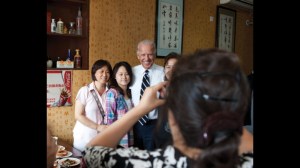
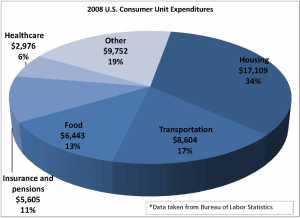
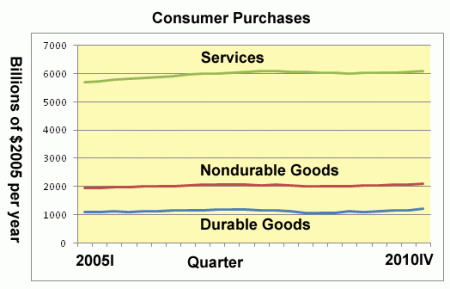


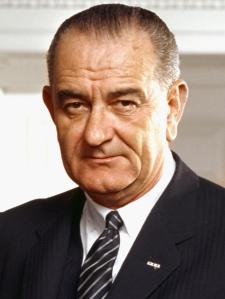
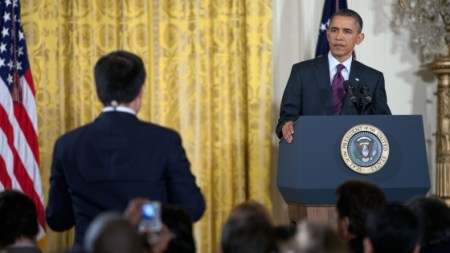


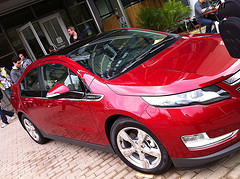
 Short and Sweet Blog