UNION-BUSTING OR JUST POLITICS?
You have undoubtedly heard the saying: ‘Live by the sword, die by the sword.’ You probably know that it is actually a paraphrased biblical reference from Matt 26:52:
Then said Jesus unto him, ‘put up again thy sword into his place: for all they that take the sword shall perish with the sword.’
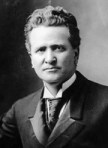
Today in Wisconsin, a historically labor-friendly state actually closely associated with the beginnings of the progressive movement and the home of the Progessive Party’s 1924 presidential candidate, Sen Robert Follette, Sr., the truth of this statement comes into sharp relief.
Politics is a winner take all business. Party politicians are all about gathering political power in whatever way they can. What is their motivation for engaging in this process? Of course, it is so that they will have more and more power to exercise in a manner which will benefit their friends and reduce the ability of their opponents to fight back. How would officeholders who decided not to “dance with who brung’um” ever successfully achieve a re-election when their friends would now be tepid or hostile to that re-election and their “enemies” would smell blood in the water? The world just doesn’t work like that. The more power that officeholders have the more is at stake in an election. Therefore, as government power increases more money is attracted to the process and the losing side has more to lose if it candidate does not win. And yet somehow we’re surprised at the hyper-partisanship and vitriol which enters the system. Higher stakes makes it less likely that the tone will be civil and the process run by Marquess of Queensberry rules. There will be winners and losers and to the victors belong the spoils.
As President Obama summed up so clearly when addressing Latinos just before the 2010 elections:
. . . . We’re gonna punish our enemies and we’re gonna reward our friends who stand with us . . . .
Just as clearly, three days after the 2008 election, with Republicans gathered at the White House to discuss potential bipartisan ideas for a stimulus bill, President Obama said: “Elections have consequences. I won.”
Public employee unions have long been in the business of electoral politics. They have provided hundreds of millions if not billions of dollars for campaigns, nearly all of it going to Democratic party candidates in state and federal elections. These unions have also provided countless hours of work for these candidates. Through election cycle after election cycle the union-supported Democratic candidates have won. As such, for decades the Democratic party has been generally in charge of state governments from Trenton, NJ to Madison, WI to Sacramento, CA. After Democratic victory public employee unions could “negotiate” their wages and benefits with the officeholders whom they had helped place into power. It worked for everybody, at least for everybody who was on the inside.
In Wisconsin after the 2010 election the number of Republicans in the 99 member State Assembly went from 38 to 60. Similarly in the Wisconsin State Senate Republican representation went from 14 to 19 of the total of 33 members. The governor’s chair also switched from Democrat to Republican. When a similar re-alignment at the federal level occurred we got a one-sided stimulus bill and a vast expansion of the federal government through reformation of our entire health care system. Both occurred with virtually no Republican votes.
In politics, when a regime falls the supporters of the old regime run the risk of being too closely linked to the previous leadership and they may have some or all of the deals that they previously struck taken away. They will doubtless lose access to the resources they had grown used to having. The public employees unions have been very closely linked to the Democratic party. They have prospered as a result of their insider status. Acting aggrieved when they are attacked by political opponents who have succeeded in achieving political victory is a little too much to stomach when the unions had engaged in the game full force for years and won victory after victory. This is especially so when they had previously received benefit after benefit at the public trough as a result of these victories.
Let’s try to be objective. Do you really believe that public sector unions were motivated in their support for Democratic candidates solely as support for “good government” divorced from any “personal benefit” from the victory of those candidates? How can they actually expect us to cry crocodile tears when they lose one and must now pay the piper?
That leads me to my final point. We have heard lots of talk about how Republicans would pay for this “union-busting tactic.” The unions suggest vocally that it is somehow shameful to pass a law limiting the public employee unions, particularly teachers, to collectively bargain only about wages and not about benefits. But nobody forces them to work in the jobs they now hold. If the pasture is greener elsewhere, union members are free to leave anytime. They don’t want to leave, however, because the benefits of their public-private partnership with the Democratic party and the government of Wisconsin has been too lucrative to give up without a fight.
Tactically, the unions position themselves as if they are innocent victims of the political process and the budget shortfalls which are totally not their fault. Say they: “You can’t balance the budget on the back of the hard-working union members.” It is as if they believe that as union members they are somehow morally superior and that lawmakers should be ashamed of themselves for voting in a way to limit their ability to “collectively bargain” in the future with their political cronies.
It is always possible that the voters who put the Republicans in power this time will turn on them over this issue and return them to the political wilderness in 2012. But why should the members of the Wisconsin Senate’s Democratic minority be avoiding even a vote on this issue if they truly believe that passage would be so damaging to Republicans. See what happened to the Democrats in the federal elections in 2010 after passage of the stimulus and health care bills. If the bill passes they will really put a whipping on the Republicans for this overreaching, won’t they? Plus, when the Democrats return to power in a couple of years they can always put it back the way it was, can’t they? On the other hand, is it possible that what the Democrats and unions are really afraid of is that these reforms will work and the budget will be balanced and, rather than the blame, the Republicans will get the politcial credit and a longer lease on political power in Wisconsin? Oh politics, politics.
Explore posts in the same categories: Politics Short and Sweet Blog
March 27, 2011 at 7:30 pm
Couldn’t agree more!