Archive for March 2011

HEAD’S UP IN THE UPCOMING DEBATE OVER FUNDING SOCIAL SECURITY

March 13, 2011

Remember when President Obama, last week, said in a press conference that in the middle of the decade his budget would have us to a point where we would no longer be adding to the deficit? Halleleujah!! Unfortunately, it is indisputable that the Obama budget never once comes close to matching income and outflow. The following is how the President’s new press secretary explained it, and did it without backing down an inch from what the President said:

This is an example of avoiding a plain mathematical truth through application of obfuscation and is just plain tomfoolery. It is true that:

In war, truth is the first casualty. Aeschylus Greek tragic dramatist (525 BC – 456 BC) .

But our politicians, for purposes other than war, have seemed to take this adage and placed it at the service of their intramural debates and elections. This is not a difference of worldviews, a topic often explored by this blog, with it’s attendant differences in context, language and emphasis created by differing worldviews. This is an example of a simple lack of candor. In no one’s world should this be okay. This is not an issue of context, of language or emphasis. It is just not true.

This also gives us a little taste of how we’ll be treated in the upcoming social security debates. An example of this was delivered by a group of Democrat Senators about 30 days ago. These Senators explained that the Republicans are in favor of ‘privatizing’ social security and that social security can pay every dollar of benefits for the next 27 years and that social security is actuarially sound among other important things.

I am unsure whether there have been any post-Bush Republican proposals for “privatizing” social security but I am certain that there is a big problem with calling social security “actuarially sound” and explaining that it has the resources to pay benefits for 27 years without any changes without further explanation. It is a bit like the President’s news conference when he suggested that in 2015 his budget will be balanced and his press secretary had to spin and spin the point until he was dry.

What is the truth? The truth is that in 2011 current social security benefits will exceed current social security taxes. How can it be that social security is “actuarially sound” or able to pay every penny of benefits for the next 27 years without any changes and yet social security has now started to pay out more in benefits than it receives in taxes? Are the Republicans ginning up lies? Are the Democrats now having to courageously put a stop it?

Well, the truth is that the social security system will need to call on non-social security tax revenues in order to pay the difference between current social security benefits and current social security taxes for the foreseeable future. It is a fact that this began in FY 2010. There is no end in sight. Since this is undeniably true, what do the Democrat Senators mean by saying that social security can pay every penny of benefits for the next 27 years? These Senators are only saying that the general tax revenues which are going to have pay the social security benefits will not be used to do so directly, they are saying that something else will happen between cup and lip. What will happen, however, is only on the books of the Social Security Administration. The government’s general revenues will, instead, be used to pay off some of the IOU’s which have been piling up in the SSA for 27 years. The general revenue funds which have redeemed the IOU’s will then be used to pay current social security benefits. In this way there will be two stops for these dollars, not one. The dollars will change status from general revenues to the proceeds from paying off the IOU’s. The net effect will be nothing, zero.

Do you remember the old pragmatic-sounding “pay as you go” Unified government budgets which began in 1983. Under the Unified budget social security taxes were used to pay-as-you-go for non-social security government programs. The surplus between social security outlays and expenditures in those years was used to make the federal budget deficit look smaller or the budget surplus look larger, including during the years of Mr. Clinton’s magic “budget surpluses” of FY 1998, 99 and 2000. See the chart below for a graphic example of what was going on.

For instance, as the chart shows, in FY 2000 approximately $200 billion was added to the trust fund as a result of this social security surplus. The accumulated surplus is what the Democratic Party’s Senators are actually talking about in terms of the “solvency” and “actuarial soundness” of the program. The existence of these IOU’s will not lessen the difficulty and the reality of coming up with the difference between the social security taxes and the social security benefits to pay retirees on an ongoing year to year basis.
This is a fact that everyone needs to know so that when politicians deny that social security amounts to a fiscal problem at the present time, you’ll know that they are trying to tell you something about accounting, not about reality. Because the general tax revenues will first be used to pay off the IOU’s which the SSA has been accumulating in it’s filing cabinets before being used to pay benefits doesn’t make a hill of beans to the painful reality that somebody will have to pay the bill.

Oh and by the way, as to the partisan politics of this. Control of Congress has been split almost evenly during the period since FY 1984 between Democrat and Republican. The presidency a bit more Republican at 16 years to 10. It should also be noted that during the legendary Clinton “budget surpluses” the Congress was Republican. In short, this not a partisan problem (notwithstanding the rather duplicitous grandstanding and fear-mongering by the Democratic Senators featured above) it’s a government problem. The only reason that the Social Security system didn’t collapse in the 1980’s, after nearly 40 years of Congressional control by the Democrats, the party whose Senators are now yoohooing about how the Republicans are all for putting granny out on the street, was because the government used it’s power to raise taxes not because it used it’s head to properly administer the taxes it had to fund the social security entitlement it had created!!!!!!

THE IMPERATIVE OF POWER

March 9, 2011

Libyan Dictator Gaddafi

It is clear to me as I watch the pressures increase on President Obama to somehow become militarily involved in the Libyan “civil war” that at this time in history this is only one in a long line of uniquely American situations. The US is the indispensible nation in every sense. Britain, France and Italy, together or in any forseeable combination with others including China and/or Russia, could not project force into the region in sufficient quantity and quality to impose a “no fly zone” or to deploy and supply land forces to intervene in this part or any part of northern Africa. Hence, the decision as to what to do with Col. Gaddafi is ours and ours alone.

What mounting pressures? First, there are the news stories of the dictator Gadaffi’s airplanes attacking civilians and images of the injured. Second, there is the economic problem of the potential interruption of exports of Libyan crude and natural gas which is causing a spike in oil prices. Third, there is the Hitler problem, i.e. this idea is that leaving a brutal dictator in power is a bad thing, if he can be removed, since the dictator is, by definition, brutal. The fact that leaving him in power may not be the worst thing that could happen is disregarded or never even entertained. Last, there is the political pressure applied by John McCain and others on the President to “do something.” The political benefit of the latter’s course is that after having come out publically for a “no fly zone,” in subsequent days if the President does nothing and anything bad happens in Libya, it can politically be spun as being the “President’s fault.”

As the American public we simply must become less idealistic and more realistic. First, American armed forces are not and should not be used as the policemen of the world. They have been raised and are supported by us to advance the interests of the United States. If the mere fact of their existence creates irresistable political pressure for them to be deployed unwisely and in ways not directly related to the interests of the United States of America, then it might very well be better if they did not exist in the first place. In short, as the father of a soldier, I suggest that it may be better to be France which has no power to do anything so they can simply sit back and criticize and complain which ever way it turns out.

As Strafor’s George Friedman observed recently:

It should also be remembered that the same international community that condemned Saddam Hussein as a brutal dictator quite easily turned to condemn the United States both for deposing him and for the steps its military took in trying to deal with the subsequent insurgency. It is not difficult to imagine a situation where there is extended Libyan resistance to the occupying force followed by international condemnation of the counterinsurgency effort.

As much as I may disagree with President Obama on many things, I do not envy him his job. He has no way to go where he will not be castigated and criticized for what he does or doesn’t do. He simply cannot win. There is no outcome, other than full fledged western-style democracy, which will unambiguously please everyone and that is very unlikely indeed.

It reminds me of discussions I have had with friends and acquaintances about the wars in Afghanistan and Iraq. Some of them criticize former President Bush for going into these wars, others criticize him for mishandling them but almost no one refrains from criticizing him under the philosophy that “he did his best to do what was right for the US” and leave it at that. They also refuse even to engage in the “hypothetical situations” which I pose. Usually they simply snort and act as if my hypothetical and indeed any such hypothetical is ridiculous. An example, assume that President Bush failed to take aggressive military action against those who attacked us from Afghanistan, what further mischief would those miscreants have been encouraged and enabled to inflict and who would have been blamed? Would Osama Bin Laden have been able to take up the mantle of Salladin, having defeated and humiliated the obviously weak infidel enemies, and been able to earlier and even more thoroughly radicalize south Asian and north African Muslims in their opposition to the West. Would Mubarak have fallen earlier? Where did the Bush go who promised no “nation building” and a humble foreign policy when the crap hit the fan?

Obviously, it is far too complex an exercise for a 10 minute conversation to rerun history with all it’s moving parts possibly moving differently. The problem is, however, that we prefer to act (and vote) as if the one variable that we would like to modify would have been the only change in the entire situation and that if our preferred choice had been made ‘things’ would have obviously turned out better. We like to think only about the opportunity costs of the roads not taken without giving any credit to the beneficial effects of the road actually taken.

This same kind of analysis could be applied to the folks who opposed the Obama stimulus. They don’t like to talk about the probability that without it the US and much of the world could have been plunged into a rather lengthy depression with attendant deflation with far more unemployment for a substantial period of time. They simply assume that the last two years would have been the exactly same (or maybe even better) except we wouldn’t have borrowed 3 trillion dollars. This is a ridiculous assumption. On the other hand, the pro-stimulus group prefers to leave to later the question of the future costs of having borrowed trillions to provide the present liquidity which has kept transactions happening and prices from falling. That this may very well cause a Japan style lost decade or worse is dismissed out of hand by the gogo-stimulus crowd (namely Paul Krugman) as being unthinkable. The opponent in Krugman’s mind is a repeat of the Great Depression and anything is better than that. The only possible problem with borrowing these trillions in Krug-world is that you may not borrow enough to keep everyone happy until the bandwagon starts rolling again.

I guess what I am really saying is that the existence of power–whether to project substantial military force into Libya or the power to borrow and spend trillions of dollars–creates it’s own imperative to use that power and let the future care for the future. It may be better policy in the long run to have our leaders constrained by laws and other circumstances which do not allow them the freedom to engage in the “big thing.” As it stands, our leaders, rather than being subject to a future of being second guessed as to what the world would have looked like if they had used the power they had, they are very likely to be overtempted to simply use it and see what happens.

UNION-BUSTING OR JUST POLITICS?

March 2, 2011

You have undoubtedly heard the saying: ‘Live by the sword, die by the sword.’ You probably know that it is actually a paraphrased biblical reference from Matt 26:52:

Then said Jesus unto him, ‘put up again thy sword into his place: for all they that take the sword shall perish with the sword.’

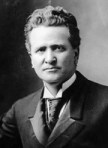
Today in Wisconsin, a historically labor-friendly state actually closely associated with the beginnings of the progressive movement and the home of the Progessive Party’s 1924 presidential candidate, Sen Robert Follette, Sr., the truth of this statement comes into sharp relief.


Politics is a winner take all business. Party politicians are all about gathering political power in whatever way they can. What is their motivation for engaging in this process? Of course, it is so that they will have more and more power to exercise in a manner which will benefit their friends and reduce the ability of their opponents to fight back. How would officeholders who decided not to “dance with who brung’um” ever successfully achieve a re-election when their friends would now be tepid or hostile to that re-election and their “enemies” would smell blood in the water? The world just doesn’t work like that. The more power that officeholders have the more is at stake in an election. Therefore, as government power increases more money is attracted to the process and the losing side has more to lose if it candidate does not win. And yet somehow we’re surprised at the hyper-partisanship and vitriol which enters the system. Higher stakes makes it less likely that the tone will be civil and the process run by Marquess of Queensberry rules. There will be winners and losers and to the victors belong the spoils.

As President Obama summed up so clearly when addressing Latinos just before the 2010 elections:

. . . . We’re gonna punish our enemies and we’re gonna reward our friends who stand with us . . . .

Just as clearly, three days after the 2008 election, with Republicans gathered at the White House to discuss potential bipartisan ideas for a stimulus bill, President Obama said: “Elections have consequences. I won.”

Public employee unions have long been in the business of electoral politics. They have provided hundreds of millions if not billions of dollars for campaigns, nearly all of it going to Democratic party candidates in state and federal elections. These unions have also provided countless hours of work for these candidates. Through election cycle after election cycle the union-supported Democratic candidates have won. As such, for decades the Democratic party has been generally in charge of state governments from Trenton, NJ to Madison, WI to Sacramento, CA. After Democratic victory public employee unions could “negotiate” their wages and benefits with the officeholders whom they had helped place into power. It worked for everybody, at least for everybody who was on the inside.

In Wisconsin after the 2010 election the number of Republicans in the 99 member State Assembly went from 38 to 60. Similarly in the Wisconsin State Senate Republican representation went from 14 to 19 of the total of 33 members. The governor’s chair also switched from Democrat to Republican. When a similar re-alignment at the federal level occurred we got a one-sided stimulus bill and a vast expansion of the federal government through reformation of our entire health care system. Both occurred with virtually no Republican votes.

In politics, when a regime falls the supporters of the old regime run the risk of being too closely linked to the previous leadership and they may have some or all of the deals that they previously struck taken away. They will doubtless lose access to the resources they had grown used to having. The public employees unions have been very closely linked to the Democratic party. They have prospered as a result of their insider status. Acting aggrieved when they are attacked by political opponents who have succeeded in achieving political victory is a little too much to stomach when the unions had engaged in the game full force for years and won victory after victory. This is especially so when they had previously received benefit after benefit at the public trough as a result of these victories.

Let’s try to be objective. Do you really believe that public sector unions were motivated in their support for Democratic candidates solely as support for “good government” divorced from any “personal benefit” from the victory of those candidates? How can they actually expect us to cry crocodile tears when they lose one and must now pay the piper?

That leads me to my final point. We have heard lots of talk about how Republicans would pay for this “union-busting tactic.” The unions suggest vocally that it is somehow shameful to pass a law limiting the public employee unions, particularly teachers, to collectively bargain only about wages and not about benefits. But nobody forces them to work in the jobs they now hold. If the pasture is greener elsewhere, union members are free to leave anytime. They don’t want to leave, however, because the benefits of their public-private partnership with the Democratic party and the government of Wisconsin has been too lucrative to give up without a fight.

Tactically, the unions position themselves as if they are innocent victims of the political process and the budget shortfalls which are totally not their fault. Say they: “You can’t balance the budget on the back of the hard-working union members.” It is as if they believe that as union members they are somehow morally superior and that lawmakers should be ashamed of themselves for voting in a way to limit their ability to “collectively bargain” in the future with their political cronies.

It is always possible that the voters who put the Republicans in power this time will turn on them over this issue and return them to the political wilderness in 2012. But why should the members of the Wisconsin Senate’s Democratic minority be avoiding even a vote on this issue if they truly believe that passage would be so damaging to Republicans. See what happened to the Democrats in the federal elections in 2010 after passage of the stimulus and health care bills. If the bill passes they will really put a whipping on the Republicans for this overreaching, won’t they? Plus, when the Democrats return to power in a couple of years they can always put it back the way it was, can’t they? On the other hand, is it possible that what the Democrats and unions are really afraid of is that these reforms will work and the budget will be balanced and, rather than the blame, the Republicans will get the politcial credit and a longer lease on political power in Wisconsin? Oh politics, politics.