Archive for July 2010

POLITICAL SPEAK REGARDING TAXES

July 25, 2010

First let me disclaim any intention to argue, in this post, for the rightness or wrongness of the tax policies advocated by democrats or republicans or the administration or the congress.  I am willing to start from zero in arguing about the best tax policy for our country.  All I am trying to do in this post is to clear away some of the politically loaded debris involved in talking about taxes.   Taxes are, after all, a given of life.  About taxes we all believe in the saying, “Don’t tax you and don’t tax me, let’s tax that fellow behind the tree.”  However, tax policy, as opposed to tax politics, ought to be based upon a wise and articulable basis as to why it is best to fund government by imposing upon some in different proportions than others.  It may very well be that taking money from some and leaving it with others is good for the country but that is what we should be talking about.  We should ask questions like, what would you or people like you do with the money which might otherwise be taken in taxes?”  Is one person’s consumption better than another’s?  Is there a societal benefit derived from investing wealth?  Should it be subsidized?  If so, is there a societal benefit in allowing people to accumulate wealth to be invested?  When we refuse to enter into this debate we are being disingenuous and expedient.  We are refusing to look at how this country actually operates and what makes it successful and instead we focus upon the “politics” of taxes, whose ox is being gored.

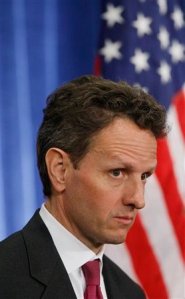
Tim Geithner, the Treasury Secretary, was interviewed today by ABC’s Jake Tapper concerning the Obama position on expiration of the Bush era tax cuts.  During the interview Geithner advocated at least two discrete policy positions.  First, Obama would let the income tax rate cuts expire for those “wealthy” earners who earn more than $250,000 a year effectively allowing the highest marginal income tax rates to increase from 36 to 39.6 percent.  Notwithstanding this pursuit of the “wealthy” to pay more in income taxes, Geithner also emphasized that Obama would see that taxes on capital gains and taxes on dividends would not increase above 20 per cent.  This 20% cap on income from capital gains and dividends is, of course, without regard to the actual total income of the receiver.  It is also not subject to the Alternative Minimum Tax (AMT) which was enacted to make every one pay their fair share.  Geithner and Obama have effectively drawn a line between two groups of taxpayers.  The  wealthy whose income comes in the form of passive dividends and capital gains and those wealthy whose income comes in the form of salaries or the net profits of their own businesses.  Of these two groups which are “the wealthy” as that term is understood in the taxing imaginations of the vast majority of Americans?  Do we see those people getting up at 5:00 a.m. to go out and run their businesses as “the wealthy” or do we see as “the wealthy” those who sit around and clip coupons from “tax free” municipal bonds like Ross Perot or collect dividends paid by Exxon, Shell and the like.  This latter group is precisely the “wealthy” who Warren Buffet chided for being taxed at a lower rate than his secretary!!!!  
How can it be that the working “wealthy” who are also paying large amounts of self employment and medicare taxes are deserving of having to pay yet more while those who “invest” are taxed at about half the income tax rate of the former and pay no social security or medicare taxes at all?  Who is better off, those who must labor to earn their pay or those who “live off the fat of the land.”  In the latter group of investors I believe you would place such wealthy democrats as George Soros and Theresa Heinz Kerry among many, many more. 

My simple and only point is that our politics make a certain group  “the wealthy” who should pay more while another group, with equivalent or even higher incomes, are politically allowed to pay less.  The politically loaded language of this “debate” actually allows the “investing wealthy” to advocate soaking the faux or “working wealthy,” who are really just the upper middle class, while pretending thereby to be oh so generous.  It reminds me of this speaker at an SEIU rally who was so concerned with the plight of government that she wanted the government to “raise my taxes.”  I doubt very much that it was her ox she was talking about!!!!

Tax debates ought to be more about what’s good for the whole country and less about what’s good for the various groups of voters.  The framing of the tax debate as a political choice between different “classes” of taxpayers has had another pernicious effect, it has actually resulted in our shifting a large percentage of the tax burden to our children and the unborn through borrowing and promising more than we can deliver.  The innocents will never even have the chance to vote about whether to accept this burden from us.  They will never receive the benefits.  The debt will just be there when they reach adulthood and they will have to pay.  I hope we can do better.  We’re going to need to be more straightforward and less partisan in this debate if we are to survive as a free republic.  I hope I’m not being too naive.

P.S.  The graph presented at http://www.quickanded.com/2010/02/effective-tax-rates-of-the-richest-400-americans.html presents my point perfectly concerning the effective income tax rates of the truly wealthy as opposed to rates applicable to the merely working higher income upper middle class.
WHAT CAN WE LOOK FORWARD TO NOW

July 24, 2010

Given the passage of the Financial Reform bill and Obamacare, I thought it might be useful to step back and consider where we are headed.  We have now turned over two of the largest chunks of our economy to the government to run, for better or worse.  Government also yearns to serve us by taking over our energy sector but, if you believe Harry Reid, that’s off the table for the time being.  Those among us who believe that government is good while business is bad must be bursting with enthusiasm and happiness for the brave new world.

Now that we find ourselves at this point, let’s ask the most relevant question.  When government is tasked with providing important goods and services, how does it do? 

If there is anything to the criticism of government workers implied in the following statement, “[t]hat’s close enough for government work” can we realistically look forward to excellence in medical treatment for all?  Will government control of the financial sector mean that only bad ideas will be impeded and new ones, innovative ones which if developed would lead to the creation of wealth, will live and thrive? Will the setting loose of government’s imagination and energy overwhelm us with it’s active and effective brilliance?  I, perhaps in limited company given the fact that these things have been passed by the representatives of the people, am dubious.

I cannot say it any better than it has already been said by the noteworthy Richard Maybury, the so called Three Thousand Year Old Man.  I have been reading Mr. Maybury’s insights and ideas for some years now and generally find his logic compelling.  I believe that you will profit also, in wisdom at least, from the eight minutes it takes to view his video.

http://www.youtube.com/user/RichardMaybury#p/u/6/bP3Sfnp_ehw

Taking the liberty of paraphrasing Mr. Maybury, when government treats us like its wards, whose money and needs are to be carefully cared for but without the need of our input we are very unlikely to be pleased by the result.  The fact that the Obamacare and financial overhaul bills are over 2000 pages long and both provide for development of further regulations by the agencies charged with their implementation, makes it clear that their rules, not ours, will apply.  It’s as simple as this, we are now to be treated like children.  They’ve got our money and now they mean to “care for us.”

THE GREAT ECONOMIC WISDOM OF PROGESSIVES

July 18, 2010

This newest Pelosi-ism has moved me to do a bit of examination of the Progessives’ approach to the economy.  This post will show a few prominent Progessives in their own words.  The first quote is from Ms. Pelosi, who you will remember has been Speaker of the House of Representatives of the United States for three and a half years.    

Ms. Pelosi’s conclusions can’t have anything to do with politics trumping sound economic principles, can they?  She concludes that: (1) Republicans are mean guys who lie about the effect of paying some people not to work, and (2) paying money for no work is a good thing for economic recovery because it makes sure the money is spent quickly.  It’s great that this policy has only positive effects, right Ms. Pelosi.  This eliminates even having to think about the possible negative effects, huh?   

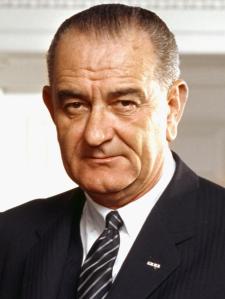
Lyndon Johnson, the father of the Progressive program known as the Great Society, is among the most prominent and powerful progressives ever.  From Larry De Witt’s excellent 2003 essay,”The Medicare Program As The Capstone To The Great Society — Recent Revelations in the Recent White House Tapes,” Johnson is quoted at length admitting that sound economics was not his motivation for acting on many domestic “priorities,” it was just his innate goodness that he was putting into governing.   

Probably the most revealing conversation regarding LBJ’s political values and sentiments as they related to Social Security and Medicare was an extended conversation he had with his Press Secretary, Bill Moyers. In this conversation, recorded on March 10, 1965, Johnson permits himself to reflect almost philosophically on his support for a provision in a pending bill which would provide a retroactive increase in Social Security payments. Moyers is arguing that the President should support the retroactivity clause because it will provide a stimulus to the economy. Johnson supports the provision, but he makes clear to Moyers that he does not see programs like Social Security and Medicare as being about economics.
Johnson: My reason though is not because of the economy. . . . my reason would be the same as I agreed to go $400 million on health. I’ve never seen an anti-trust suit lie against an old-age pensioner for monopoly or concentration of power or closely-held wealth. I’ve never seen it apply it to the average worker. And I’ve never seen one have too much health benefits. So when they come in to me and say we’ve got to have $400 million more so we can take care of some doctors bills, I’m for it on health. I’m pretty much for it on education. I’m for it anywhere it’s practicable. . . . My inclination would be . . . that it ought to retroactive as far back as you can get . . . because none of them ever get enough. That they are entitled to it. That’s an obligation of ours. It’s just like your mother writing you and saying she wants $20, and I’d always sent mine a $100 when she did. I never did it because I thought it was going to be good for the economy of Austin. I always did it because I thought she was entitled to it. And I think that’s a much better reason and a much better cause and I think it can be defended on a hell of a better basis. . . . We do know that it affects the economy. . . . it helps us in that respect. But that’s not the basis to go to the Hill, or the justification. We’ve just got to say that by God you can’t treat grandma this way. She’s entitled to it and we promised it to her.”    

In fact, Johnson explicitly eschews economics in favor of his paternalistic approach to “taking care” of people.  What happens in the long run, who knows so long as the present is taken care of?    

Paul Krugman, a self admitted Progressive as well as an Economic Nobel Laureate and columnist for the NY Times, has recently observed this concerning his assignment of blame for starting the Third Depression:    

So I don’t think this is really about Greece, or indeed about any realistic appreciation of the tradeoffs between deficits and jobs.    

Paul Krugman

It is, instead, the victory of an orthodoxy that has little to do with rational analysis, whose main tenet is that imposing suffering on other people is how you show leadership in tough times.     

And who will pay the price for this triumph of orthodoxy? The answer is, tens of millions of unemployed workers, many of whom will go jobless for years, and some of whom will never work again.    

In other words the ‘not profligate’ among us are hard hearted and unfeeling b_ _ _ _ds who are just interested in elections!  Huh?    

FDR Campaign Button

Then there is this famous quotation from the godfather of all modern Progressives, FDR, addressing the political strength of the Ponzi scheme  known as Social Security:    

We put those pay roll contributions there so as to give the contributors a legal, moral, and political right to collect their pensions and their unemployment benefits. With those taxes in there, no damn politician can ever scrap my social security program. Those taxes aren’t a matter of economics, they’re straight politics.     

This demigod admitted to his unconcern for the future economics of his country in favor of the politics of paternalism.     

And again there is the always economically minded Ms. Pelosi addressing Obamacare as a “jobs” bill.     

Who believes that it is a good thing for this country for people to quit their paying jobs so that they can be cared for by the rest of us.  But in the mind of Madam Speaker this is a great jobs program because the unemployed will be able to fill the now abandoned jobs.  You sly fox!!!  Since it’s such a good jobs program why aren’t we starting it in 2010 instead of 2014?     

Finally, I quote the “Compassionator in Chief,” the “Decider” himself on the indispensible nature of the Medicare Part D drug benefit which has never been paid for, even in theory, other than by increasing the size of the federal deficit.  Having pushed this entitlement through to favor politcally active and powerful senior citizens over everyone else, in his 2004 State of the Union speech George W. Bush proclaims:    

I signed this measure proudly, and any attempt to limit the choices of our seniors, or to take away their prescription drug coverage under Medicare, will meet my veto.    

What economic laws do Progressives hold to as a matter of principle?  None that I can see other than the idea that there really is such a thing as a free lunch.  The economics of supply and demand, the law of unintended consequences be damned, that’s what Progessives believe.  In the Progressive mind electoral politics is the only thing that matters.  Whatever policy will get them through the next election is what they will choose.  Whatever benefits them politically, usually paternalistic and pandering, will win the day even if the problems created in the long run are obvious and huge.  They simply deny the existence of long term economic effects from their politically motivated economic actions.  Progressive politicians, like most of us, are capable of rationalizing away any inconvenient fact of life, such as the fact that you can’t create wealth by dropping borrowed money from helicopters.  In fact, the more intelligent the Progressive, the better they are at rationalizing and sound biting away the inconvenient fact that there is simply no such thing as a free lunch, someone always has to pay.

UPDATE – As of August 11, 2011 this just in:

The White House has now adopted the economic road advocated by Ms. Pelosi. Grow unemployment and you will grow the economy. No kidding, this is what they think. Don’t believe me, here is Jay Carney lecturing a reporter from the Wall Street Journal from the White House podium on the basics of economics:

I guess you really can grow the economy by dropping money from helicopters. Why stop at the unemployed, give everyone free money and we’ll all be better off in the long run. Whoo knew? No wonder we’re in such great shape with these geniuses in charge. Have they ever heard of Bastiat and the effect of the broken window?

NAACP CALLING TEA PARTIES RACISTS – A MATTER OF WORLDVIEW

July 15, 2010

I believe that the primary point of agreement among Tea Party adherents is a commitment to limited government. Is limited government a racist idea per se? Is it a racist idea in a country with a history of slavery and racism and therefore with much to correct? Is it possible that the desire for limited government is mainly motivated by the racial animus of self identified Tea Partiers? Does the existence of racism in a person or an institution require the existence of racial animus? If so, can it be demonstrated that it is Tea Partiers’ racial animus which causes them to desire limited government? Likewise, if racism requires animus, is it even possible to disprove the charge that the desire for limited government is motivated by racial animus? Motivations being such slippery things, how would you demonstrate this? Therefore, the party which has the burden of proof on the issue of animus and therefore racism, either in the affirmative or negative, will necessarily fail. If the burden is upon the Tea Partiers to prove pure motives then the limited government movement can never be rid of the label “racist.” Limited government Tea Party types must consequently accept the label of racist and understand that they can only overcome it in the eyes of their opponents by renouncing their limited government ideas.

Next question. Is it morally wrong to advocate the definitionally “racist” policy of limited government? If there is no burden of proof on those asserting racial animus as the motivating factor in the limited government movement, then the very term “racist” loses much if not all of its moral opprobium. If racism is not a matter of morality but only of policy, then being accused of racism should lose its painful sting and disqualifying connotation. If there is no evidence of racial animus but only evidence of racially disparate impact of limited government policies, then a Tea Partier can simultaneously be a racist and a good person.

The following exchange between Keith Olbermann and a Princeton professor points out the distinction between racism based upon disparate racial impact and racism based upon racial animus [Unfortunately the link to this Olberman interview with Princeton Professor Melissa Harris-Lacewell, which perfectly makes my point, has been removed and is no longer on the net, I will continue searching for it. I am adding a link to an Olberman interview with NAACP Ben Jealous who himself, around the last minute and a half of the interview, concedes that there is a difference between Selma/Birmingham racism and the “racism” which is espoused by people other than David Duke.]:

It appears to me that the divide between the NAACP and the Tea Parties is their respective worldviews. A worldview is neither a fact or an opinion but a context or point of view? If someone disagrees with your worldview they are not necessarily, by this fact, liars or morons. Substantial evidence should be required to damn them as morally defective!

Daniel Patrick Moynihan, a democratic US Senator from New York, famously observed that:

Everyone is entitled to his own opinion, but not his own facts.

At first blush Moynihan seems right but upon reflection I’m not so sure. To what extent is our worldview based upon accepted and demonstrable facts and to what extent upon our own life experience and our own emotions? Can one worldview be deemed right and the other wrong by application of facts and logic? Certainly the rightness and wrongness of worldviews are in the eyes of the holders of those worldviews since it is so much based upon each personal history and upbringing. The human ability to rationalize all contrary facts is unlimited and this is particularly true when one’s view of himself and his life is intimately affected by his assessment of the factual evidence. Therefore, there are very few statements which are indisputable enough to be referred to as the “facts” in Moynihan’s quote. We must be careful about labelling our opponents as anything other than as opponents.

As to the dominance of worldviews in regard to this issue, this blog returns to a poll reported by Rasmussen on June 24, 2010 in an article titled, 48 Percent See Government Today as a Threat to Individual Rights. It yields the following :

The latest Rasmussen Reports national telephone survey finds that 48% of Adults see the government today as a threat to rights. Thirty-seven percent (37%) hold the opposite view. Fifteen percent (15%) are undecided.

Most Republicans (74%) and unaffiliateds (51%) consider the government to be a threat to individual rights. Most Democrats (64%) regard the government as a protector of rights.

What are we talking about? Is one side or the other lying about how they see the proper role of government? Can both be right and both wrong simultaneously? That this Rasmussen poll gives profound insight into the worldviews of the two sides seems inescapable. There is a fault line that runs through American politics which is based upon the view of whether government is a threat or an ally. This fault line is too deep to overcome by mere factual evidence.

The NAACP perceives Tea Party people as racists because they advocate policies which are not specially advantageous to members of racial minorities but are targeted at making the playing field level for all, a situation which in their worldview is the ultimate in correctness. Generally speaking, however, the average white is economically and institutionally better off than the average black or hispanic so whites begin the game with a head start. That there is “institutional racism” in our world is inescapable given the disparate impacts of existing structures on differently situated people. Therefore in the worldview of the typical black or hispanic citizen this may be viewed as a matter of racism since they start out with less institutional and economic power than most whites. The typical response of the white worldview to the worldview which holds these institutional advantages to be forms of racism is likely to be that their own ancestors started off with nothing when they came to this country and that wasn’t racist, it was just a fact of life which their respective immigrant groups overcame. The alternative worldview holder argues in response that they and their ancestors have been in this country for hundreds of years and that if their race were different they would certainly be economically and institutionally “equal” by now. The reason that they are not equal by now, they conclude, is that racism and its vestiges hold them down. Therefore, they say, they’re still entitled to the head start government intervention gives them. To which the typical Tea Party response is something like, I don’t care what happened hundreds of years ago, just start out on our level playing field and you and your children will get the economic benefits of existing institutions in due course. To do otherwise, they argue, the governmentally instituted advantages for minorities will effectively become permanent which may actually inhibit the disadvantaged from ever “catching up.” And so the argument goes on ad infinitum.

The point of this blog is that NAACP-style “outcomes racism” or “institutional racism” is not actively and causally connected with a demonstrable racial animus. This type of “racism” only requires proof of disparate racial impact for existence not proof of racially based feelings of superiority or inferiority. With this type of “definitional” racism what is really being talked about is political maneuvering for advantage and it cannot be properly considered a moral label. As such “racism” is a label which has everything to do with differences in worldview and little to do with human moral values. Remember that Majority Leader Reid was absolved of a charge of racism by reason of statements about President Obama’s “light skin” and lack of “Negro dialect” essentially because Reid had the right voting record. Apparently no visible moral taint on Reid’s moral character or reputation remains.

Contests between worldviews have always been the province of politics in this country, ever since the federalists and anti federalists squared off over the constitution more than 220 years ago, and so it goes.

The Supreme Court Legislates From The Bench, Again

July 8, 2010

Notwithstanding what you know or believe you know, it is the application of the Supreme Court’s so-called “incorporation doctrine” and not the 2nd Amendment which was the focus of the case striking down Chicago’s gun ban.  In McDonald v. City of Chicago the Supreme Court decides that state governments may not deny you, as represented in the case by Otis McDonald, the right to own and have a hand gun in your own home.  This is only an extension of the 2009 case, District of Columbia v. Heller, in which the Court held that the individual right to own a gun is protected against federal infringement.  

Otis McDonald

It is surprising to most that once Heller was decided that McDonald even needed to be addressed.  However surprising, the Bill of Rights was not originally intended to apply to the states but was designed only to restrain the power of the federal government.  The Supreme Court recognized this fact in 1833 in a case holding that the City of Baltimore could take private property without compensation to the owner which would otherwise have violated the Fifth Amendment’s takings clause, to wit:  “. . . nor shall private property be taken for public use, without just compensation.”  The need for the Court to decide whether the 2nd Amendment, once found applicable to the federal government, also applies to the states seems a non-question to most Americans.  That this issue would even need to be addressed by the Supreme Court seems odd and anachronistic in a world in which the federal government is universally considered the master and the states the servants.  This is their emotional reaction even though many are intellectually aware that the First Amendment provides,

Congress shall make no law respecting an establishment of religion . . .” etc.  [Emphasis added.]

We the people have just not followed the arcane legal basis of the evolution of the Bill of Rights into being generally applicable to the states as well as to the federal government.  There’s been no popular press coverage of this legal issue.  It has happened almost silently as far as the public is concerned.

There are four different opinions in McDonald written by the nine justices and they cross reference things they agree with in one another’s opinions.  Therefore, there are more than four opinions held by the nine.  Wow, huh?  So much disagreement over such a fundamental issue of our constitutional fabric of which the public is almost totally unaware.  How can this be?  What happened that there is still such a broad divergence of opinion on the Supreme Court in 2010?   Why hasn’t this been solved yet after about 220 years.  What has changed? Why aren’t we all on the same page about this by now? 

This is why.  The “what happened” is the adoption of the Fourteenth Amendment in 1868, passed in order to protect former slaves from the actions of the seceding states in the wake of the Civil War.  The Fourteenth Amendment explicitly modified the thirteen previous amendments and the power sharing envisioned by the rest of the constitution when it provided:

No State shall make or enforce any law which shall abridge the privileges or immunities of citizens of the United States; nor shall any State deprive any person of life, liberty, or property, without due process of law; nor deny to any person within its jurisdiction the equal protection of the laws.

We’ve been struggling for 132 years with the ramifications of these words.  How do they apply and what do they restrict?  Do these words amount to a “fairness” requirement for life in the US with the federal courts acting as umpires?  How does the 14th Amendment’s protection for the privileges and immunities of US citizens as well as the due process and equal protection of law interact with the “rights” of US citizens some of which are protected in the Bill of Rights?  What are privileges and immunities anyway?  How does the 14th Amendment dovetail with the first eight amendments and especially the Ninth which provides as follows:  

The enumeration in the Constitution, of certain rights, shall not be construed to deny or disparage others retained by the people.

The broad language of the 14th Amendment is subject to expansive interpretation by federal courts when they are asked to provide protection against actions of the states.  Into the breach, to remedy the lack of specificity of the Fourteenth Amendment, the Supreme Court has thrust a doctrine which correlates the due process requirements of the 14th Amendment with the protections provided by the Bill of Rights.  The so-called “incorporation doctrine” effectively grafts (incorporates) most of the individual rights protected by the Bill of Rights into the 14th Amendment, a doctrine which is then used to restrict the ability of the states to manage their own affairs.  As such the ‘incorporation doctrine’ has effectively been used to limit the power of the states since at least 1933.  It is the use of this doctrine in this manner which has been decried by many as federal courts “legislating from the bench.”

I find myself in substantial agreement with Justice Stevens dissenting opinion in McDonald.  This is odd since it is people philosophically aligned with me who complain most bitterly about federal courts “legislating from the bench.”  We do not usually agree with Justice Stevens.   Stevens in his dissent argues for restricting the scope of the 14th Amendment in a principled fashion without reliance on the fact that certain individual rights have been protected by the Bill of Rights, to wit:  

The question we should be answering in this case is whether the Constitution “guarantees individuals a fundamental right,” enforceable against the States, “to possess a functional, personal firearm, including a handgun, within the home. That is a different—and more difficult—inquiry than asking if the Fourteenth Amendment “incorporates” the Second Amendment

Showing the partisan divide of the Court while writing for the plurality Justice Alito spurns Stevens’s outreach to reconsideration of decades of poorly reasoned precedents calling his dissenting opinion “eloquent” but, with a nearly visible sneer, stating :

As we have explained, the Court, for the past half-century, has moved away from th[is] . . . approach. If we were now to accept Justice Stevens’ theory across the board, decades of decisions would be undermined. We assume that this is not what is proposed. What is urged instead, it appears, is that this theory be revived solely for the individual right that Heller recognized, . . .  [Emphasis added.]

Alito may be correct as to duplicitous motive behind the Stevens dissenting opinion.  Such a motive is made more likely because Stevens is now retiring from the Court and will not be voting to reconsider earlier precedents on the basis stated in that dissent.  (Among hundreds, subjects of reconsideration would be cases involving school prayer, abortion rights, rights of homosexuals, and even the rights of free expression of high school students).  I am not naive but it seems unfortunate to me that a non-partisan outreach to reconsideration of decades of questionable decisions could not have been accepted at face value and honored for what might have been.